Mythology Monday: Echo and Narcissus

daffodil-87648_1280

“E.” Narcissus snapped his fingers. “Get over here.”
For a second, I thought he meant Elise. Then a beautiful woman with wide, intelligent eyes hurried across the auditorium after Narcissus, dodging tables and lingering models with a nymph like grace. “E” whipped out a tablet and held a pen at the ready.
Narcissus looked me over. “Is she with you, Donnie?”
Was I? I raised an eyebrow and looked to Adonis.
He glanced between me and Elise then let out a long-suffering sigh. “Yeah,” he decided. “She’s with me.”
“With you?” Elise sputtered. “What do you mean with you?”
“Can we talk about this later?” Adonis asked in an undertone.
“Um. No.” Elise’s gold eyes flared and she drew her hands to her hips. “Narcissus, I apologize for being so unprofessional, but we were actually talking when you—”
“It’s fine.” Narcissus said with a dismissive wave of his hand. “You two can go.”
“You ever consider a career in modeling?” Narcissus asked, oblivious to the drama playing out between the two models. “Your kind needs all the exposure you can get, right?”
“Um…” My kind, huh? Modeling wasn’t an uncommon cover career for a god struggling to find worship. We needed the exposure, and we couldn’t lie, which made pursuing acting or most other careers that threw you into the limelight difficult.
But I had charm. I could get all the worship I needed by walking through a crowded room.
“Aw, come on. A pretty girl like you?” Narcissus raised his eyebrows at me. “Sure you have. E, draw up the paperwork.”
“Draw up the paperwork?” She at least noticed I hadn’t agreed.  Her eyes darted up from her tablet every so often as if she were trying not to look occupied by something on her screen. Was she playing a game? Why bother hiding it? Throughout this entire conversation Narcissus hadn’t so much as looked at her.

~@~

So don’t ask me why, I don’t know, but when I sat down to write Narcissus as a character (he runs Adonis’ modeling agency in Venus and Adonis) that is who I pictured. Outfit and all. I don’t question my muse, I just go with it 🙂

Narcissus was an exceptionally good-looking demigod, the son of a river god and a nymph, and his pride and arrogance attracted the attention of the goddess Nemesis. She lured him to a pond where he could see his own reflection, and the arrogant fool fell in love with it. Narcissus wouldn’t eat, wouldn’t drink, wouldn’t leave because he was so enraptured with his reflection (most sources do agree he wasn’t aware it was a reflection, he just figured it was another person staring back at him), so he died. Which I have to say does show commitment. Think about it, as he wasted away, his reflection surely got less pretty, so maybe it wasn’t all about looks?

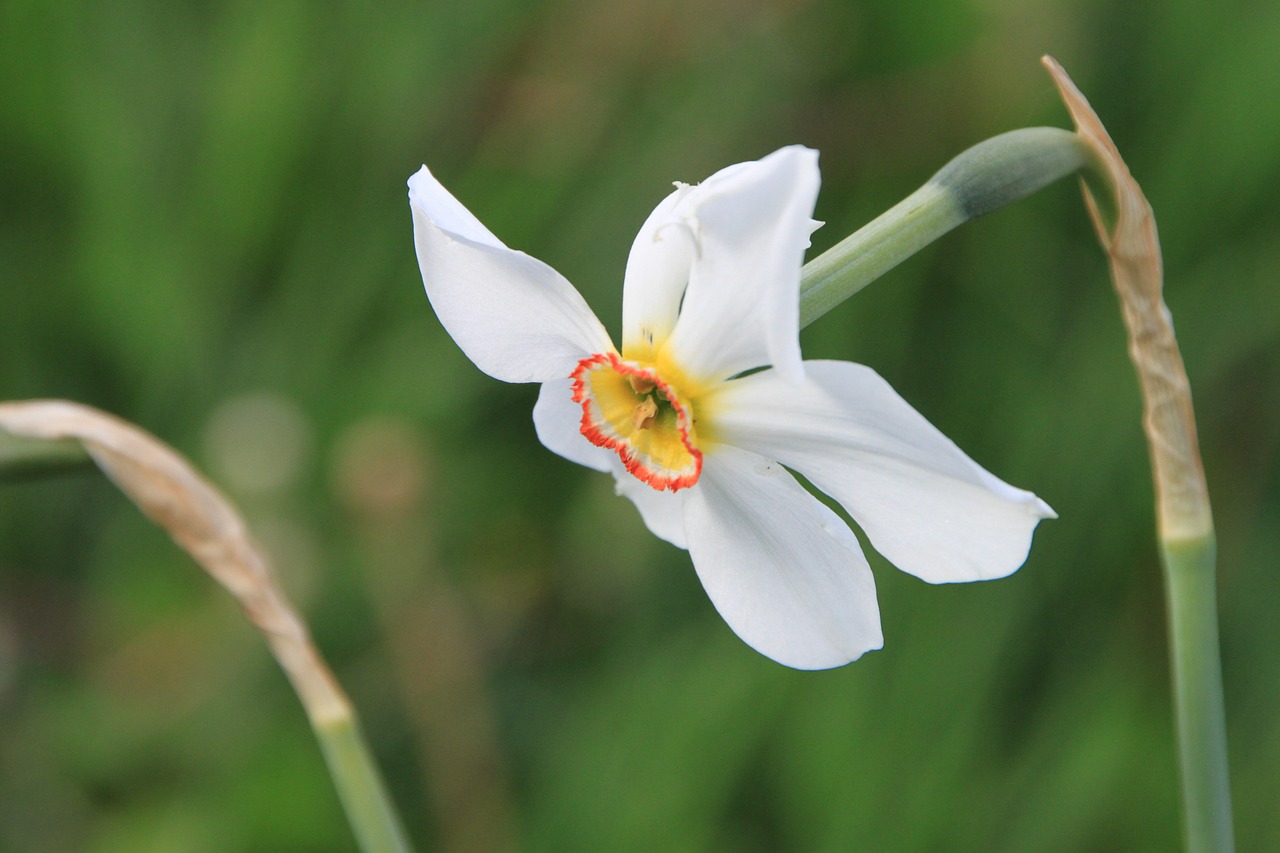
He was turned into the Narcissus plant, which looks like a small white daffodil. They lean over water in such a way that it looks like they are looking at their reflection.

However, in some versions of the myth, Nemesis didn’t just randomly lure him to the reflection, but was in fact punishing him for his rejection of the nymph Echo.

Echo was a chatty nymph that managed to piss off Hera enough that she was cursed to only repeat what was said to her. How did she piss her off? She either slept with Zeus or distracted Hera while Zeus slept around. At first, I figured this was Hera being Hera and taking out her anger at Zeus on other people.

Then I really researched the rest of this myth, not just the version I heard in high school. It goes a little something like this:

Echo saw Narcissus hunting one day and fell head over heels in love with the man based on nothing but a glimpse. When Narcissus became aware he was being followed, he shouted “Who’s there?”

Rewinding for a second to point out that rather than walk up to a hunter, she chose to stalk him through the woods. Granted, that behavior is typical in nymphs, but still.

Because of Hera’s curse, all Echo could do was repeat “Who’s there?”

Intrigued, Narcissus followed the voice and said, “Let us meet together.”

Ecstatic with joy, Echo replied “Let us meet!” and showed herself.

Unfortunately, Narcissus was unimpressed with the, by all accounts, beautiful nymph. Perhaps it was because she was so terrible at reading body language, because she tried to embrace Narcissus so much he ran away.

From a nymph.

I’m not exactly sure *how* she embraced him, or how clear Narcissus made it that he wasn’t interested, but the demigod felt upset enough by Echo’s attack to yell  “May I die before what’s mine is yours.” And really, that seems a bit harsh coming from someone who was fine meeting and chatting two seconds ago.

“What’s mine is yours,” Echo sadly replied, still not taking the hint. Echo stalked Narcissus and repeated any words of love he said to another (including his reflection) until all that was left of her was her voice.

Let’s unpack that a bit. Narcissus was open to meeting, but did not return her affection. Her response was to stalk him and take comfort in kind things he said to other people by pretending they were about her. That’s…I mean that’s the modern day equivalent of cutting your crush’s girlfriend’s head out of pictures with the two of them and pasting in your own. Add the self harm into that (she literally wasted away into nothingness) and you’ve got a bit of a nightmarish picture.

Her voice survived, and according to Greek mythology she’s still around. Whenever you hear an echo, it’s her. Stalking you. Because she still has no life.

Darwinism at its finest.
Mythology Monday: Tantalus and the Cursed House of Atreus

Tantal

“You know, if I had a gorgeous goddess following me, I’d slow down.”

I turned, following the deep voice to its owner. Another demigod stood beside the silver set of double doors that led to the auditorium. He looked taller than Adonis, but about as muscular. If Adonis got into heavy steroids. Seriously, I couldn’t decide if I felt impressed or frightened. It’s a thin line.

“Tantalus.” He offered his hand, then shifted, grabbing me before I walked into the “Private Function” sign mounted on a gold pole. “Watch out.”

Letting out an embarrassed laugh, I stumbled into Tantalus. I shouldn’t be so hard on myself; I’ve only been walking for three years. It takes practice. “Thanks.”

“Here for the convention?” He kept his hands on my shoulders and didn’t move away from me or out of the way of the door. Ignoring the people streaming around him, he looked me over. Clearly, he liked what he saw.

Finally! Some appreciation. I could do with a little more reverence and a little less attitude. Especially if it came from someone who looked like this.

Tantalus noticed me noticing him and puffed up with pride. My interest wavered. “Um…actually…” I didn’t want to get into my whole investigation in this crowd. One on one, I could always charm him into not telling anyone what I’d shared and charm him into reporting to me if he saw anything suspicious. But in a room like this, there was no telling how far even a whisper could carry. I’d rather not waste the energy charming an entire convention into silence. I searched for another reason for being here, but drew a blank. “I’ve always wanted to go on a cruise?”

Stopping at the edge of the auditorium, I leaned against the back wall, soundproofing fuzzies tickling my bare arms. Adonis stood out like a golden beacon in the crowd, somehow managing to almost glow despite the dim light.

I scoped out the rest of the room, taking a moment to get my bearings. Booths, set up in semicircles so everyone seated could see the stage, spread to either side of the auditorium. The walls and tables were accented with silver swirls that glittered against the black. No one sat. The atmosphere in the room felt rushed and impatient. Sitting would indicate a time commitment no one seemed to want to fill.

Tantalus smirked and leaned against the wall beside me, hand planted right next to my head. “I’d buy that, if I ran into you on deck.”

What difference would that make? I cocked my head. “What is this anyway?”

“Orientation.”

Ah, for the convention. That made sense. “Maybe I’m just enjoying the view.”

He beamed. Gods, men were so easy to flatter. Tantalus stepped in front of me, holding out his hands as if he were the gods gift to man. Which technically speaking…. “Well look no further, sweetheart.”

A violent shudder wrenched through me at the term of endearment. I wrapped my arms around myself as if I’d shivered.

“Cold?” His eyes flickered over me. “If you want, we can ditch this and go someplace warmer.” His tone made the request behind his offer crystal clear.

I kept my eyes on Adonis, considering Tantalus’ proposition. Well, not considering that angle of his proposition. I prefer men who worship me, not themselves.

Adonis stood in the center of the crowd, deep in conversation with a short, brunette woman. I did double take. She was one of the Plain Janes. The rest of the trio stood close by, chatting up another model. They were here for the modeling convention? Huh. Adonis nodded at something she said, not once looking away to search for me in the crowd.

No. I wasn’t going to do this. Goddesses didn’t follow guys around and stare at them across rooms hoping to catch them trying to steal a glance. A goddess did not pine. And as much as I wanted to convince myself that my only motivation to keep an eye on Adonis was my investigation, I knew that wasn’t true.

But Tantalus? Tantalus wouldn’t question me following him around. He’d actually welcome my attention. And I wouldn’t be heartbroken if something happened to him. That made him good bait.

~@~

Tantalus was a demigod, the son of Zeus and a nymph. He was invited to a dinner on Olympus by Zeus, and while there stole ambrosia and nectar and the gods secrets. He also might have had a part in stealing Rhea’s dog, but that’s debatable.

Following what I believe to be a pattern of Ambrosia driving demigods crazy (it is deadly to mortals, but demigods had it on occasion, often before doing incredibly stupid things with very little motive given) Tantalus made misguided effort to appease the gods by killing his son, Pelops, by boiling him alive, slicing him up, and serving him to the gods at dinner.

The gods caught on pretty quick to the human flavored feast before them and most of them did not partake. Demeter, distracted by her worry for her missing daughter, took a chunk out of the kids shoulder before realizing she’d consumed human flesh.

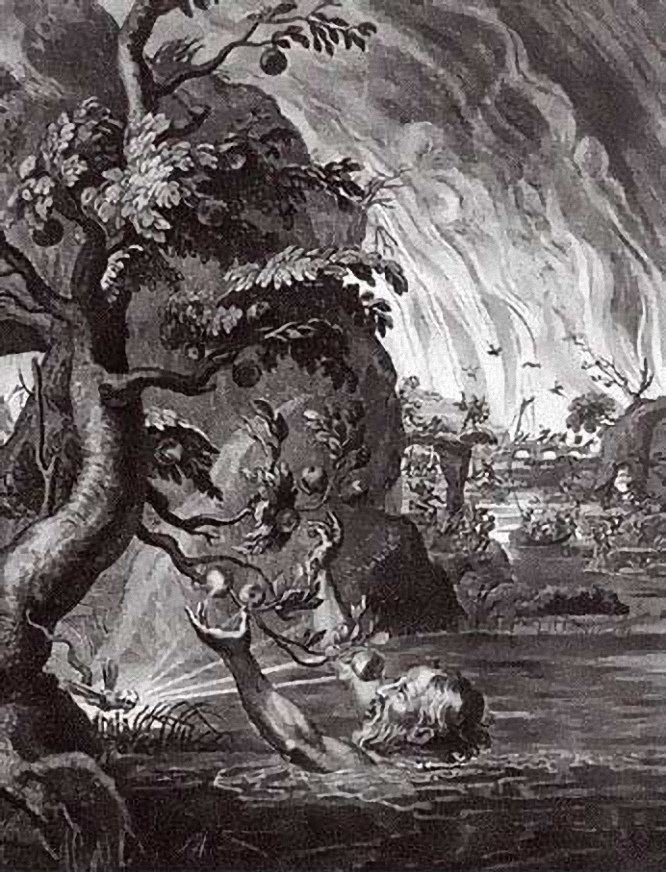
Tantalus was killed and sent to the depths of Tartarus for his crimes. His punishment was to stand ankle deep in water and look up at a cluster of grapes hung just out of reach as he starved and thirsted to death for all eternity. His location is a bit precarious as the giant boulder that another resident of Tartarus has to push up the hill everyday looms above him, precariously perched.

Meanwhile, the Fates gathered the body parts of poor Pelops, and Hephaestus made the kid a new shoulder out of ivory, marking him and his descendants, and he was brought back to life. Poseidon took the kid under his wing and taught him to race chariots until Zeus randomly decided Tantalus’ entire family line needed to suffer. Tantalus’ descendants became known as the cursed house of Atreus.

Pelops went on to win a chariot race for the hand of a woman named Hippodamia. But he won by cheating and sabotaging her father’s chariot which crashed and killed him, but not before Hippodamia’s dad managed to curse Pelops’ house (descendants) with his dying breath.

Pelops and Hippodamia had two sons. Atreus and Thyestes. Pelops dies at some point and Hippodamia gets remarried. Her sons kill their new step brother and get exiled, Hippodamia hung herself in shame.

Somehow Atreus became king of the land they were banished to, Mycenae, and he was going to sacrifice his best golden lamb to Artemis, but decided to give it to his wife instead, who in turn gave it to his brother because she was sleeping with him. His brother convinced Atreus to say whoever possessed the golden lamb should rule, since Atreus thought the lamb was safely at his home he agreed, his brother produced the lamb and took over, saying his brother could take back over once the sun moved backward in the sky.

Atreus and Hermes convinced Zeus to make that happen, and Atreus became king again. Angered by his brother’s betrayal (sleeping with his wife and taking over his kingdom is pretty underhanded) Atreus exiled Thyestes, but not before he killed Thysestes kids by boiling them and slicing them up for dinner, and forced Thyestes to eat them. He kept the kids hands and feet as trophies and taunted Thyestes with the dismembered bits of his children.

Isn’t Greek mythology fun 😀

As his revenge, Thyestes slept with his niece, Atreus’ daughter Pelopia. She had a son, Aegisthus, and abandoned him in the local sheep pen. A shepherd found the boy and presented him to Atreus who raised him as his own out of charity. Meanwhile, Atreus had two sons, Menelaus and Agamemnon. Thyestes came back on the scene, told Aegisthus his backstory, and sat back and watched while his son murdered Atreus.

Agamemnon married Clytemnestra, and Menelaus married Helen of Troy. When Paris took Helen to Troy, all hell broke loose, and Menelaus asked his brother for help. Agamemnon set sale right away, sacrificing his daughter Iphigenia to the gods so he could make better time. In some versions of the myth, Iphegenia was saved by Artemis (unbeknownst to anyone else) and sent to be a priestess.

Clytemnestra, furious that her firstborn daughter was killed, had an affair with Aegisthus (remember him? He killed Atreus, who was also his granddad and uncle) and the two plotted to kill Agamemnon when he returned home from the war. They succeeded, killing him in the bath tub with a net/funeral shroud, and then her other two children, Orestes and Electra, plotted to kill her to avenge their father.

Orestes was torn, and prayed to Apollo who advised him to kill his mother. He did, and Orestes was plagued by furies until Athena stepped in and a fair trial was held. Orestes was forgiven, and the gods stopped doing the whole punishing descendants for something their parents did thing. Thus ended the curse on the house of Atreus.

Mythology Monday: Adonis

Audiobook Cover

Audiobook Cover

Looking at him set my heart racing. He was perfect. His golden features shone like the sun. A rakish grin lit up his face, and his unbuttoned shirt billowed in the wind, revealing an impressive six-pack.

“Thank you, wind,” Melissa whispered beside me.

Bobbing my head up and down in agreement, I admired the model. Wow! Wait a minute, what in the hell was I doing gawking at a demigod like a deranged nymph? I snapped out of it and straightened up, tossed my hair behind my shoulder, and turned on my charm full blast before striding across the beach.

I felt the weight of everyone’s eyes on me and reveled in the reverence of their slack-jawed expressions. This was more like it.

“Come with me.” I didn’t wait for Adonis to acknowledge the order, but turned on my heel, confident he would follow.

He didn’t.

I turned, pouring more charm into my gaze. “Come. With. Me.”

“Why?” he asked, completely unaffected by my charm.

“Because I said so,” I sputtered, bewildered by his indifference.

He raised an eyebrow. “You seem to have a rather high opinion of yourself, so I’ll try to break this to you gently.” Leaning toward me, he put a hand on my shoulder and stage whispered, “You aren’t as impressive as you think you are.”

Melissa giggled. Adonis looked up as if noticing her for the first time, easy grin faltering. “Can I give you some advice, or are you so brainwashed by this thing you can’t understand me?”

Melissa giggled again. “I’m not charmed, if that’s what you’re asking.” She blinked and looked around at the other models and photographers. They stared back at her, expressions blank.

“They won’t remember this conversation,” I assured her.

Adonis narrowed his eyes. “Stop charming them.”

“It’s for their own good,” Melissa murmured. “If they tell anyone about this or mention the gods—”

“They aren’t stupid!” Adonis snapped. “Unlike you, hanging around these creatures willingly. If you were smart you’d stay away because whatever they’ve promised you isn’t worth it.”

“Excuse me?” I demanded.

Melissa grinned at Adonis as if she’d discovered the one person in the whole of creation who felt the same way she did. “I don’t like them either, but you may want to listen to this one. She’s trying to save your life.”

“Come along, Melissa. He’s not worth the effort.”

“Save me from what?”

I smirked at Adonis and opened my mouth to tell him off, but Melissa spoke first.

“Zeus is killing off all his kids, including demigods.”

“What makes you so sure Zeus is my father?”

“You have charm,” I interrupted. “Not controlled of course, but charm only comes from Zeus.”

“Is that why he’s immune to you?” Melissa asked in an undertone.

I shook my head. “That happens every now and then, random fluke of the fates. The gods can’t touch him.”

Melissa’s eyebrows shot up. She started to say something, but I cut her off with a glare.

The look on Adonis’ face told me his parentage was news to him. That wasn’t uncommon. Most demigods knew they were demigods. It was obvious to anyone in the know thanks to their distinctive physical features, but few knew which god spawned them. Gods were fond of disguises.

“I thought Zeus was dead.”

“Not yet.” I gave him a dark smile. “But I’m sure he’ll be around to explain soon enough. Bye now.”

I flounced off, dragging Melissa behind me.

“Wait!” he called.

I turned, feigning indifference. “Yes?”

He hesitated and looked at Melissa. “Can I trust you?”

“Me?” She drew back in surprise.

He smiled at her. “Well, I know I can’t trust her.”

~@~

Okay, so remember in Iron Queen when I said Adonis was inbred to the extreme? There’s actually mythological basis for that. Adonis’ family tree is a bit messed up. His line starts with Galatia (as in Pygmalion’s statue) and continues to his mother Myrrha, who managed to piss Aphrodite off by not worshiping her enough. Aphrodite cursed Mryrrha by giving Myrrha the hots for her father. Myrrha tricked her father and seduced him with the help of her nanny (seriously, don’t ask for details).

Her dad freaked out, and tried to have her killed, but Myrrha fled and was turned into a Myrrh tree by some sympathetic gods. Why the gods were so convinced life as a tree was preferable to death is a mystery for another day. Anyway, nine months later, Adonis popped up beneath the tree either by way of an arrow, boars tusks, or tree labor with helpful nymphs. Aphrodite immediately fell for the infant, possibly thanks to Cupid. She handed Adonis off to Persephone for safe keeping, but Persephone ended up falling in love with him too. The women went to Zeus so he could settle the dispute, and Zeus declared that Adonis spend four months wherever he want, four months with Aphrodite, and four months with Persephone every year.

Most myths agree that Adonis spent eight months with Aphrodite, but some (mostly Shakespeare) contend that he was ambivalent to her attentions, preferring the joy of hunting and killing things to the company of the goddess who got his mother turned into a tree.

One day, while hunting, he was gutted by a wild boar that was possibly sent by Ares out of jealously, or by Artemis for revenge for Aphrodite getting one of her worshipers killed, or by Apollo for sheer randomness. Aphrodite cradled Adonis in her lap as he died and flowers (anemone to be precise) sprang up where his body rested. His blood is also believed to turn the Adonis river red every year.

Mythology Monday: Ares

submachine-gun-62902_1280

The doorbell rang, and since no one else moved to get it, I turned and pulled the door open. A man wearing a black leather jacket stood on the porch.

Not just any man. Tall. Dark. Handsome. And a god. Nice. I stood speechless, captivated by his fiery eyes. He seemed equally stunned and let out a low whistle.

“Got to say,” he murmured in a voice almost too low to hear. “I’m liking the newer models.”

“And just who the hell are you?”

He shot me a rakish grin. “Ares.”

God of war. Bloodshed, screams, battle cries. People dying by the thousands. A wooden horse. Fire. Blackened bodies. Sick and wounded soldiers with melting faces. The images came too fast. Too overwhelming. I tore my gaze away from him and stepped back, stumbling in my haste. He stepped forward and grabbed my arm, steadying me.

“That was stupid of me, I’m sorry.” He sounded like he meant it. “It’s been a long time since I’ve met a new deity. I should have let you guess.”

“Everything all right here?” Adonis’ voice came from somewhere over my left shoulder.

“And if it wasn’t? What would you do about it, half breed?” When Adonis didn’t reply, Ares smirked. “Yeah, I thought so.”

He moved past me and stalked into the room. Everyone fell silent. I stood, staring at the open door, too stunned to turn and investigate the silence behind me. All those dying people . . .

Adonis moved between me and the door, breaking my gaze. He studied my face. “Hey, what happened?”

Behind me, Ares and Athena started arguing. I couldn’t focus on the words. I just kept seeing the bodies, the blood, and the death.

“Aphrodite?”

I shook my head to clear it. What was I doing standing here in shock over the death of a few . . . million . . . humans? Humans died, it happened. War was great for gods. There’s no beating wartime worship. Fear and desperation gave it a potency that was hard to replicate in the day to day goings on of the typical human life.

But their faces . . .

“Aphrodite?” Adonis touched my shoulder. “Are you okay?”

I pulled away from him, temper flaring. “What do you care?”

Spinning on my heel, I stalked off. Stupid humans and their stupid wars and their stupid lies and fake concern. And stupid me, for giving a damn about any of them.

~@~

I’m moving on from the mythology I researched for the Persephone trilogy for just a bit because I’ve been doing a ton of research for the next trilogy and I’m just so excited about everything I’m learning that I can’t wait to share it.

So in my writing, Ares just made his first appearance in Aphrodite’s trilogy and I got stuck. I had a firm grip on him when I wrote his character in the third Persephone book, but Aphrodite’s books are full of cocky, arrogant, pretty boys with hearts of gold, and I needed something to keep Ares from blending in.

So I re-read the scenes with him in Iron Queen, and looked over all my research to see if I could find his character again. At some point, I really need to do a short story about the road trip Aphrodite, Ares, and Hephaestus went on at the end of book three.

Anyway, when it comes to mythology, there is surprisingly little on Ares. He’s mentioned in a ton of myths, but he doesn’t star in many. He’s just always there, on the periphery, throwing a temper tantrum.

Ares is one of the few children born to Zeus AND Hera. Well, actually Ovid said he was conceived when Hera touched a flower, but he’s largely ignored on that point. He’s the god of war, but he’s not the ONLY god of War. His sister, Athena is a goddess of war, but she’s more about wisdom and battle strategy. His other sister, Eris invokes war, calls it into being, and Zeus was actually a god of war to the extent that he directed it’s course. Ares wasn’t THE god of war, he was the god of the love of war. The brutality of battle, the primal rage that fuels the fire. He’s never cared who was fighting who, and rarely took sides. He’d go back and forth for fun.

He loves the fight.

But when it comes to actually fighting, he kind of sucks. There’s very few myths that actually feature him winning. During the Gigantomachy, Ares was imprisoned in an bronze jar for thirteen months by the giants Otis and Ephialtes. Hermes found out and told Artemis who pulled off the earliest version of the “hey boys, look at me,” trick, and distracted the giants by offering herself to one of the brothers. The other got jealous, and the two fought and killed each other while Artemis helped Ares escape.

He fought with Athena, a lot. And lost. A lot. She wounded him with a spear during the Trojan War, then threw a boulder at him, then struck him with a sword later just for kicks.

Zeus hated him, but in my book that’s a badge of honor. Zeus seriously insulted him in the Iliad, saying:
“Then looking at him darkly Zeus who gathers the clouds spoke to him:
‘Do not sit beside me and whine, you double-faced liar.
To me you are the most hateful of all gods who hold Olympos.
Forever quarrelling is dear to your heart, wars and battles.”

Ares slept around, a lot, but there’s no accounts (I can find) that he was violent about it. His Roman equivalent possibly raped Rhea Silvus as she slept, impregnating her with the founders of Rome, Romulus and Remus. But according to Livy she was raped by an unknown man, but “declared Mars to be the father of her illegitimate offspring, either because she really imagined it to be the case, or because it was less discreditable to have committed such an offense with a god.” The reason I’m inclined to agree with Livy, is because it is so out of character for Ares to rape. He killed rapists. When one of Poseidon’s sons attempted to rape one of Ares’ daughters, Ares killed him. Violently.

He loved Aphrodite, and by all accounts, actually loved her, not just…well, you know. He and Aphrodite get a bad rep for their affair, but here’s the thing. Ares and Aphrodite were already an item when Aphrodite was given to Hephaestus as a prize/blackmail reward. But more on that later. Once, while Ares and Aphrodite were having sex in one of Hephaestus’ temples, they were spotted by the sun god, Helios and ratted them out. Hephaestus trapped the two in a net, and the two naked gods were put on display for the rest of the gods to see. The two were super embarrassed, and Ares’ son who was supposed to be playing look-out got turned into a rooster. Cause you know, roosters always announce the sun’s arrival. Haha.

He’s been a very fun character to write.

Mythology Monday: Ambrosia

wine-440575_1280

“Mmm . . . this is sweet. What is it?” I took a longer sip.

“Yours? Sparkling white grape juice.” He grinned. “Did I mention that I’m afraid of your mother?”

I rolled my eyes and finished the glass. It didn’t taste like any grape juice I’d ever had, but that wasn’t surprising. Everything in the Underworld had a richer flavor. Hades made his way around the room, greeting the souls between dances. I stayed close, keeping an eye on the ballroom for any demigods. When another glass found its way into my hand I smiled. I could get used to having servants.

The next time Hades invited me to dance a grin stretched across my face. My teeth felt tingly, and all the dancing was making me dizzy. As he led me through the simple motions I gave him an appraising look.

“You look nice tonight.”

Surprise flitted across Hades’ face. “Thank you. You look lovely as well.”

“I always kind of figured you’d be ugly.”

Hades blinked. “Excuse me?”

I giggled. “Well, you know, in books and movies you’re always, like, deformed or something crazy. You know, like a reflection of your soul?”

“Ah, I take it you mean my ugly and deformed soul?” Hades kept his voice light. He held me at arm’s length and gave me a quick once-over. I felt a ping of power pulse through me.

“No. That’s not what I meant.” I touched my hand to my forehead, trying to make sense of my jumbled thoughts. “I don’t think you or your soul is ugly. You’re actually pretty hot.”

Hades raised an eyebrow. “I see. Not so fast.” Hades intercepted a champagne glass from a tall Lethian and studied the liquid carefully. After a cautious sniff he took a small sip, and his eyes widened.

“Something wrong?”

I jumped at the sound of Thanatos’ voice. I hadn’t realized he was behind me.

“Somehow Persephone was given ambrosia instead of grape juice,” Hades replied.

Thanatos raised an eyebrow. “How much did she drink?”

“Is this a god thing?” I asked, growing annoyed. “Talking about people like they aren’t standing right there? What’s ambrosia? Some kind of poison?” The thought should have alarmed me, but I found it very difficult to care at the moment. Everyone looked so nice, and the music was so pretty.

“It’s just a divine drink,” Hades assured me. “It’s not poisonous. Well, not in the traditional sense of the word.”

“Do you think someone gave it to me on purpose?”

Hades frowned. “I can’t imagine what purpose it would serve. It was probably just a mix-up, but Thanatos, would you mind interviewing the Lethians who were in charge of our drinks?”

“Sure. Did you want me to take her to her rooms?”

Hades stared at me, considering. “Do you drink? In the living realm, I mean?”

I shook my head. “I’m boring. Mom always asks me to promise her not to drink anytime I go out.”

“Demeter does that?” Hades sounded surprised.

Thanatos let out a low whistle and shook his head.

My mouth dropped open. I couldn’t lie. My mom wasn’t lax. She didn’t trust me. She just knew if I promised not to drink, I physically wouldn’t be able to do it.

“That bitch!”

Thanatos snorted, and Hades raised an eyebrow.

“Water for her.” He motioned to a Lethian for a refill.

When our glasses arrived, Hades tested my drink before passing it to me. “I’ve got her, Thanatos. Go on.”

Thanatos studied me, looking so serious that I giggled. “Hades, she’ll only embarrass herself. Let me get her out of the—”

“She is right here and she doesn’t want to go back to her room. She wants to dance and have fun.”

“Yes, Thanatos, you’re being rude.” Hades’ lips twitched as though he was suppressing a grin. “See to the Lethians.”

“I really don’t think—”

“What exactly are you worried about?” Hades asked.

“You’re a lot taller than Thanatos,” I observed.

Thanatos met Hades’ eyes with an unreadable expression on his face. “If someone got close enough to switch her drink—”

“To what end?”

“Compromise her judgment? Lower her guard? Should I go on? She’s vulnerable.”

“She is right here,” I grumbled.

“Yes, you are.” Hades grinned. “I need you to stay with me until you’re safe in your room. Would you be willing to do that?”

“Sure.”

Hades gave Thanatos a look. “Satisfied?”

Thanatos made a noncommittal noise and signaled a Lethian from the crowd.

Hades shook his head when Thanatos disappeared into the crowd. “He worries too much.”

“You’re not worried?”

Something flickered in Hades’ eyes but it was gone before I could interpret it. “It was probably an innocent mistake. But still . . . I’d rather not have you out of my sight.” He held out his hand. “Still want to dance?”

Time passed in a blur of color and light. People laughed and danced around us, the spinning arcs of the skirts making me dizzy.

“I can’t dance another step.” I giggled, clinging to Hades so I wouldn’t trip and fall.

“Let’s get some air.” Hades led me out of the ballroom. The party was scattered all across the Underworld, but we found privacy in the grove of trees. The trees stretched into the sky, their branches arching and spilling over, sheltering us from view of any of the other souls wandering the Underworld.

“You’re trying to stop me from making a scene.” I stepped away from him into the center of the clearing. I spun around, holding my arms out. “Whoa.” I stopped mid-spin, waiting for the clearing to do the same.

“You should probably eat something.” Hades caught my hand. “Think of something, anything at all.”

I imagined pomegranate seeds and a plastic baggy full of them appeared in my free hand. I put six seeds in my mouth. An owl hooted in the distance.

Hades laughed. “You’re going to need more than that. What’s your favorite type of bread?”

“I’m a goddess. Do I have to worry about hangovers?”

“Your metabolism will change when you come into your powers. As far as alcohol is concerned, right now you’re a human.” He suppressed a grin. “Ambrosia gets even gods drunk, so you’re in trouble.”

I sat down on the cool grass. “Have you ever eaten one of these? They’re delicious.” I offered him a seed, and he took it, sitting down beside me.

“I’ve tried everything. I was there when your mom came up with this one.” He leaned back, studying the sky.

I followed his gaze. The sky was empty, faintly glowing with the same soft light that filled the Underworld. It was never quite dark here, but never bright enough for my tastes. “You guys really need to get a moon.” I tilted my head back further. “Where are the stars?”

“This is the Underworld. The sky is just a decoration.”

“Stars are pretty.”

“Stars are tragic.” Hades turned to face me. “Most of the stars are nothing but reminders of love gone horribly wrong, or men challenging the gods.”

“I thought they were gas giants.”

Hades waved his hand. “Semantics. The constellations they form are nothing but sad stories. Why would anyone want to have a constant reminder of tragedy hanging above their head?”

I thought about that for a minute, studying the blank sky. “Did you play a part in any of those tragedies?”

He met my eyes and something in them set my heart beating uncomfortably hard. “No.”

I smiled. “You’re nothing like I pictured you.”

“Yeah, let’s not go down this road again. If you start talking about how my hair should be on fire, or how evil I should be, I might take Thanatos’ advice.”

“You’re not evil.”

“You don’t think so?” Hades asked, studying my face. “After what I did to you?”

“You saved me.”

“I could have handled it better. I could have taken a second to think, found some way that wouldn’t tie you to me.” He hesitated. “But when I saw you, there was just something about you . . . ” He trailed off and looked at the sky. “Maybe I didn’t want to find another way. What if I wasn’t just impulsive, what if I was selfish? What kind of a person does that make me?”

I burst out laughing. “Do you always over-think things so much? You saved my life. That’s about as selfless as it gets. Being down here isn’t convenient, and being married is a little weird, but it’s just a few months. It’s not like you get anything out of this, and I’ve been such a brat about it.” I shook my head, enjoying the wave of dizziness that accompanied the motion. “Thank you, Hades. For everything. Really.” I leaned over and kissed his cheek, giggling at the surprised look on his face. “I owe you, big time.”

“I don’t think you understand.” He reached toward me. I blinked when he brushed a strand of my hair behind my ear. “It’s not just a few—”

“Hey, Hades! Persephone!” Cassandra called. She laughed when she found the grove. “Oops, hope I’m not interrupting anything.”

“Of course not.” Hades stood, brushed himself off, and extended his hand. I lay frozen, hand touching my face where the ghost of his fingers had brushed against my skin.

“Persephone.” His voice was gentle. I looked up and grabbed his hand. “We should get back to the party.”

~@~

Ambrosia was the divine drink (and sometimes food and sometimes perfume for Aphrodite) of the gods. It is sometimes used interchangeably with Nectar, a divine drink. Other times Nectar is the drink and ambrosia is the food. Other times Nectar is the food and Ambrosia is the drink. For my purposes, Ambrosia is the “golden Nectar of the gods.” Persephone drinks a glass in book one, and it gets her very, very drunk very, very fast. In my series it’s the only drink that can actually get gods drunk, and the impact it has on humans is even more pronounced.

Depending on the myth, Ambrosia is either created by the earth in a sort of atmospheric offering to the gods and carried to Olympus by pretty gods, or Ambrosia was a nymph who was assaulted and turned into a grape vine to escape.

In mythology, the drink could turn mortals immortal, heal, and restore youth. It could also keep corpses fresh and life like for all time. Demigods drank it on occasion with no side effects, but the food/drink/perfume was jealously guarded from mortals. Tantalus was sent to a special place in hell because he tried to steal it. More on that in an upcoming Mythology Monday.

That’s not to say that Ambrosia was never given to mortals, just not without a gods approval. Achilles was anointed with Ambrosia (except his heel) in some versions of the myth, and Psyche was annointed with Ambrosia at her wedding so she could marry Cupid.

Liquids like Ambrosia pop up in all kinds of lore. I use it more like fairy wine. There are references to ambrosia on Egyptian statues of Anubis. “I am death…I eat ambrosia and drink blood.” Creepy much?

Mythology Monday: Ichor

olive-oil-601487_1280

“How will I know who’s a demigod?”

“By sight. Halflings have ichor running through their veins.” When I looked at him blankly, he sighed. “The golden blood of the gods?”

“I have gold blood?” I asked incredulously. At this point, why not, I thought ruefully. Hell, I can probably fly.

“Not in color,” Hades clarified. “In essence. Though it does affect their appearance.”

“How?”

“They look gold.” At my disbelieving look he sighed again. I thought about offering him an inhaler, but he continued. “Gold hair, skin, eyes—they practically glow. Surely you’ve met a demigod, either here or on the surface. It’s a useful marker we decided on long ago. Accidentally killing or cursing another god’s child is rife with political complications.”

~@~

Ichor is the golden blood of the gods and is deadly to humans. The blood is enhanced by the divine diet of nectar and ambrosia. Actually, it’s been hinted at that the gods are immortal because they only eat and drink nectar and ambrosia. As in if they would become mortal if they ate human food. Food is often binding in mythology. Mortal food makes souls mortal. Food from the Underworld makes souls, living or dead, bound to that realm. I didn’t stick to that line of logic in my story. Persephone eats both the food of mortals and the food of the Underworld with no ill effects.

There’s an interesting myth about a man named Talos who was created either Daedalus or Hephaestus with single vein of ichor nailed to his spine in such a way that it was stopped up from entering the rest of his body. Oh, and his body was made of bronze and had wings. The ichor made him super strong so he could protect Europa and her island.

When the Argonauts sailed past Talus threw rocks at them to protect his island. Medea either convinced him to remove the nail holding the ichor contained within his body, or removed it herself, releasing the ichor and killing Talus.

In my books, Ichor is responsible for giving demigods their golden coloring. It’s also the source of the gods divinity and power. Ichor is going to have a pretty important role in the next trilogy, I’d tell you more, but you know… spoilers.

Mythology Monday: The creation of man

heart-583895_1280

“There’s a myth about broken souls,” Joel said finally. “I’m surprised Orpheus hasn’t heard it. As crazy as he is about all that stuff.”

I leaned against Joel, and he draped his arm over my shoulder. “What is it?”

“When the gods created humans, they didn’t look like us. They had four legs, four arms, two faces, and one soul. They were complete and happy. But they were too fulfilled. Too powerful.”

“They were a threat,” I murmured.

“Exactly. Zeus split them in two saying that men would never amount to anything if they spent half of their lives searching for their other half.” He gave me a significant look. “Some people get lucky and find their soul mates, but the rest will always be searching to fill that void in their lives.”

“Do you think the gods have soul mates?” I winced at the wistfulness in my voice.

“Why would they need them?”

~@~

Once the titans were defeated, Zeus and his siblings divided their roles. Zeus took the domain of the skies and of Olympus, the palace/mountain of the gods, Hades took the Underworld, Poseidon too the ocean, Demeter became goddess of the harvest, Hestia became goddess of the hearth and home, and Hera became queen of the gods.

Zeus was terrified of having children. He’d seen the pattern of divine children killing their parents and decided it wasn’t for him, so when his first child, Athena, was born, he ate her. That lasted for all of a day before she popped out if his head fully grown, wearing full armor, in the world’s worst migraine. After that he gave up and had a ton of kids. Then the gods created humans. Prometheus and two other Titans who did not take sides during the Titan war helped to fashion humans out of clay and Athena breathed life into them.

Humans didn’t used to look like we do now. They had four arms, legs, and two faces and one soul. But they were too happy and too fulfilled and didn’t fear or worship the gods enough to be useful. So Zeus cut them in half, into us. So long as humans spent their lives searching for their missing halves they could never amount to anything.

Zeus also tormented man by giving some men more intelligence, strength, and power than others, and by creating a perfect woman. Pandora. He sent her to Prometheus’s brother, Epimethius. Prometheus had warned him to never accept a gift from Zeus, but at the sight of her beauty he couldn’t resist. He gave her a box and told her she must never open it.

Naturally she did and in it all the horrors of the world flew out. Evil, mistrust, sickness, worry, the only good thing in the box was at the very bottom, hope.

The humans fell into a half-existence. The world was harsh and unforgiving and the humans were hungry and cold. Prometheus saw their suffering and brought them the gift of fire. Zeus saw this betrayal and punished him by staking him to a boulder. Every day he is picked apart and rated by an eagle only to heal overnight and begin the torture anew the next day.

Mythology Monday: Pygmalion and Galatea

women-220103_1280

Once upon a time, there was a woman made of stone. She was beautiful and perfect and strong. Until one day, she was found by a lonely man who could not find a woman to love him.

Blind to her beauty, Pygmalion took a chisel to her and reshaped her to better fit his desires. Though her flesh softened and her shape changed, she remained strong and unchanged within.

Frustrated, the man appealed to the gods. “The women of Cyprus are all poor and whores and unsuited to a man of my station. Breathe life into this stone, and I shall build a great temple in your honor.”

“The city of Cyprus is filled with women made of flesh and bone,” The goddess of wisdom reasoned. “Perhaps the problem does not lie with them.”

“Do not blame the prey when you are not worthy of the hunt,” said Artemis.

“Never.” Ares’s eyes glittered with disdain.

“Build me a temple that touches the sky and the woman is yours,” decreed the God-King.

Pygmalion agreed and when the last stone of the temple was set into place, Zeus breathed life into the statue, hollowing out her insides, removing every trace of who she once was and replacing her very essence with what Pygmalion wished her to be.

According to the myth, she was beautiful, dedicated, and obedient to her husband’s every whim. The perfect wife.

But I know better than anyone that perfection has a price.

~@~

I’m going to be honest, I *hate* this myth. I hate the message it sends. I hate that it’s so popular. Everything about this myth makes me feel kind of sick. So be warned, my distaste WILL be reflected in my tone. But it’s important in my next book. So…mine it for spoilers.

Pygmalion was a skilled sculptor who grew tired of he local prostitutes (technically these women pissed off Aphrodite, so she cursed them into prostitution). Apparently every woman he met, ever, was unworthy of his love, so he made one of his own. He carved a beautiful, pure, clean woman, and fell in love with it.

Like, really in love with it.

At Venus’ next festival, Pygmalion made a sacrifice on the alter and prayed for a girl who was like his statue. He later returned home, began to make out with his statue, and noticed its lips were warm.

Let’s pause there for a minute. Pygmalion did not go home assuming his statue would be alive. He didn’t check it for a pulse or anything. He didn’t even ask Aphrodite to bring his statue to life. He asked for a girl *like* his statue to appear on his doorstep (where he likely would declare she was unworthy, slam the door, and start a war of epic proportions). The idea that his statue could come to life had not actually occurred to him before he started making out with it.

Take from that what you will.

Anyhow, the statue comes to life and Pygmlion names it Galatea, or Galathea, or Elise. That last name you may want to remember when you read Venus and Adonis. Just sayin.

They get married and have a daughter named Paphos, who had the Island of Paphos named for her, near the rock of Aphrodite (where Aphrodite was born). They also had another daughter named Metharme who married King Cinryas, who had a daughter named Myrrah, who slept with her father and had a child named Adonis. More on him next week.

As much as I hate this myth, it’s become a major part of Aphrodite’s trilogy.  My favorite part of studying mythology is seeing where the myths intersect. They’re all connected, which makes my job of rewriting them a lot more fun.

Mythology Monday: The Fourth of July

american-flag-795305_1280

We like to think of mythology as stories that are neatly in the past, but that’s just not true. Mythology is happening now. It’s actively being created and perpetuated in this moment. And nothing quite brings that out as much as holidays. So here are a few fun myths about the Fourth of July.

1) It’s the day the U.S.A became a nation. John Adams would disagree with you. Officially, the Continental Congress declared its freedom from Britain on July 2, 1776, when it approved a resolution and delegates from New York were given permission to make it a unanimous vote. It took two more days to draft the paperwork, and several weeks for the news to spread to all of the colonies and for all the signatures to be collected (a good chunk of the names were signed August 2nd.).

2) The Liberty Bell Rang in Independence. No, it really didn’t. That’s also not when the bell cracked. That story we all grew up with was just that, a children’s story written in the 19th century. The bell wasn’t even a major symbol for America or freedom until the abolitionist movement.

3) No one actually knows who sewed the first flag. Betsy Ross’s descendants claimed she did in the 19th century but there’s literally no proof to substantiate that. We do know that she never lived in the Betsy Ross house and that the design for the flag was not her making, but Frances Hopkinson’s.

4) The entire story behind the writing of the national anthem is a myth. Frances Scott Key was not a prisoner sitting in a lonely cell watching the American Flag get lit up by the rockets red glare. He was on an American truce ship engaging in negotiations with the British over a prisoner. Granted, there were British guards making sure his ship didn’t sale away and reveal any strategies they may have overheard. He did see the flag though, in the morning, through a spy glass.

5) If it wasn’t for the French, we wouldn’t have won. Like, at all. They weren’t late in the game and unhelpful. Our history books LOVE to downplay the French influence in the war. They provided 90% of our firepower. 90%. That’s not a small or unhelpful amount. It wasn’t our amazing guerrilla war tactics that won the war either, sorry Mel Gibson. Native Americans by and large sided with the British. They had the guerrilla warfare thing down. Also, since the patriots were actually the minority of the colony, even if you wanted to believe the British and the Native Americans weren’t familiar with Guerrilla warfare, over half of the country were loyalists and would have had the same experience fighting the patriots did.

Mythology is as active in our culture as it ever was for the Greeks. And we have just as hard of a time separating fact from fiction as our ancient counterparts.

Mythology Monday: The Trials of Psyche Part 3- The Underworld

20140408-130901.jpg

Maleficent: Oh come now Prince Phillip. Why so melancholy? A wondrous future lies before you – you, the destined hero of a charming fairy tale come true. Behold – King Stefan’s castle. And in yonder topmost tower, dreaming of her true love, the Princess Aurora. But see the gracious whim of fate – why, ’tis the self-same peasant maid, who won the heart of our noble prince but yesterday. She is indeed, most wondrous fair. Gold of sunshine in her hair, lips that shame the red red rose. In ageless sleep, she finds repose. The years roll by, but a hundred years to a steadfast heart, are but a day. And now, the gates of a dungeon part, and our prince is free to go his way. Off he rides, on his noble steed, a valiant figure, straight and tall! To wake his love, with love’s first kiss. And prove that “true love” conquers all!
[she laughs]

For Psyche’s final trial, Venus sent Psyche to the Underworld to obtain “the secret of Persephone’s beauty,” a box called a pyxis. Generally the myths say Psyche was sent to retrieve a beauty cream of some sort, but that gets pretty vague. Psyche planed to get to the Underworld by throwing herself off a tower (this girl had more suicidal tendencies than Bella Swann) but the tower talked her down. Personally, I would have fallen in surprise when the tower talked, but for a girl that’s constantly “in despair,” she’s made of some pretty tough stuff.

The tower told Psyche how to get to an entrance of the Underworld and told her to carry two coins in her mouth (for Charon), two barley cakes in her pockets (for Cerberus), and to ignore any souls begging for help by not speaking a word herself until she reaches the queen. She followed the instructions to a ‘T’ and found the queen of the Underworld more than sympathetic to her cause. Persephone filled the box with her “beauty cream” and sent Psyche safely on her way.

But Psyche wanted to be pretty, too. So after she left the Underworld, she opened the box which Persephone has actually filled dark Stygian Sleep. Once freed, it put Psyche into a death like coma.

Meanwhile, Cupid finally healed and escaped his mother’s house by flying out the window. When he found his bride, he awakened her with true loves kiss, by drawing the Stygian Sleep from her body like venom and spitting it back in the Pyxis. As soon as Psyche woke up, Psyche and Cupid went to Venus (in front of an audience this time) to prove she’s completed the trials and to ask Zeus to bless their marriage.

Zeus was more than happy to bless their marriage (though why you’d want the blessing of a serial cheater is beyond me) provided Cupid promised to help him catch any girls that catch Zeus’ attention in the future (sorry, did I say serial cheater? I meant serial rapist.) Cupid doesn’t have a problem being Zeus’ accomplish, so Zeus gave Psyche  ambrosia so she could be immortal and wed her husband as an equal. The married before Zeus could change his mind, gave birth to the goddess Hedone (pleasure), and lived happily ever after.