
Photo by Sharon McCutcheon on Pexels.com
Yesterday, my creative writing campers practiced writing a short story entirely in dialogue. Good dialogue should tell you more than the words the character is trying to say. It should give us insight into the character, their situation, their setting, and their relationship to the topic and the person they’re speaking with. The voices should be distinct enough not to require tagging (in a dialogue only story).
Tagging is great, but often writers rely on it to convey how something is being said, or to provide redundant information.
“What did you say?” she asked provides absolutely no additional information compared to… “What…” she whispered, murder gleaming in her eyes, “do you mean?” where we get mood and inflection.
Like all things in writing, variety is king. Sometimes, you just need a , she said, to move the conversation along and clarify who is speaking. But when every line of dialogue ends the same way, you have a problem.
Ideally, every bit of exposition added to the dialogue should convey more information or new insight. Consider the difference between.
“I’m just hungry.”
And
“I’m just hungry,” she sobbed. She couldn’t seem to take her eyes off the pulsing blue vein on the softest part of his neck.
In addition to getting insight into what the character is feeling, suddenly the words take on a new meaning.
So today’s exercise was to take their dialogue only story, and use blocking (how the characters move within their space and what they interact with) to change the meaning of every single line.
I had some amazing results. Want to try? Share your exercise in the comments below.
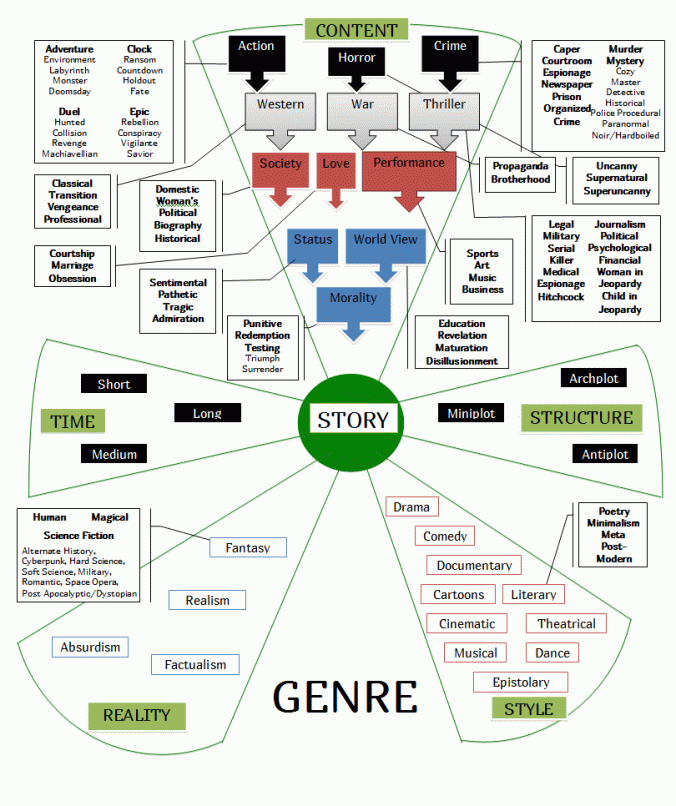

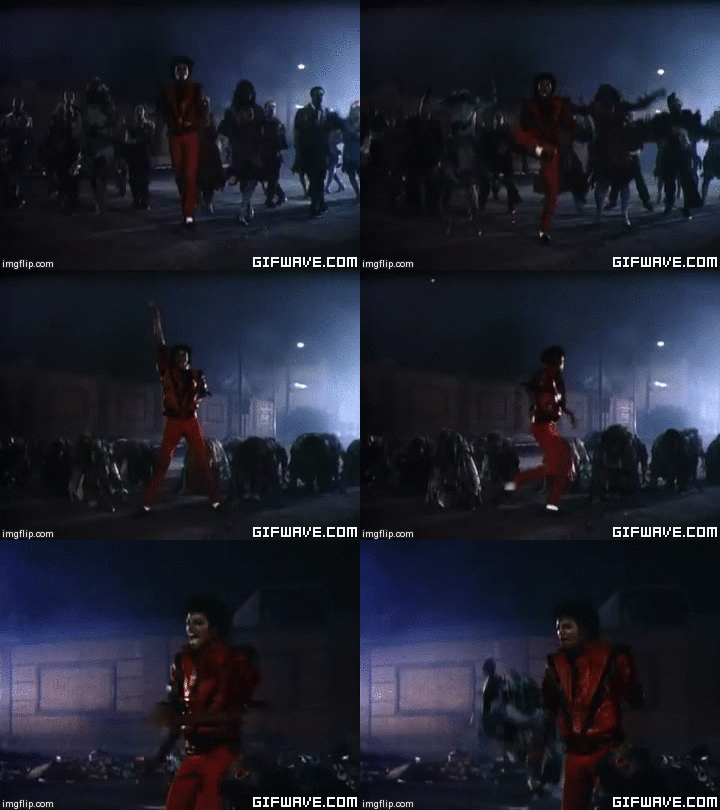 The thriller genre is a mashup of horror, action, and crime. Writing Excuses described the difference between a mystery and a thriller as whether or not the reader knows who the bad guy is and what they’re up to. In a mystery the driving force to turn the page is curiosity. In a thriller, it’s dread. You know what’s coming, the protagonist doesn’t. Like horror, thrillers often go beyond life and death to fates worse than. But a thriller also tends to be a bit more grounded than horror. The villains a bit less like Voldemort and more like Umbridge. He’s out of this world horrifying, she’s the evil you know. Thrillers tend to be more character driven than an action novel because when the stakes are personal (i.e not a bus full of screaming children) and worse than death, you have to care whether the protagonist lives or dies.
 Kaitlin Bevis