
Thursday Review: The Mistborn Trilogy by Brandon Sanderson

20130530-230550.jpg

I won this trilogy at a conference in February, and am SO glad I read them. Here’s the blurb to book 1.

Brandon Sanderson, fantasy’s newest master tale spinner, author of the acclaimed debut Elantris, dares to turn a genre on its head by asking a simple question: What if the hero of prophecy fails? What kind of world results when the Dark Lord is in charge? The answer will be found in the Mistborn Trilogy, a saga of surprises and magical martial-arts action that begins in Mistborn.

For a thousand years the ash fell and no flowers bloomed. For a thousand years the Skaa slaved in misery and lived in fear. For a thousand years the Lord Ruler, the “Sliver of Infinity,” reigned with absolute power and ultimate terror, divinely invincible. Then, when hope was so long lost that not even its memory remained, a terribly scarred, heart-broken half-Skaa rediscovered it in the depths of the Lord Ruler’s most hellish prison. Kelsier “snapped” and found in himself the powers of a Mistborn. A brilliant thief and natural leader, he turned his talents to the ultimate caper, with the Lord Ruler himself as the mark.

Kelsier recruited the underworld’s elite, the smartest and most trustworthy allomancers, each of whom shares one of his many powers, and all of whom relish a high-stakes challenge. Only then does he reveal his ultimate dream, not just the greatest heist in history, but the downfall of the divine despot.

But even with the best criminal crew ever assembled, Kel’s plan looks more like the ultimate long shot, until luck brings a ragged girl named Vin into his life. Like him, she’s a half-Skaa orphan, but she’s lived a much harsher life. Vin has learned to expect betrayal from everyone she meets, and gotten it. She will have to learn to trust, if Kel is to help her master powers of which she never dreamed.

Readers of Elantris thought they’d discovered someone special in Brandon Sanderson. Mistborn proves they were right.(

My thoughts:
Brandon Sanderson created an entirely unique fantasy world that uses metals and allomancy instead of sword and sorcery. A reviewer on goodreads summarized allomancy better than I can (I ramble) here goes:
“Speaking of the magic that was probably the most intriguing part of the book for those who have read a lot of fantasy and get the same magic systems over and over. Magic is fueled by trace minerals that are ingested by those with the power. A Misted can only ingest one type of metal but a Mistborn can take as many trace minerals as desired (there are a standard 8 with some surprises). Mistborn are rare even in the nobility and as a result are highly prized by the powerful”

The plot had so many twists and turns that I felt out of breath when I finished. I took a LONG break between book two and three because I knew once I picked book three up, I wouldn’t be able to put it down.

I loved the people in his world, and the ending was perfect. I could almost hear Kelsier saying “there’s always another secret” as I turned the last page. Even little inconsistencies I’d picked up on through the series (how would super enhanced eye sight help you see through mist exactly?) were answered. I will admit that I saw the end coming for books two and three, but knowing it was coming only made me more anxious to get there. It was great anticipation. I really enjoyed these books, and I think most of my readers would really enjoy it too.

Mythology Monday: Hercules’ labors 1-3

20130604-135308.jpg

Mad with grief, Hercules took the Oracle of Delphi’s advice to perform 10 impossible tasks for King Eurysteus. He was tricked into doing the last two. In return for completing the labors, his sins would be forgiven and he would be granted immortality.

*side note: most of the monsters in these myths were the children of the Titans Typhon and Echidna)

The first task (order varies depending on who writes the myth) was to slay the Nemean Lion. It had golden super-fur/body armor that could not be cut with any weapon. It also had claws sharp enough to shred metal. Sometimes the lion could shape shift into a beautiful woman and would feign injury, drawing in the would be heroes and then shifting into a lion and killing them.

Hercules blocked the exit of the lion’s cave and then either strangled the lion, or shot it with in an arrow in its mouth. He ran into a problem when he tried to skin the lion because nothing could cut its fur. Finally, Athena took pity on him and pointed out the lions claws were rather sharp, so Hercules used them to skin the lion.

This skin became his cloak/armor.

Next, Hercules sent to kill the hydra. You guys know this one, it had nine (or three, or a thousand) heads and every time you chopped off one, three (or two) more grew in its place. Remember, myths varied by who told them (hence the parenthesis). The hydra’s breath and blood were poisonous and the reptilian creature lived in a lake that sat above an entrance to the Underworld.

Hercules shot flaming arrows at the creature, but that just pissed it off. He may or may not have beat it with his club, stabbed it with his sword, or cut off several heads with a sickle. Whatever weapon he used, it soon became apparent that more heads grew every time he chopped one off. Unfortunately, the hydra couldn’t die so long as it had one head.

Hercules may have asked Iolaus or Athena for aid, and came up with the brilliant idea of cauterizing the wounds before more heads could grow. He either used fire or the creatures own blood dipped on his sword to cauterize the wound. Then he used the creatures blood to turn all his cool weapons into cool poisonous weapons.

Sadly, in killing the hydra, Hercules rendered that river uninhabitable. All the fish died and the nearby villagers either starved or moved.

The last labor I’m covering today was for Hercules to obtain a doe belonging to Artemis. It had golden antlers and bronze and brass hooves. It could outrun even the swiftest of arrows. Hercules chased it across Greece for a full year. Eventually he trapped it a. while it was sleeping, b. with a net, or c. with an arrow shot between its legs, tripping it. He apologized to Artemis and promised to return the doe once he showed it to the King. Artemis didn’t hold a grudge, ruining Hera’s plot to anger the goddess.

When Hercules showed the deer to the King, he wanted to add it to his collection of woodland creatures, but he was unable to keep up with the deer, so it escaped and returned to Artemis.

Over the next few weeks we’ll cover the rest of Hercules’ labors and other tasks. I promise we will get back to general mythology soon.

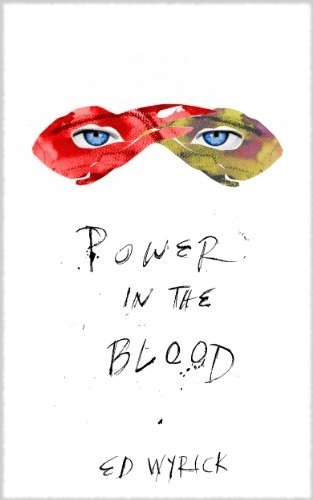
Thursday Review: Power in the Blood

20130515-192236.jpg

Hollywood movie star Lawton Fletcher has come to tiny Warrendale, Georgia, with plans to buy the entire town. Instead, when attorney Tammi Randall and her friend Mitch Griffeth arrive to keep an appointment with Fletcher, they find him shot to death. To the police, the obvious culprit is Freddy Meadows, a local man known to be violent. Tammi is less than impressed by the unappealing Meadows, but believing he is innocent, she agrees to represent him on behalf of the Legal Aid Society. Investigating Fletcher’s background for other possible suspects, Tammi travels to the fleshpots of Los Angeles and New Orleans, but the clues she finds lead her back to Georgia. There, the young lawyer and her friends uncover corruption among government officials and an ever-widening list of suspects, including Warrendale’s police chief, the sheriff, the county commissioner, a Dixie Mafia king-pin, a Satan-worshiping teenager, and a migrant worker. Is the handsome young Warrendale heir among them? She very much hopes not. Tammi desperately needs to find the one among them who actually killed Lawton Fletcher–and learn whether it’s the same person making death threats to her.

My thoughts:

A very entertaining read with a mystery that kept me guessing. The book was also unexpectedly funny. I’m not used to so much humor popping up in mysteries, but it really worked. I found myself laughing out loud in a lot of places. There was a character who did impressions that, handled by any other author, would have been too much, but Wyrick made it work. The title had me worrying there would be major religious overtones (nothing against religious overtones, just started more than one book that had a great plot devolve into a long sermon) but that really wasn’t a factor. Great read.

Mythology Monday: Young Hercules

20130528-211844.jpg

Hercules wasn’t originally named Hercules. His original name was Alcides. Once his adoptive parents realized Hera wanted to kill him, they renamed him Heracles (Greek version of Hercules, the original) to try to appease her.

It didn’t work.

Young Hercules was a jerk. He had a music teacher, Linus, brother to Orpheus and son of Apollo and the muse Calliope, who created basic musical concepts like melody, and rhythm. Unfortunately, he made mistake of correcting his student.

So Hercules took Linus’ lyre and bashed his head in, ending the life of a brilliant musician in one petulant tantrum. Seeing Hercules was a budding psychopath, his foster father-uncle sent him to the fields where the only things he could hurt were sheep.

Hercules was then visited by two nymphs. Pleasure and Virtue, they offered him a choice between an easy life full of pleasure, or a hard life full of glory. In a rapid character 180, Hercules, the kid who just killed someone for correcting his music, you know, making him work harder to be better, decided that the hard life would pay off.

Hercules traveled to Thebes where he slew an entire army single-handed. He was rewarded by being given King Creon’s oldest daughter, Megara. The two lived a happy life, and had two children before Hera drove Hercules nuts and made him kill his children, and in some versions his wife. In other versions of the myth, Megara was given to Iolas. Hercules’ nephew, and then they had a kid.

Sane again, then driven newly mad with guilt, Hercules fled to the Oracle of Delphi and begged for atonement. She (working for Hera) sent him on a quest that would involve twelve labors. We’ll cover those in the next mythology Monday.

Thursday Review: Ever After by Kim Harrison

20130504-194344.jpg

The ever after, the demonic realm that parallels the human world, is shrinking. If it disappears completely, so does all magic. It’s up to witch-turned-daywalking-demon Rachel Morgan to avert catastrophe and keep life from changing… for the worse.

While saving the world is important, it isn’t Rachel’s only motivation. There’s also the small fact that she caused the ley line to rip in the first place, setting off a chain reaction of unfortunate events. That little mistake has made her life forfeit unless she can fix it. It’s also made her more than a few enemies, including the most powerful demon in the ever after—a terrifying entity who eats souls and now has an insatiable appetite for her. He’s already kidnapped her friend and goddaughter to lure her out, and if Rachel doesn’t give herself up soon, they’ll die.

But Rachel has more than a few impressive and frightening skills of her own, and she isn’t going to hand over her soul and her life without one hell of a fight. She’s also got a surprise: elven tycoon Trent Kalamack. With this unlikely ally beside her—a prospect both thrilling and unnerving—she’s going to return to the ever after, kick some demon butt, rescue her loved ones… and prevent an apocalypse before it’s too late. Or, at least that’s the plan…

My Review: I LOVED it! Love love love this whole series. I really love the slow reveals of this series. Rereading book one after this made me realize how much this world and all the characters in it have grown in such a realistic way. This book was nonstop action and I absolutely couldn’t put it own. Once again, I can’t wait for the next one.

Mythology Monday: Hercules

20130513-190907.jpg

Hercules/Heracles (Greek name) is bar none the most famous demigod. He’s had Disney movies, television shows, and look, there’s Kevin Sorbo and my daughter at Dragon Con 🙂
The Greek myths surrounding this legend are numerous, so I’ll be dedicating a few Mythology Monday’s to him. Let’s start with his birth.

Hercules, the Greek version (technically Heracles) was the son of Zeus and Alcmene, granddaughter to Perseus and Andromeda which means that Hercules was descended from Zeus twice.

She was happily married to Amphitryon, so Zeus disguised himself as her husband while he was away and they conceived Hercules. Tireseas the prophet told her husband what happened and by some accounts she was exiled. (Interesting note, her second husband was Rhadamanthus who later became one of Hades’ judges). Another version of the myth has her coming home the same night Zeus left, and conceiving two children that night, Hercules with Zeus, and Iphocles with her husband.

Hera tried to prevent Hercules from being born by having the goddess of childbirth hold up the delivery, but Galanthis, a maid, stopped her and got turned into a weasel. The delay cheated Hercules out of a kingdom as the gods had promised the next-born descendent of Perseus would be king. While Eileithyia (goddess of childbirth) was delaying the delivery with Alcmene, Hera caused another descended of Perseus to be born two months premature and he was crowned King instead

In some versions of the myth, Alcmene abandoned Hercules to the elements because she feared Hera’s wrath. Athena, protectress of divine children scooped him up and brought him to Hera. Hera, not realizing the child was Hercules nursed him so he wouldn’t die. There was a breastfeeding mishap, and the spilled milk formed to milky way. The milk gave him extra super powers, and he was returned to his mother.

When he was eight months old, Hera sent snakes to kill him, but Hercules strangled the snakes.

Alceme later died in Megara (yes you read that right) and Hercules, born Alcaeus, was adopted by Amphitryon, Perseus’ other grandson.

Tune in next week for even more about Hercules!

Winner: Rachel

Random number generator chose Rachel as the winner of the mythology blog hop. Thank all of you so much for commenting, and keep an eye on my blog for future contests.

Thursday Review: When it Happens to You by Molly Ringwald

20130504-192920.jpg

When it happens to you, you will be surprised. That thing they say about how you knew all the time, but just weren’t facing it? That might be the case, but nevertheless, there you will be.

Molly Ringwald mines the complexities of modern relationships in this gripping and nuanced collection of interlinked stories. Writing with a deep compassion for human imperfection, Ringwald follows a Los Angeles family and their friends and neighbors while they negotiate the hazardous terrain of everyday life–revealing the deceptions, heartbreak, and vulnerability familiar to us all.

In “The Harvest Moon,” a stay-at-home mom grapples with age, infertility, and an increasingly distant husband. In “Ursa Minor,” a former children’s television star tries to rebuild his life after being hospitalized for “exhaustion.” An elderly woman mourns the loss of her husband and her estranged relationship with her daughter in “The Little One.” In “My Olivia,” a single mother finds untapped reserves of strength to protect her flamboyant six-year-old son who wishes only to wear dresses and be addressed as Olivia. And in the devastating title story, a betrayed wife chronicles her pain and alienation, leading to an eviscerating denouement.

My review:

As the lives of these characters converge and diverge in unexpected ways, Ringwald reveals a startling eye for the universality of loss, love, and the search for connection. An unflinching yet poignant examination of the intricacies of the human heart, When It Happens to You is an auspicious literary debut.

This was a book club book from my Mom’s group, so it wasn’t my typical read. I enjoyed it enough. My favorite story was “My Olivia.” I’ve found I really enjoy reading about children or young adults struggling with gender identity. Ringwald handles the story with sympathy and tact, I didn’t feel like she was pushing an agenda but exploring the life of a very three dimensional set of characters. Another great read along the same lines is

    Jack

      by Adrienne Wilder. Fantastic book. This was an interesting read but I don’t see myself reading it again and again.

Spoiler Warning! This whole post is a spoiler if you haven’t read Iron Queen

So I had a great question from a reader last night, and judging by the crickets when I put the question on facebook to get reader opinions, a lot of people were wondering the same thing.

Here’s the question:

@AmandaLeannW: @KaitlinBevis I have a question for you about the ending of Hades last POV chapter in the Iron Queen, what’s he mean “what isn’t?”

Hades and Persephone come out of the events of this book in very different mental places. Persephone is in a place of strength. Her world has been rocked by all the events, no question, and she’s upset at how everything turned out, but she has confidence in herself, her identity, and her ability to handle anything life might throw at her next.

It’s really easy to focus on what Persephone’s been through, or even what Aphrodite’s been through. They aren’t quiet about it. But Hades plays it closet to the vest. So it’s easy to forget what he’s been through.

Hades HAD that confidence Persephone just found. But it’s been shattered In the last two years (in no particular order), he….
– fell in love with Persephone, the teenage daughter of another realm ruler
– his realm has been broken into by not one, but two demigods
– a teenage girl slipped past his security and left his realm
– his most trusted advisor/best friend betrayed him, leading Hades to kill his best friend but only after his wife went through all kinds of pain because of his insistence to use Reapers to guard her
– the man he hates most in the world that he thought was in his realm wasn’t, instead he was out, charming then abducting his wife, when Hades came to her rescue she ended up taking a knife meant for him that was made out of literally the only material in the universe that could kill a god.
– He saved her, but only by ripping her arm off while she screamed for him to stop.
-His second best friend kept vital information from him
– Demeter, a woman he kind of idolized/respected for keeping the gods sane and together before the rebellion, died.
– Persephone killed Zeus.
– He was honestly about to trap Artemis in the Underworld to trap Zeus, but he got away
– he missed the fact that Persephone hadn’t actually escaped Zeus’ realm, and gave her information that led Zeus to Apollo, nearly killed Aphrodite, Ares, Hephaestus, Demeter, Melissa, Artemis, and Ryan.
– missed the fact that Triton was in his realm (thanks to Cassandra)
– during that chat with Cassandra, he realized that he’s sat by and watched (if not directly participated) horrible things happen to people.

I’m sure I’m missing other traumatic stuff thats happened, but Hades is in a dark place. He’s feeling incompetent, and responsible for everything bad that happened. Persephone is back, so he is happy about that, but he can’t get past the feeling that everything that happened is his fault. He looks at her and sees all the ways he’s failed. He also worries that maybe the reason she’s been through so much is a price to pay for all the bad things he’s done. The scene is reminiscent of the dream he had where every time he touched Persephone it hurt her, only instead of her being hurt, he literally put blood on her hands. He’s worried his darkness is rubbing off on her, that he’s going to end up destroying her.

That self-doubt\trauma is going to reverberate through the next few books. Make no mistake, he loves Persephone, and he’s not planning on letting her go, he’s very happy with her. But there is a LOT wrong and the two of them are going to have to work through it.

*blinks at the list of what Hades has gone through.* Good lord, I’m sadistic.

Mythology Blog Hop: Persephone


20130528-164644.jpg

My favorite goddess is, of course, Persephone. Though Aphrodite is growing on me. So, giveaway time, in honor of this blog hop. Comment the answers below for a chance to win an ecopy of Persephone, or any other books I have written. I’ll choose a random winner and announce it on June 9th.

*Myths were passed on and adapted through oral retellings through multiple cultures, and retold by a variety of authors. Homer, Ovid, Virgil and many other classical writers each put their own spin on the myths to suite their stories, just as I altered the myths to fit the plot of Persephone. I pulled from a variety of sources, combining the elements of multiple versions, so please be aware that the myths you read below are by no means the “official” or definitive versions of the myth. If you hear or read an alternate version somewhere else it is not wrong or inaccurate. It is simply a different telling.

The rape of Persephone:

Kore, the goddess of Spring, was a beautiful goddess and would have had many suiters had her mother, Demeter, goddess of agriculture, not kept her hidden away from the other gods. One day Kore went to a meadow to pick narcissus flowers, lilacs, poppies, or some other flower depending on the source with some nymphs when Hades, God of the Underworld spots her and decides he wants her for his wife. He bursts through the earth (in some versions, Gaia, goddess of Earth assists him) in his creepy black chariot of death, and drags Kore into the Underworld. After her rape/marriage, Kore becomes known as Persephone, the Queen of the Underworld.

Demeter, goddess of Agriculture and Persephone’s mother, searches frantically for her daughter, neglecting her duties as a goddess and plunging the earth into famine. Helios, god of the sun, or in some versions Persephone’s nymph friends, tell Demeter what happened and she begs Zeus to rescue her daughter.

At first Zeus tells Demeter she should be pleased to have such a high ranking son in law, but eventually relents since too many people are starving to worship him properly, and sends Hermes to liberate Persephone so long as she has not consumed food or drink in he Underworld.

Meanwhile, Persephone is tricked into eating 3-7(depending on the version) pomegranate seeds by the god Ascalapus, Hades’ gardener. He is turned into a screech owl in retribution for his crime, and Persephone is forced to return to the Underworld for a month every year for each seed she ate. While she is home with her mother, plants grow, but during her time in the Underworld every year they die. This myth is considered an explanation for winter.

Changing a gods name to reflect a change in their divine role was not uncommon. In Persephone’s case she doesn’t even get a name until she’s important. Kore translated to girl, or maiden.
Persephone has a variety of other names and titles within her cult the Eleusinian Mysteries.

The pomegranate is known as the fruit of the dead as well as a symbol for fertility, and thanks to the little crown on the top of a pomegranate is a symbol of royalty. So it’s easy to see why it was chosen as symbol in the Persephone myth. You’ve got royalty for the new Queen of Spring/fertility of the dead. When you cut it open is naturally divided into three to six sections depending on the fruit. It is full of tiny little seeds covered in a blood red juice.

While the Persephone myth is the most well known example of using a Pomegranate for symbolism, way back when, this weird little fruit found its way into a variety of stories across cultures.

The flower chosen in the myth kind of sets the tone for the whole story. The narcissus flower for instance is commonly seen as a phallic symbol, and a symbol of unrequited love, and as a portent for death, so you’ve got some foreshadowing, and loss of innocence going there. Other flowers symbolize different things that the story teller may be trying to get across.

In my version of the story Hades was actually rescuing Persephone. The idea that Hades may not have been the bad guy has been toyed with in popular culture throughout my entire life (Beauty and the Beast anyone?) so it’s logical, and certainly not original, to consider that Hades may have just been misunderstood.

That myth has never really vanished or fallen out of fashion. It resonates with us for some reason. If you studied any mythology at all in school, you learned the Persephone myth. I think part of it is if you take the myth at face value, it’s unspeakable, so we want to fix this poor girls fate. But another part of it is that it seems incomplete. In most myths you get a bit of characterization. Zeus’s personality and wants and needs come across crystal clear in every single myth he’s a part of. Hades and Persephone both are ambiguous in this myth. Instead we learn a lot about Demeter, and her devotion as a mother. I wanted to know what happened down there. So I wrote my own version.

So my questions:

Why did Persephone’s name change?

Why a pomegranate?

Why did I change the myth?