Writing on Wednesday: Three Things I Learned During Edits

For the past few months I’ve been in the editing process for Aphrodite. Edits happen in several stages. There’s content edits, which looks at global issues like plot, sub plot, character development, and pacing. There’s line edits, which keeps those in mind, but mostly looks at things like consistency. The character had green eyes here, blue here. She picked up a cup twice, she walked in the door all ready.

Then there’s copy edits. Copy edits are the nitpicks. Mostly it focuses on grammatical stuff. Is this comma in a right place, did you capitalize your random special magic words consistently, ect.

Most of the time, the books go through each set of edits twice, with the second time being a review of the changes made or questioned. Every time I have a book sent through edits I learn something new. Here are three things I learned this time.

  1. Pointed out and realized are not dialogue tags. Which basically means I can say “Pointing out some random detail.” She pointed out. Not “Pointing out some random detail,” she pointed out.
  2. Editors hate the word like,preferring instead to use the phrase “as if.” Most of the time they leave dialogue alone because it’s less formal, but not always. So avoid it when you can, and be prepared to defend it when you use it.
  3. It is really humbling how many major errors you can miss. Before my book even makes it to my publisher, I’ve taken 2-3 drafts of it through my writers group in 5,000 word chunks. THEN I send the whole thing to a friend who content edits for a living, THEN I send it to a friend who copy edits for a living. THEN I give it to the publisher where it’s run through the gauntlet of edits. I’m thorough when it comes to editing. I don’t just go through and accept changes blindly. I try to learn from my mistakes. After I take the time to review, analyze, and understand each change, I go through and read my story out loud, generally to someone, to check for errors I might have missed. I have a system. Before turning in content edits, I put the whole manuscript through my writers group to make sure none of the global changes I made contradict or slow the pacing. This, I hope, saves my editor some time. Before I turn in line edits, I do a run through of the audio book, before I turn in copy edits, I read the story out loud to my amazing husband. Page proofs, I read to myself and send to a friend or two for a beta read (these aren’t edits, it’s catching things like when formatting leaves a word off). There is a whole team of people staring at/listening to every single word of my book, and I’ll still get all the way to copy edits and find glaring errors I never should have missed. Technically I learn this lesson every time, but it’s still shocking to me.

Edits are a special kind of torture. I love them, I really do. I’d edit all day long to procrastinate on writing something new. Editing takes words on a page and makes them BETTER. It’s a thousand times easier than coming up with entire chapters worth of new words. But it’s still tedious and it’s still really hard not to get defensive when you’re staring at a document that’s hemorrhaging tracked changes. It’s so worth it though. And I’m always so unbelievably impressed with how thorough my editors are. They’re amazing. I could never do their job.


Motifs and The Croods

Welcome back to movie Monday! We’ve talked a bit about plot and soon we’ll get into different plot structures. We’ve also talked a bit about characters and their development. But today we’re going to talk about something a bit more subtle.

Motifs. A Motifs is a recurring symbol that links to the theme of a work. Let’s back up there and talk about symbols.

In a story, a symbol is basically an object that has deeper meaning than itself. For instance, in many stories light is just light. It may be darkened or lightened to match mood, just like different objects may be swapped out to establish settings (swords instead of guns to indicate time period for instance) but in many cases light simply acts as light.

Light is often used as a symbol. When shadows overtake the land, it’s often a symbol of evil conquering. When a candle is snuffed out, it’s often a symbol of death. Sunset is often a symbol of old age or endings and sunrise of youth and beginnings. Light doesn’t become a motif until it’s used repeatedly in the story as a symbol for the same thing. The best, absolute best example of this in animation is in Dreamwork’s The Croods.

Light is a symbol for growth and innovation in the Croods, darkness for stagnation, death by standing still. Literally every use of light in the film is intentional and it’s always used to mean the same thing.

Their cave is dark, the closer they get to the cave, the narrower the light grows. The further they go from the cave, the brighter the landscape. Even night is more illuminated away from the canyon/cave area.  When they leave their home, they fall through a shaft of light.

Eep chases the light, craves it. Grug hides from it, fears it. Guy brings light, and with it change. His parent’s last words were “follow the sun, and you’ll make it to tomorrow.”

Also the saddest thing I’ve ever heard because he took tomorrow to mean a place when what they were actually telling him was that he’d LIVE to tomorrow. But tomorrow as a place made for a beautiful quest arc, so I also love it.

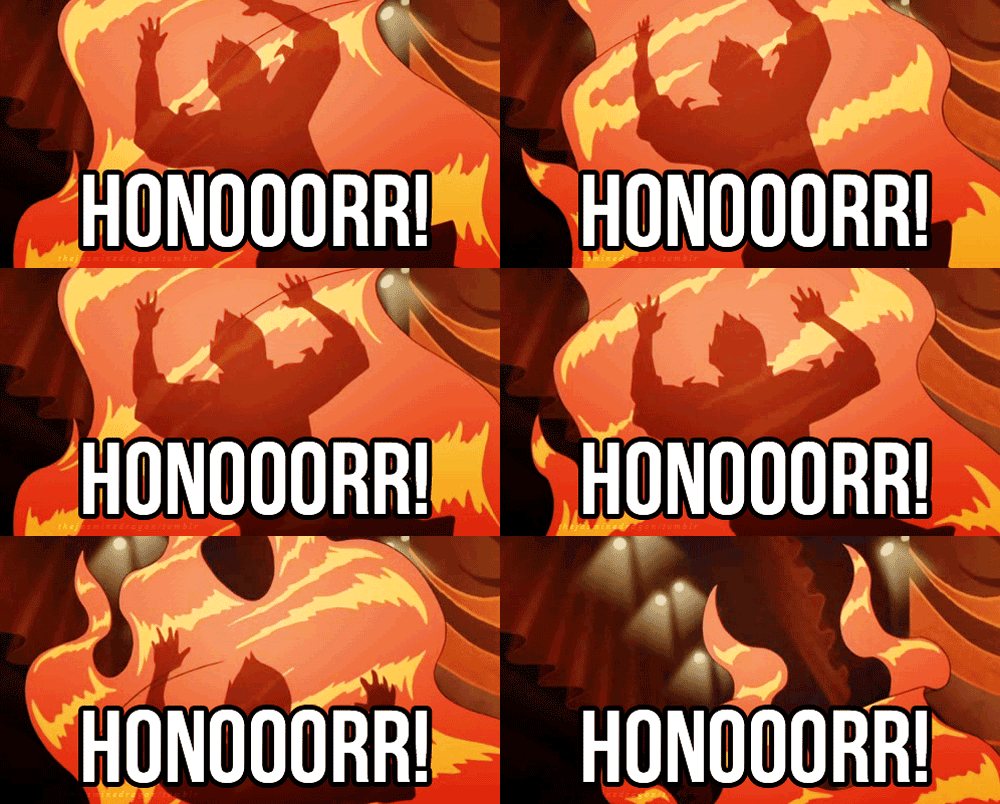
He tells stories about a tiger (symbolically Eep) riding on the sun to tomorrow. That majorly plays into the ending. Embers and light and hands dancing in shafts of sun are images that keep coming back throughout the movie. I mean look at all of this.

You can’t go thirty seconds in that movie without seeing light acting as a symbol that supports the theme. They did an incredible job (and missed out on a major opportunity by not having the ending credit songs be that “Follow the day and reach for the sun” song). I maintain the ending would be a thousand times stronger if it had ended during this scene and the narrative would have been stronger.

And if at any points any of the characters acknowledged that Grug kept them alive for decades and they wouldn’t have gotten to a place where they could grow/change without him. Just as light needs darkness to shine, innovation needs a foundation on which to grow.

tumblr_inline_mj05cembnn1qdei8m

What are left-overs?  Something much easier to come by when you’re only responsible for feeding yourself and not a family of six.

But what can you do?


For Real Friday: Gas Stations and Shopping Carts

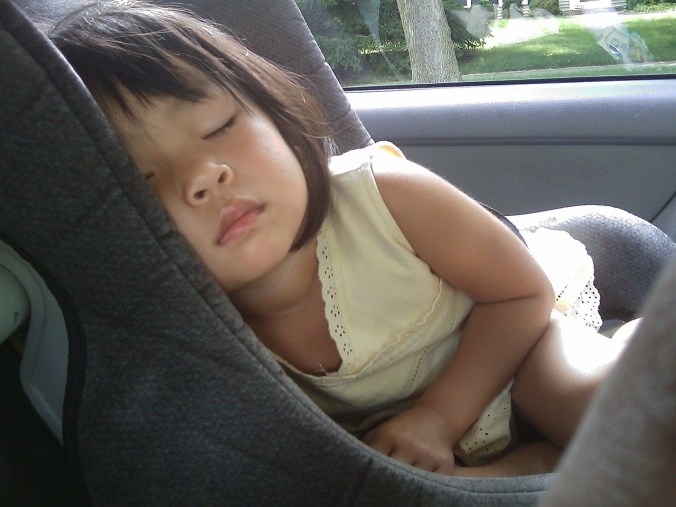
child-85321_1280

not my child, photo credit from pixabay

So I had a thing happen the other day. I was at the gas station and prepaid. There was no line, took all of two seconds to walk in, hand my money to the cashier, and walk out. Or it would of. If I hadn’t had to get my daughter out of the car, walk her in to the store full of candy, pay, walk her out, have a heart attack when she narrowly being missed getting hit by a truck rushing through the parking lot, and buckle her back in before pumping gas.

I didn’t do it for her safety. I did it for mine. And when a police officer pulled into the parking lot, I went, oh, thank goodness I didn’t leave her in the car, because people have literally been arrested for leaving achild in the car for an observed time of two minutes on a cool day. 

It’s a mental debate I have with myself every time I take the grocery cart from my car to the cart return. “Should I bring her? But people are backing out, pulling it, it’s so dangerous. If I don’t, am I going to lose her?”

Let’s be clear, I’m not talking extreme heat. I’m not talking about extreme cold. I’m not talking about walking into a store, searching the aisles and checking out. I’m so sick of these “Awareness”campaigns and slanted statistics creating this massive danger where there’s not one. I’m tired of literally putting my child’s life in more danger than she would have been in in the car to protect her from an imaginary threat that has almost no chance of happening if any logic is used whatsoever.

“Oh, but Kaitlin, I heard from a friend of a friend of a friend that one time someone jumped into one of those cars and drove off, not realizing there was a child in the backseat.”

Yeah, you know whose fault that is? THE PERSON WHO STOLE THE CAR. And by the way, that completely fictitious scenario has only a .0002% change of happening at all, ever.

If that is parental neglect, so is letting your child sleep in their own bedroom because a home invader COULD come and kill them while they sleep but bypass your room completely. It’s possible. It’s happened before in the entire history of the world (actually it happens a lot more frequently than children die from getting left in a car. Just sayin’).

Let’s break down the statistics. About 24 children died last year from being left in the car.

“Wow, those horrible parents,” you might be thinking. Not so fast.


Only four of those children were intentionally left in the car. 13 Were left in the car by accident.

HOW CAN YOU FORGET YOUR CHILD IN THE CAR?

Easily. Every driven somewhere and realized you can’t remember the drive? Driving has a way of making people zone out. There’s science behind it but I’m too lazy to look it up. But here’s what happens.

Mom or Dad drove past the daycare on autopilot. When they got to work they walked right in because they remembered dropping their kid off at daycare. They didn’t realize they were remembering yesterday. The same thing happened to them that happens to non-parents all the time. They left point a, arrived at point b, and somewhere in the middle spaced out and don’t remember the drive. Mom or Dad drives back to daycare at the end of the day to pick up their kid, and only when they realize their child isn’t at daycare do they remember they are in the car. The child died hours ago. It’s horrible, it’s tragic, it was a mistake. And I promise, nothing you can do to those parents will touch them inside because they will carry the guilt with them forever.

What should we outlaw? Oh, oh! I know! We should make it illegal to get out of your car without checking the backseat. Any parent seen getting out of their car without looking in the backseat will be fined or thrown in jail for neglect. That’s reasonable, right?

Wait, no, it’s ridiculous.

Seven of those children weren’t left in the car at all. They snuck in. Yup. That’s a thing. Kids want to play taxi driver, so while mom is in the shower, they grab the car keys and run to play with the steering wheel. Sometimes they accidentally turn on the car in their garage. Sometimes it’s a million degrees. Sometimes they get in but can’t figure out how to get themselves out. Should we outlaw showers? Car keys? Cars in general?

Compared to the number of children who died because they were shot (555 in 2015) or in car accidents (THE leading cause of death for children in the US  so why not outlaw cars? That’s reasonable, right? ) it’s not much.

“One death is too many Kaitlin.”

True, so let’s not compare apples and oranges.

How many children were hit by cars in 2015, like how I’m scared of my daughter getting backed over in a parking lot? 44.

Oh, well, thats not so–

A day.

Oh.

The entire debate is ridiculous and I really don’t get why our society gets off on keeping parents chained to their children 24/7 and blaming parents for absolutely every potential thing that could ever go wrong, ever. Our world is not more dangerous now than it once was. Statistically, it’s actually less. So can we give parents some breathing room here? Not much. Just enough to return their grocery carts without the very real possibility their child will be traumatized by being sent to a foster home for months on end while the legal system tries to determine whether or not the kid was in danger? It’s not much to ask.


Writing on Wednesday: Sneak Peek

Enjoy this incredibly, super rough draft of a scene that MAY open one of the books in the Daughters of Zeus series. Disclaimer. It is very rough. It may change or disappear completely. Also, this scene links three entirely different myths that are not actually linked in mythology. Do not count on this to be an accurate representation of the Pandora myth.

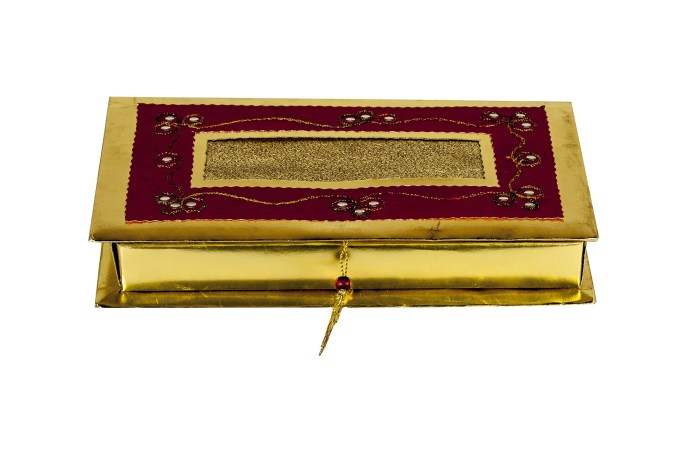
gift-880145_1920

Pandora was the box. The myths always get that part wrong. When the mortals overstepped and stole fire from the God-King’s domain, Zeus molded the perfect woman out of clay and breathed, not a soul into the woman’s small frame, but something darker. Ingredients to break mankind.

“She looks like us,” Ares said in surprise when he set eyes on the first mortal woman. “Mostly.”

At the time, the human body held an entire soul, two heads, four arms, and four legs. They were complete and perfect beings. However, perfection did not bring them satisfaction. The human drive to always do more, have more, be more, left them hungry for more. Already they had stolen the fire of knowledge from the gods. Now they longed for Ichor and the secrets of immortality.

“This is the only way?” Artemis asked, glancing at the woman with unease. “Are you certain?”

“I’ve seen it,” Apollo replied. “The mortals current path will destroy us all, god and man alike.”

Resolved, all the gods of Olympus came forward to contribute to Pandora’s creation. Athena taught her wisdom, Hephaestus curiosity, Ares passion, and Artemis strength. As her lessons progressed, Pandora’s love for all but one of the gods grew.

Zeus frightened her. She saw the way he treated his children and it was not with kindness. So when he sent her to live among traitorous gods and men alike, she resisted.

“You’re asking me to infiltrate, to spy, to destroy,” she protested. “There must be another way. Please, don’t make me do this. Don’t send me to them.”

“You were made for this,” the God King decreed.

Eventually her love for the gods prevailed. She loved Zeus’ children and knew that if men no longer had need of the gods, the gods would soon die for want of worship.

Love makes monsters of us all.

The humans regarded Pandora as a curiosity, as she did not resemble them. Little did they know they were looking upon their future. The humans were kind to Pandora. She grew to love their company, but sensing their nature found she could not entirely dismiss Zeus’ plan. She broke off pieces of her not-soul and sowed them among mankind. But all her attempts to cause division within the human soul were met with failure. They were too complete, too content, too perfect in their formation to bend and break to the plagues, cold, and darkness.

The traitorous gods on the other hand were more amenable to distraction. Pandora was too much like the goddesses the brothers left behind on Olympus to ignore. Devoted though they were to the cause of man, they still longed for home. Epimetheus resisted her charms not at all, Prometheus for little longer. The brothers fell to infighting, and when, nine months past and the first demigods were born, chaos swept across the land.

The children only held half a soul, yet for all their inadequacies, the humans could not help but love them, could not help but want them, could not wish but to be them. Here was the answer they’d been waiting for. A single, golden step between the mortal and divine. First one soul, then another rent in two and remade themselves in the semidivine children’s image.

But instead of becoming stronger, the humans became weak. The worst traits amplified, their best halved. They spread across the globe, intent on consuming more and ever more. By the time they realized their mistake, they could no longer find the missing pieces of their souls.

Her grim mission complete, Pandora returned to her Olympian home, eager to be reunited with her gods.

But Zeus did not welcome her back to Olympus.

“Where am I to go?” she demanded, heartbroken.

“Live among men or throw yourself off this mountain for all I care. You’ve outlived your usefulness.”

Unsurprised, Pandora took her box and left. It did not take long for Ares to find her.

“Did you know what would become of us?” he asked, already wearied of his new role of war god.

“When their souls split, your role expanded to include the dark sides of your gift,” Pandora replied. “Man must always need you if you’ve any hope of surviving. There’s a price to balance.”

Ares shook his head, staring down the mountain as if his gaze could pierce the fog so he could see the battle and bloodshed below. “This is no kind of balance.”

“It will be.” Pandora drew Ares to her and whispered the last piece of her soul into his ear. A single word that had never before been uttered.

“Why me?” he asked, voice hoarse.

“You’ll need it more than anyone.”


Te Last Airbender and Character Arcs

The TV series Avatar: The Last Airbender was an exercise in character development. Every.Single.Character in that show was ridiculously thoroughly developed, had incredible arcs, and memorable character traits. They had distinct voices, personalities, and motives.

tumblr_m1tu46qcvb1qk1ysz

Step one in creating a character arc is to create a distinct character. Take Zuko for example. He’s immediately distinct due to his physical scars and angry personality. Not a word of his dialogue would sound natural coming from the mouth of another character.

Step two to a great arc is to add depth. This is most often achieved through weaknesses, flaws, and motivation. Zuko’s flaws seem obvious at first glance. He’s a bad guy. He’s impulsive. He’s got an attitude problem and a temper, he’s an ungrateful brat to his uncle, and he’s obsessed with honor and his duty as prince of the fire nation. He’s a perfect foil for Aang who is calm in matters of temper, happy, well mannered, on the side of good, and terrified of being forced to do his duty. Opening scene Zuko wants nothing more to be prince, opening scene Aang wants nothing less than to be Avatar. One is exiled from his role and has no other goal but to return to it. The other is actively running away.

tumblr_mbk2rjyhpc1qehejt

Each scene Zukko is in chips away at his exterior to reveal what he’s like inside and to reveal his backstory. He’s a victim of abuse, he’s afraid, he’s desperate to regain his honor, not for himself, but because he thinks if he’s just good enough his family will accept him. The writers gave him very concrete, very universal motivations so viewers, while frowning at his methods, can’t help but feel sorry for him.

tumblr_m6mdssrvo71qc4x4wo1_500

Halfway through the character arc there’s typically a major character transformation in motives, not flaws or methodology. Most often this is achieved by the character getting what he wants, only to discover the price was too high or that what they wanted wasn’t what they wanted after all. Zuko makes a choice that results to him being  welcomed back to the Fire Nation only to find that there’s no honor in being on the side of evil. At this point he joins team Avatar, but he still has a long way to go.

tumblr_m6pi9dvcwi1rau4fzo1_500

During the downward slope of the characters arc the character gains strength, whittles away at flaws, takes a major stand and is tested in the worst ways. This is where that belly of the whale moment comes in. For the character arc, this is called the dark night of the soul. If the character survives it, they come out the other side stronger, resolved, and at peace with their transformation.

His is the most obvious arc in the story, but it’s not the only one. Every character was brilliantly developed, even his sister. Gosh, that episode on the beach…If you haven’t watched Avatar: The Last Airbender, do. It’s amazing.


I won’t be at Athcon after all

I will be attending Athcon next year, but for this year it’s just not in the cards. There just wasn’t enough notice. It was really nice of them to offer me a place on the panels and a table to sell and sign my books, and I’m absolutely signed up for next year. But for this year there was just no feasible way to stock that table in enough time for the convention or prepare for the panels. I tried everything I could to make it work on such short notice, but at the end of the day I had to come to terms with the fact that as excited as I was to do my first panel and my first signing, going in half prepared would do more harm then good to everyone involved.

To anyone hoping to see me at Athcon, email me. I will coordinate a time to meet up with you this weekend. Promise.

For Real Friday: Time is Money

clock-650753_1920

On Wednesday I talked a lot about my writers group and how keeping a group like that going takes a lot of time and commitment. For me that time commitment has paid off. I’ve written a lot of books, published most of them, have every reason to believe the others will follow suite, and make enough of the books to keep writing.

Deep down, I want to take credit for that time. I planned for this career my entire life. Every elective I took in high school, every class I took in college, every choice I made along the way was strategically chosen to either help my writing or help me get to a place where I could write full time. I chose to only have only one kid. I chose to give up every Saturday my husband is off (hes off every other weekend) to go to writers group for the last six years. I chose to work from home instead of taking much higher paying in person jobs so I have time to write full time. Believe me, we could use the money, it’s a sacrifice, but it’s one that is starting to pay off economically and definitely pays off in terms of me being happy with my life choices.I made a million other choices and make them every day to protect my writing time and to improve my writing.

I want to take credit for all that planning. I want to take credit for those sacrifices. But I can’t. Because the truth is time is a form of privilege. It costs money. We struggle to get by on his full and my half income, but it’s possible. For many, that’s not an option. Some of those people still become writers or still fulfill whatever their dream is in the tiny bits of free time they’ve managed to eek out for themselves, but for many the idea of free time is a laughable illusion.

But the narrative our society has structured around time doesn’t support that reality. When people say they don’t have time for something, it filters through a listener’s perspective and comes out as “I am lazy.” or “I am not dedicated enough.” We have this underdog mythos so fully ingrained in us that when we hear statements like “it takes a lot of time and commitment,” we hear it as “if you really wanted it enough you’d make that time.”

Time can’t be made. It must be bought. And people genuinely don’t seem to understand that. Don’t believe me? Find a blog, any blog, that mentions a single mom working 2-3 jobs and still can’t make ends meet. Read the suggestions people propose. I promise you someone will suggest she grow her own food to save money. Others will chime in with made from completely scratch meal suggestions to save money, insisting that “it doesn’t take much time.” And it doesn’t seem to once you fall into a rhythm, so I can see why they suggest it. It takes me an hour or two a week to pre-prep freezer or crock pot meals, then the hour or they take to cook a night, less for slow cooker meals, because those I just toss in in the mornings. As someone who has that hour or two a week to make dinners like that, I can attest it saves me a ton of time. It took more at first to figure out recipes and grocery lis, but yeah, eventually it saved time. But that doesn’t matter to someone who literally does not have an hour. Time is like money, once you have it, it’s easier to get more of it, but when you don’t you fall further and further behind and any free bits that you are suddenly gifted with already has a million places to go before you can even begin to be smart with it.

So when I saw it takes time and commitment to become a writer, I’m not downplaying the cost of that time. I don’t mean it as a simple and trite response. Time is a luxury I am fortunate enough to afford.

AthCon!

a036e5_7f139fa982df40ce832b2f4be4c2e742

I just found out I’ve been invited to my first Con! Well, the first as a guest, I’ve attended a few. If you’re in the area, come out and meet me and some other cool guests this weekend at AthCon in Athens, Georgia.  January 16 – 18. Learn more at www.ath-con.com

I’ll be posting photos to social media from the event through Instagram, which will filter through to Facebook and Twitter. Please follow along at those sites. I’ll make sure to tag the posts with #AthCon.

Writing on Wednesday: Maintaining Your Writers Groups

pencil-918449_1920

As a writer, the single best thing I’ve ever done for my writing is join a writers group. I can’t speak for all writers, but for me, having the steady deadline keeps me writing with a specific goal. The feedback of my group becomes the voices in my head when I write saying random gems like “‘it’ is a missed opportunity.” Reading other people’s raw work through a critique lens helps me see errors in my own. There are many benefits to joining a writers group, more than I can count.

But writers groups are very delicate things. They only work when everyone in them feels like they are getting just as much from the group as they put into it. Our group doesn’t have issues with one person slacking yet expecting a lot out of their critiques, our issues are more numbers based.

Too many people in a writers group can kill the group. Members get bogged down in submissions and the actual meetings last all night while the members say their piece. You can institute things like comment limits, and shorter word counts, but my group likes being thorough, we like round-tabling submissions, we like the freedom to interrupt each other with our opinion on “x” or clarification of what “y” is. So when we grew too large we put a cap on membership and started screening new members to make sure their genre was something we could critique (living in a university town we often had writers come through with academic papers and such).

We did such a good job that a little over a year later we had the opposite issue. Our group shrank to the point where we had an average of three people at each meeting, which doesn’t sound so bad except that if each of those people submit something, there’s only two people to give feedback on their work. That’s more of a critique partnership, which does have its place, but critique groups meet for a different purpose. We all have our strengths and weaknesses. We balance each other out. Plus, with numbers,  if one person doesn’t get something that eight other people did, then it might just be them, if seven people don’t get it, it’s an issue with the writing.

This isn’t the first time this has happened. Groups ebb and flow. The new year brought with it more members and we’re slowly stabilizing. The important thing is what we did in the meantime to hang on in both cases. We made adjustments. We hosted write-ins instead of critiques when we didn’t have enough voices. We held book clubs on books on writing when we didn’t have full manuscripts to read. We found new ways to reach out to the writing community to bolster our numbers.

Keeping a writers group together takes effort. It takes commitment. It takes time. But that time is worth it. Today is the seventh anniversary of our writers group. I’ve been a member for six years and in that time, I’ve written five books start to finish, published four (one will be out shortly, the other is in queries), and I can say without a doubt, that wouldn’t have happened without my group. It’s a major time commitment, no doubt, but that time has more than paid off in my writing.

So Happy Birthday Writers Group. I owe you big time.

Movie Monday: Plot and Lilo and Stitch

So when I mentioned the hero cycle last week in reference to inside out, it got me thinking. While summarizing and reviewing movies is fun, there’s way to tie it to writing. Movies are great at demonstrating literary elements! Particularly children’s movies because they have to do everything in a much more concise way.

So until Mythology Monday returns, I’m going to be highlighting some basic literary concepts using disney movies.

Let’s start with the most basic. Plot. Promise we’ll get more complex from here, just stick with me.

plot1

A plot is a sequence of events. Basically, the story. A typical plot line is comprised of the exposition, rising action, climax, falling action, and the resolution. You can get more complex than this, but in any plot line you are going to find these elements.

So what’s all that stuff? Let’s look at Lilo and Stitch for an example.

liloandstitch-01

The exposition is the background stuff established at the start of the movie. We see Stitch’s trial, a slice of life for Lilo, and a separate yet integrated slice of life for Nani. We’re quickly introduced to the rules of the world and the character’s wants, needs, and goals within it.

The inciting incident is another plot point that occurs before the rising action. It’s the first domino that falls and starts the chain of events that keeps the rest of the show going. In Lilo and Stitch the inciting incident is Stitch crashing onto the planet.

lilo-stitch-8

The rising action can typically be summarized as “There’s a problem. The character tries to fix it but makes it worse. Then they try to fix that and makes THAT worse, until the Climax when things get REALLY bad.”

d1afc31e0364485abec1394a03c7c75a

In Lilo and Stitch there are three subplots working to form the overarching plot. Lilo wants to make Stitch a part of her family, but she is consistently undermined by Stitch causing chaos by trying to avoid capture, which wrecks Nani’s attempts to keep her family together.  The conflict of these three separate sub plots bumping against each other builds and builds and builds until it crashes around them in the Belly of the Whale moment when Nani realizes she is going to lose Lilo and Stitch runs away. You could argue the belly of the whale moment is when Nani is demanding that Stitch get her back, but the moment is too swift and one of the hallmarks for the belly of the whale moment is that the character has time to marinate in how much life sucks.

The Climax is the highest point in the plot. The most stuff is happening and it’s all very fast paced and stops just short of resolving the plot. In Lilo and stitch this occurs when the three plot lines stop simply bumping into each other and truly merge. Stitch fights off his pursuers, destroying Lilo’s house and alerting the social worker, and just when it looks like things can’t get any worse, Lilo is kidnapped and Stitch demonstrates how much his character has changed by trying to save her while emphasizing the theme, Ohana.

original


The falling action is where the pieces start to get picked up. The battle may still be ongoing, but the tide has turned to reveal a clear winner but there are still some threats to be dealt with. In Lilo and Stitch the falling action is pretty concisely the conversation with the councilwoman. Lilo is out of danger, but Nani could still lose her and Stitch could still be arrested. The conversation that follows neatly clicks everything into place, solves a mystery, and leads the characters to their resolution, the happily ever after,  which is shown in montage form.

100-lilo-s

And that, my friends, is a plot. Also, an amazing movie, seriously, watch it. Watch it again. It’s worth it.