Mythology Monday: The Argonauts meet the Amazons


After the Argonauts got through the clashing rocks, they entered the Black Sea and discovered the island Thynias. As they approached the island, they saw Apollo flying overhead in his sun chariot to visit a mythical people called the Hyperboreans, descendants of Boreas’ daughter, Khione. The island shook when he passed so the argonauts decided to build Apollo an altar and shrine, just to avoid offending other gods. Based on every other Greek myth I’ve ever read, that was a super good call.

Their next stop was the river Acheron, which flows into Hades and here they met King Lycus. The king was friendly and offered to let them rest as his place, but tragedy struck when their prophet was killed by a wild boar, and a minor Argonaut is killed by an illness. They build a memorial and with heavy heart they sailed on.

As they sailed away from the Acheron, they notice Sthenelus, a deceased comrade of Hercules who was left behind after Hercules completed his labor to steal Hippolytas’ girdle, and three living humans who were stranded at the island of Sinope. The Argonauts help the ghost Sthenelus find peace and welcome the three living guys on board. To collect them, the Argonauts have to make a brief stop on an island of Amazon influence, but skedaddled before the women could organize and attack them.

That’s right, the Amazon’s were so epic the Argonauts ran away.


Mythology Monday: The Argonauts Encounter Hungry Harpies

20131217-105112.jpg

Jason and crew’s next stop was still in the gulf of Propontis, only this stop landed them in hot water (what a change!) when a hothead of a king named Amycus demanded a boxing match with their strongest fighter. Pollux steps up and wins the fight. The King’s people attack and the Argonauts fight them off, escaping with a random surplus of sheep.

The Argonauts destination was an island called Colchis, but they found their way blocked by clashing rocks called the Symplegades. Unable to find a way around, they stopped in Thrace where they met a king named Phineus. Phineus was a prophet who gave away the gods secrets. (Percy Jackson fans will recognize this myth.) As punishment, Phineus had been cursed by Zeus to be old, frail, blind, and followed by Harpies that would steal his food before he could get it in his mouth. Phineus was thrilled to see the Argonauts because his foresight told him they were going to release him from his curse. The Argonauts hesitated, unwilling to anger the gods, but Phineus assured them their fate was already written. He’d seen them help, so they were going to help, otherwise they’d never get past the rocks. Jason either killed the Harpies, or two of his Argonauts (Phineus’ brother in laws in fact, and children of Boreas) chased them away. Either way it happened, the trap is the same. Phineus sits down to eat a meal and the Harpies swooped down to get the food. When they swooped down, the Argonauts sprang and either chased them away or cut them down.

As a thank you, Phineus told them how they could get through the clashing rocks and get to Colchis. Kind of. In the same way I could walk up to some random pregnant woman on the street and tell her she’s having a girl. There’s a good chance I’d be right. And just as much of one that I’m not. Phineas told Jason to release a dove when they approached the clashing rocks and if the dove made it through, to row with all their might. If the dove was crushed, he was doomed to fail.

Lucky for the dove it made it through, losing only a few tail feathers. So they rowed fast and The Argo made it through with minimal damage. The clashing rocks got stuck together and now everyone can get by them.

Mythology Monday: Meet an Argonaut: Glaucous


After leaving the island of women and sex, the Argonauts travel through a straight called Hellespontos, searched the islands found there. They make friends with a king named Cyzicus of the island Propontis. Cyzicus was a friendly newly wed and close to Jason in age, so the two hit it off immediately. Cyzicus suggested that the Argonauts search an area beyond Bear Mountain for the Golden Fleece, but the fact that the region was inhabited by six-armed giants somehow slipped his mind. The giants raided the ship. Hercules and a few others managed to fend them off, but many of the supplies were ransacked.

The Argonauts needed more supplies, so they set about searching the forests for food, water, and wood for repairs. Hercules sent his current romantic interest or son depending on what source you’re reading, a young man named Hylas, to get water. Hylas somehow managed to get himself drowned by water nymphs or kidnapped and married to a water nymph, but his body wasn’t found, so Hercules ended up staying behind to search for Hylas while the Argonauts continued their quest. The timing of this bit varies. I think it makes the most sense here, but many sources list this happening after the events of the next paragraph.

The Argonauts headed back to King Cyzicus, but got lost along the way. They arrived near Cyzicus’ home when it was dark, and Cyzicus’ people, the Doliones, mistook the Argonauts for enemies and attacked. A bloody battle ensued, many died, including Cyzicus. Both sides realized their mistake when the sun rose, and an epic funeral was held and Cyzicus’ wife committed suicide. Bad weather keeps the Argonauts on the Propontis shore for several days until a local seer starts a new cult to appease the gods.

Some of the Argonauts are unhappy with Jason’s decision to leave Hercules behind. Or rather Jason’s decision to respect Hercules’ request to stay behind. Mutiny looked likely, but in classic Deus Ex Machine, Glaucus, a random sea god and prophet pops up to reassure the crew that Herc leaving was meant to be.

Let’s talk about Glaucus for a minute. Glaucus was born a mortal fisherman. He discovered a special herb that brought the fish he caught back to life and decided to try it for himself. The herb made him immortal and a prophet, but it also turned him into a fishman. Think of the least attractive variation of merman you can imagine and you’re close. Oh, and he may have been immortal, but he still aged. Some sources say he built the Argo, though Argus is typically credited with building the ship. Glaucus watched over sailors and such. He stuck around the Argo as well, helping it out of storms and unmoving seas and chatting with the crew and throwing random prophesies at them. Glaucus was probably kind of bored. He used to be human, so human interaction was a must. It also helped that he was a huge fan of Orpheus.

Glaucus fell in love with the sea nymph Scylla, but she was turned off by his fish man vibe, so she rebuffed his affections. Desperate and devastated, Glaucus begged Circe for a potion that would make Scylla love him. Circe fell in love with him instead, and begged him to choose her. Glaucus refused saying he would never stop loving Scylla, so Circe turned Scylla into a monster. He later moved on to seduce Ariadne, the maze-solver, but lost her to Dionysus later. Glaucus went on to love many other men and women, depending on the myth.

Anyhow, appeased that the missing crew members (Hylas, Herc, and Polyphemus (he stayed with Herc to search) were part of a divine plan, the crew go on their merry way and continue the quest for the Golden Fleece.

Mythology Monday: Meet an Argonaut: Euphemus

20131215-234156.jpg

Euphemus was the son of Poseidon and is sometimes portrayed as the son of Europe. Europe was the daughter of the giant Tityos. Tityos was the son of a mortal princess named Elara and Zeus. He was not a good guy and got sent to Tartarus and sentenced to the Prometheus treatment during his stay.

Anyway, Euphemus was maybe married to Hercules’ sister, Laonome. His marriage to her changes depending on the source. He could walk on water and was pretty much perfect. He is not, I repeat, is not, the same Euphemus that was killed in the Iliad.

Euphemus isn’t known for much, except winning a chariot race at the funeral games of Pelias and starting the civilization of Cyrene in Libya. He met up with his half brother (on Poseidon’s side) and was given a dirt clod as a gift of hospitality (the Greeks were really odd about Hospitality). He was supposed to drop the clod in front of the Underworld, but it got washed overboard and through some really odd, kinky dreams about sleeping with one of Triton’s daughters while crying about it and nursing her, he gave birth to a civilization. The clod grew into an island called Thera, and Euphemus’ descendants ruled there.

The Greeks were fricken weird sometimes.

Mythology Monday: Meet an Argonaut: Atalanta

20131212-110917.jpg

Atalanta is my favorite Argonaut, which is a shame because not all sources agree that she was one, but lets pretend, shall we? Atalanta was born to King Iasus, and possibly an Arcadian princess, but her mother is never really talked about in mythology. The king wanted a son, not a daughter, so he left her on the mountaintop to die. She was found and raised by a bear, so she grew up hunting like a bear would. She was a fierce huntress, and unsurprisingly, worshipped Artemis.

Artemis’ name/honor was left out of a major sacrifice by Oiuneus. Artemis took issue with being left out so she sent a wild, man-eating boar to wreak all kinds of havoc. This boar became known as the Calydonian Boar. A guy named Meleager (also an Argonaut) hosted a hunt for the boar, and Atalanta and a crap-ton of Argonauts and other famous heroes joined forces to hunt down the boar.

A brief side note about Meleager. When he was born, the fates predicted his life would only last as long as a specific piece of firewood hanging above the mantle. So his mother, Althea, doused the firewood and hid it, so no harm would come to her child. He grew up a hero, married Cleopatra (Not that one) and developed a *huge* crush on Atalanta. But she was a sworn virgin for Artemis and he was married. Fate can be so cruel.

Anyway, back to the hunt, the boar killed a lot of men, and two centaurs took advantage of the chaos to try to rape Atalanta, but Meleager came to her rescue. She wounded the boar, and Meleager killed it. Because she had drawn first blood, Meleager awarded her the boar’s head or hide or both which pissed off his brothers, who didn’t think a woman deserved the prize. Meleager killed his brothers for insulting Atalanta. When his mother heard he had killed her other sons, she tossed the firewood on the fire and Meleager died in a blaze of flame.

It’s worth noting that she knew Meleager well before the hunt. The two had been Argonauts together. Some sources say she joined out of love for Meleager, that she wouldn’t consummate because an Oracle had warned her losing her virginity would be disasterous for her.

Meleager continued to have adventures in the Underworld. When Hercules visited to find Cerberus, he took the opportunity to play matchmaker, and convinced Herc to marry his younger sister, Deianira.

Anyway, after the hunt, Atalanta’s father remembered he had a daughter and tried to arrange her marriage. She made a deal that she would only marry a man who could beat her in a footrace. Many men died in the attempt to outrun her until Hippomenes came along and asked Aphrodite for help. The goddess gave him three irresistible, shiny, golden apples. As they raced, Hippomenes would throw the apples and Atalanta would veer off course to collect and eat them. He won, they got married, had a son named Parthenopaios (more on him when we cover the seven against Thebes). They either failed to honor Aphrodite, or managed to piss off either Zeus, Hera, or Rhea, and got turned into lions.

At the time, by the way, the Greeks believed that lions only mated with leopards, so the two could never actually have sex again. She lived the remainder of her life alone as a lion. Poor girl.

Mythology Monday: Meet an Argonaut: Castor and Pollux

20131211-203323.jpg

The Gemini twins. I wanted to be a Gemini so badly when I was younger. Depending on the magazine, I’m either a Libra or a Scorpio. I also *really* wanted to be a twin. Alas, I am still neither.

Anyhow, Castor and Pollux were Helen of Troy and Clytemnestra’s half brothers. Pollux was the son of Leda and Zeus, and Castor was the son of Leda and Tydareus (Icarus’ brother and Penelope’s uncle). Apparently Zeus seduced/raped Leda in the guise of a swan while she was pregnant? OR Zeus was both of their parent’s and that’s just the way the genetics broke down. It depends on the myth. Tydareus was a father figure to all four of the children though. Anyway, Pollux was a full-blooded deity somehow and Castor was a complete human.

The two rescued Helen when Theseus kidnapped young Helen, but you’ll have to read her Mythology Monday for more details about that ;). The twins also took part in the hunt for the Calydonian Boar, Pollux won a boxing match against King Amycus, and both were present for the attack on the city Iolcus. But we’ll get to Argonaut adventures on another week.

The twins wanted to marry the sisters Phoebe and Hilaeria, but they were already engaged to the twin’s cousins, Lyceus and Idas. Lyceus and Idas had special powers. Idas was gigantic and Lyceus had night vision. Both were also Argonauts. So they did the logical thing and kidnapped the women and took them to Sparta, where they both had one son. This caused a major family feud. They fought over everything and stole one another’s cattle, and it was just a huge mess. At one family gathering, Castor and Pollux attempted to steal back their herd of cattle, their cousins realized what they were up to and followed them. The cousins ambushed the twins and managed to kill Castor just after he shouted a warning to Pollux. The four were so busy fighting that they neglected to notice Paris sneaking away with Helen, which sparked the Trojan War.

When Castor was killed, Pollux asked Zeus if he could give up his mortality or share it with his brother so they would never have to be apart. Zeus transformed them into the constellation Gemini.

Isn’t it crazy how everything in Greek Mythology connects?

Mythology Monday: Meet the Argonauts: Telamon

20131206-200331.jpg

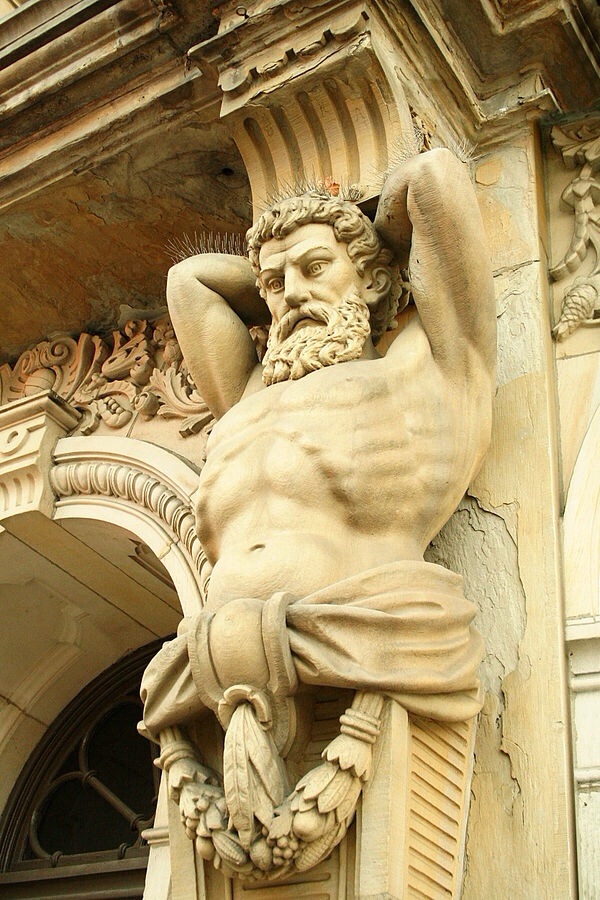
Telamon was brother a son of Aeacus, brother of Peleus, and friend of Hercules.

After he and Peleus killed their brother Phocus, Telamon went to Salamis, and married the kings daughter Periboea. They went on to have a son, Ajax the Great.

Telamon was the first to breach the wall of Troy when Hercules sacked the city (pre-Trojan war). Hercules wanted that honor for himself, so he very nearly killed Telamon in the fit of rage. The only thing that stopped him was that Telamon dropped everything and built an alter to Hercules to appease his “friend.” As a reward, Hercules gave Telamon a woman named Hesione to marry. Not sure what happened to Periboea, but he had another son by Hesione, who was named Teucer, an archer and another prominent figure in the Trojan War.

Mythology Monday: New Years

20130910-150615.jpg

Did you know the New Year’s baby is an Ancient Greek thing? At the festival of Dionysus/Bacchus, a baby would be paraded around in a basket as a symbol of rebirth. There was lots of partying, plenty of drinking, and an overall good time to be had.

New Years hasn’t changed much. People forget, I think, that mythology can be a very modern thing. It’s still happening. Take New Year’s Eve as an example. It’s a ritual. A really fun, very positive, happy ritual. 😀 Now a days ini Greece, families turn off all the lights and reopen them to “enter the year with a new light”. After the fireworks show, they cut serve a New Year’s cake that has one coin baked into it that symbolizes luck to whoever gets it.

On New Year’s many people….

1) Go to parties
2) Make a wish at midnight.
3) Drink champaign
4) Believe that when the clock strikes twelve you get a clean slate
5) Set a goal for your future
6) Make a list of everything bad that happened in the last year and burn it
7) Count down and watch a giant ball, peach, or other large object drop or fireworks
8) Kiss that special someone
9) Believe that whatever you are doing at midnight is what you will be doing all year
10) Eat twelve grapes
11) Sing “Auld Lang Syne”
12) Reflect on the last year

What’s your mythology? Comment below with your New Year tradition 🙂

Mythology Monday: Brumalia

20130102-103006.jpg

Originally, Brumalia was a holiday intended to honor Cronus, Demeter, and Bacchus. Bacchus by some beliefs was another facet of Hades’ personality so I chose to use it in my book. It was typically held in November, which makes no sense because it was intended to celebrate the Winter Solstice. Some sources indicate that the festival lasted for weeks, so that may explain the date discrepancy.

Brumalia was full of prophesied, visions, and not surprisingly, copious drinking. It really sounds like a surprisingly typical holiday party. There was even kissing under mistletoe and holly themed decorations.

So why did I use it in my book? I felt like the Underworld wouldn’t celebrate mainstream holidays like Christmas, but they would celebrate something around the same time. Hades is pretty considerate when it comes to encouraging the souls to keep their customs. Choosing an ancient holiday makes sense because he’s ancient. The celebration is kept open enough to where the souls could interpret it however they want. The palace had a ritzy party, but Brumalia was celebrated all across the Underworld in different ways.

Mythology Monday: Meet the Argonauts: Peleus Edition

20131206-175623.jpg

Peleus was one of Aeacus‘ sons. His mother was a mountain nymph. When he and his brothers Telamon (another Argonaut) and Phocus were out hunting one day there was a hunting accident, or possibly an argument that led to an “accident” and Phocus was killed. He fled the country to Phthia and got married to a woman named Antigone (not that one).

Peleus and Eurytion (Antigone’s father and another Argonaut) were out hunting one day and Eurytion ended up getting killed. If both hunting accidents were in fact accidents, I would at this point pray Peleus took a hint and stopped hunting. Seriously. Anyway, Peleus fled, again, and ended up losing a wrestling match against Atalanta at a funeral game he was attending with Acastus (yet another Argonaut) in Iolcus. Acastus’ wife (who I’m not naming here because her name varies so much depending on the myth) thought that was hot, so she made a pass at Peleus.

Peleus was disgusted and turned her down. Enraged, she sent a note to Antigone telling her that Peleus was going to marry her daughter, and Antigone got depressed and hung herself. Then she told her husband that Peleus tried to rape her. Her husband decided it was time for him and Peleus to go hunting.

So off Acastus and Peleus go on a hunting trip. Acastus stole Peleus’ sword and abandoned him in the woods with a bunch of angry centaurs. One of the centaurs, Chiron, said, yeah…we’re not getting in the middle of this, and returned Peleus’ sword, and allowed him to escape.

Peleus returned to Iolcus, dismembered Acastus and his wife, and marched an army between their dismembered limbs.

Now Peleus needed a new wife. He decided he wanted to marry Thetis, a sea nymph who is sometimes a Nereids and sometimes elevated to a sea goddess, but the problem was she wasn’t often in humanoid form so he enlisted the help of the old man of the sea, Proteus. They had a wonderful wedding, Poseidon gave the couple two immortal horses and everyone was happy until Eris showed up. Apparently she hadn’t been invited, so brought a special gift. A golden apple. She offered the apple to the most beautiful goddess in attendance then watched Hera, Aphrodite, and Athena duke out who was the prettiest. This led to the judgement of Paris and the Trojan War. Fun times.

Sometime after the wedding, Peleus and Thetis gave birth to seven sons. One lived past infancy. Achilles. Thetis attempted to make her son impervious to harm by dipping him in the river styx, but she forgot a spot. The heel by which she held him. Or she pulled a Demeter and anointed him with Ambrosia then burned away the mortal parts of his body. We all know how that turned out.