Is Persephone brave?

board-939244_1920

Persephone is called brave twice in the entirety of the Persephone trilogy, and only once by Hades. But it made quite an impression on the goddess (as I’m sure being called brave by the Lord of the Underworld would.) She immediately denies it, thinks about it for two books, and denies it again.

“You’re strong and brave. More than you know. You stood and fought in Tartarus.”

I shook my head. “I’m not brave. I’m just stupid. When something scary or bad happens, my mind shuts off and I act. Believe me, later, when it has time to process, I’m terrified.”

Their difference of opinion here has to do with the definition of brave. To her, it means not being afraid, which some of my readers agree with. Since Persephone quakes in fear and cries after the fact, to them she’s not brave. That’s a matter of opinion, and is open to reader interpretation. Those readers are not why this is a frequently asked question.

To Hades, being brave means moving forward despite your fear. Which means you can’t possibly be brave in the absence of fear.Persephone  was scared of Pirithous and stabbed him with a pencil, when she stood up against Hades in the clearing, when she stood up to Hades in the Underworld, when she learned self-defense, when she opened her mind on purpose to Boreas’s dreamwalking after Melissa was taken. When she faced Pirithous in the Underworld, and finally when she faced Pirithous in the end. She was scared, and while internally she may have quaked, and while she cried, and shivered, and sometimes whined after the fact, she took her fear and pushed it aside moment by moment, often at the risk of her own life. These aren’t always reactive situations either. She makes plans to do something scary from a place of relative safety and implements them in moments of danger throughout the trilogy.

Many readers agree with Hades’s definition. That’s a matter of opinion and is open to reader interpretation. Those readers are not why this is a frequently asked question.

This is a frequently asked question because Persephone can’t lie, so when she says “I’m not brave,” it’s not false modesty, she absolutely does not believe bravery is one of her traits.

The whole not being able to lie thing gets complicated when the gods start talking in absolutes. She doesn’t say “I don’t think I’m brave.” She says she’s not. Period. And to her, that is true, but her truths don’t dictate other people’s opinions. So reader’s (and Hades’) opinions are still valid here, because she’s not talking about something steeped in fact. It’s not “Does 2 +2 = 4?” It’s “Does that equation look pretty?” A god can answer in an absolute to that question, because to them it either does or doesn’t. That is their truth.


Pitching in Brief

writing-2bexcuses-2b-2bcover

My favorite episode in season seven of writing excuses was an episode on YA Contemporary Fiction. The information on YA was nice,but what I really got out of that episode was the way she pitches. It’s awesome. I’d describe it, but it’s better just to listen.

Another cool thing that I was exposed to this season were The Pixar Rules of Storytelling. Check them out. There was also a fantastic episode on figuring out what comes next in the story. The best thing I got out of it was to ask does what your character need to happen next to accomplish their goal happen, and then put it in this format.

Yes, but….

No, and…

I was trying to come up with examples for this, but I found a better one on this post.

Inigo Montoya wants to kill the six-fingered man.

Through many trials, he enters the castle.

Does he find the six-fingered man?

Yes, but four guards get in the way.

Does he defeat the guards?

Yes, but the six-fingered man runs away.

Inigo gives chase! Does he catch up?

No, and the six-fingered man has barred the door.

Fezzik busts the door and Inigio runs through. Does he catch up?

Yes, but he gets a throwing knife in the gut.

Can he regain his feet and continue?

Yes, but the six-fingered man has a sword at the ready.

Can Inigo defend himself?

Yes, but he gets stabbed in each shoulder.

The six-fingered man bargains for his life. Does Inigo overcome the temptation?

Yes, and he achieves his goal.

What ever the goal is, “yes, but / no, and” is a reminder to you to not allow it to be easy. Make things worse, and the journey will be more exciting, and the payoff sweeter in the end.

Writing on Vacation

luggage-1482697_1920

November is the worst possible month for Nanowrimo. Sorry, it’s the truth. Thanksgiving chaos, vacations, kids out of school. Plus for kids in school the semester is wrapping up so there’s that to deal with.

But as a professional writer, every month is Nanowrimo, so I had to learn to write on vacation without actually missing out on the vacation or my family.

For me that means squeezing writing in during down time. Between all the hustle and bustle and busy places. Morning is great too. People are tired, shuffling around, drinking coffee. It’s a socially acceptable time to be anti-social. I can squeeze at least an hour in. Which isn’t much in terms of writing time, but that’s the other thing about vacations. Daily expectations must shift to something realistic. If I get anything done, that’s a win. I’ve found I actually get more done when I take the laid back approach of not caring about word count goals during vacation than if I plug away until I reach a certain number. During the rest of the year, it’s the opposite, but if I do that on vacation, then it’s almost a guarantee that I won’t be able to use a word of what I wrote past what should have been my stopping point.

When do you get your writing in during vacation?

UGA Alumni Day AND Buford Barnes and Noble Signing

I have a busy weekend! Tonight, from 5:00-7:00 PM, I will be signing autographs and selling books at UGA’s campus bookstore Tomorrow, from 2:00-4:00, I will be signing books at the Mall of Georgia Barnes and Noble. Details for both below. I hope to see some of you there!

event-bookstore

The UGA Bookstore will host Alumni Day at the Bookstore on the Friday before the Georgia vs. UL Lafayette football game, and will offer UGA’s more than 300,00 alumni an additional 10 percent discount for a total of 20 percent off on merchandise. The discount also applies to items in the Clinique Closeout Sales Event. Be sure to stock up on holiday gifts or snag a diploma frame during this special gathering!

Uga X and Hairy Dawg will make appearances and free refreshments will be provided. The following authors will be in attendance from 5:00 to 7:00 p.m. to take photos and sign their books:

  • Rennie Curran (M ’15) – Free Agent: The Perspectives of a Young African American Athlete
  • L. D. “Neicy” Wells (AB ’96) and Dr. Francene Breakfield (BS ’95) – An Anthology of Sisterhood: 22 Shades of Red
  • Loran Smith (ABJ ’62) – Letters from Larry
  • Sonny Seiler (BBA ’56, JD ’57) – Damn Good Dogs
  • Charlene Thomas – The Munson Series
  • Lakeisha Poole (AB ’05, ABJ ’05) – Don’t Let Me Fall
  • Kaitlin Bevis (MAT ’13, EDS ’15) – Persephone
  • Celeste Marshall (AB ’95) – Memoirs of a Barren Woman
  • Tracy Adkins (AB ’98) – History and Haunting of Athens Georgia
  • Lynyetta Willis (MED ’03) – My Forgotten Self
  • Bridgette Burton (AB ’11, ABJ ’11) – The 365 Project: The Year of Getting Back to Me
  • Tara Hays (BBA ’88) – Friends and Rivals: Cheer for the Bulldogs
  • Emily Gaddy (BBA ’00) – Go Bulldogs
  • Mandi Mathis (ABJ ’01) and Danielle Ragogna (M ’15) – The Littlest Inventor
  • Suzanne Adams – Musings of an Earth Angel
  • Ina Hopkins (ABJ ’77) – Rock Eagle Centerpiece of Georgia 4-H
  • Patrick Garbin (BBA ’98) – About Them Dawgs

For directions and more information, click here:

2972

Saturday November 19, 2016 2:00 PM We are pleased to welcome author Kaitlin Bevis to sign her latest book in the Daughters of Zeus series, Aphrodite. It’s not easy being perfect. But Aphrodite is determined to prove that she’s more than a pretty face. When she’s asked to investigate strange events occurring on cruise ships, she’s all over it. Little does she guess how much this mission is going to cost her.

For directions and more information, click here.

The M.I.C.E Quotient

mastomys-443291_1920

My second favorite episode of Writing Excuses for all time was season six, episode ten, when they talked about the M.I.C.E Quotient.

The M.I.C.E Quotient was created by Orson Scott Card. M.I.C.E stands for Milieu, Idea, Character, and Event. Millieu is setting, so basically if your story revolves around a fantastic, neat, or meaningful setting, it may be a Millieu story. Stories like The Hobbit, or Chronicles of Narnia fit into that category. An Idea story revolves around a unique idea, something like Animal Farm or Brave New World would be an idea story in my opinion. The unique *thing* happening in the book outweighs everything else. Character is obvious. Event stories are stories where the thing that’s happening outweighs all. Like a volcano erupting.

While all stories have setting, character, ideas, and events, there’s a difference between having those elements and those elements being the defining trait of the story. A short story may focus on just one of the aspects, possibly two. A novel will have three or four, but in determining the focus, Mary suggested looking at it like nesting code or an equation. If your setting is ( the equation needs to end with ) and everything else needs to nest and resolve in-between. So if your story begins with your character stepping through  magical portal to a new world, it needs to end with them stepping back into the ordinary world. Everything else needs to be introduced and resolved inside those brackets in the order they were introduced.

It’s a really interesting way of looking at story building! Have a listen here or read the transcript here.


Story Bibles

wx-wordpressbanner-wdtrophy2016

In season five of Writing Excuses, my favorite episode focused on Story Bibles (though they had a lot of great episodes on POV as well).

Story Bibles are a document, a wiki, or some other webpage or something you have that help you keep up with your universe. I use scrivener to some degree for this, but I’m toying with the idea of creating a wiki for the Persephone Universe where I go through the real life connections of the myth, the powers and how they work in my universe, the characters, and the rules. In fact, right now I’m writing a blog post that will link to all the existing content I have on all of that in my blog.

That’ll be the public equivalent of my story bible. Eventually, I may post the private one. The scrivener character profiles that go into all the development of each character in each story. The plot summary for that story. The layout of different places in that story, and the rules of the universe in that story.

The biggest reason I haven’t made the jump and created an actual wiki for the Persephone universe is because right now, I have everything I need in scrivener, so anything I do in wiki will just basically be me procrastinating on writing the next book. I don’t want to get world-builders disease (where you use world building to procrastinate actual writing). But I also don’t need to do that much because Persephone is basically set in our world. It’s an alternate reality of our world, but it’s not very far alternate. If I need to remember something about the setting, I can visit it. If I need to know how long it takes to get port to port in Aphrodite’s cruise ship, I can google it. I know my rules well enough to avoid getting tangled in them (gods can’t lie, charm isn’t forever, glamours work like x). But my magic system is fairly simplistic because my characters are actual gods. I don’t have to worry much about god complexes, because if any creature deserved to have one, it would be the ones who created the world.

But if I were to write a new story, set somewhere else with different rules, a story bible would be a must. So this podcast gave me a lot of great tips on creating one.

You can listen to it here or read the transcript here.

Athens Montessori Fall Festival

img_5183

If you’re a fan in the area, feel free to drop by the Fall Festival at Athens Montessori School tomorrow from 10:00-3:00 PM. There’s a local author table set up that I’ll be at on and off throughout the day. You can buy books, get an autograph, or just hang out for the very cool petting zoo.

For more information about the event, click here. Hope to see you there!


Love and War Out of Context Sneak Peek

love-and-war

ARES’S LIPS BURNED against mine as the door swung shut behind us. The heat of his hands seared my back, but I couldn’t bring myself to mind. After what felt like an eternity that didn’t last nearly long enough, he pulled away. “What were we supposed to be doing again?”

I laughed. “There’s a basement.”

He blinked. “Right. Yeah . . . that could be important.” But his body leaned toward mine, and he planted a hand on the wall beside my head.

“If we’re lucky.” I ducked under his arm.

It took us longer than I anticipated to find the stairs. Hopefully, if anyone noticed our absence from the party, they’d assume we headed home or found a quiet corner somewhere. The whole charade was probably unnecessary, but better safe than sorry.

When Ares turned on the light in the basement, my heart sank in my chest. The room was tiny. My guess was this corner of the building allowed for deeper digging than the rest of the dining hall, so the resort made use of the space for storage.

“Look for shields,” Ares reminded me as we explored the small room.

Ares went left, and I went right. I ran my hand along the wall and kept my eyes locked above, looking for any places where the walls and the ceiling didn’t match up. When I met Ares in the middle, I scowled. “Nothing.”

“Still, this may be where they keep the weapons. Check the boxes.”

But our search revealed nothing but paper products, non-perishables, and other innocuous supplies stacked on open-backed, plastic shelving.

“Okay.” Ares took a regretful look around. “We should—”

Footsteps overhead sent us scrambling deeper into the storage room.

“Here,” Ares grunted, pushing one of the shelves forward just enough to make room for us.

“Light,” I whispered harshly, shoving the boxes around to make sure they’d conceal us.

Ares swore, and darted out long enough to tug on the thin, white string hanging from the low ceiling. Then he squeezed in beside me just as the door opened.

“Bring ’em down here!” someone yelled, thuds sounding on the steps. The light flickered on, and the footsteps receded back upstairs and moved above us down the hall.

“Get down,” Ares whispered, yanking me down beside him.

My knees scraped against the plastic shelving when I sat down. Ares reached forward to yank the boxes on the shelf back far enough to touch the wall. In a matter of seconds, he’d completely hemmed us in. The wall stood behind us, the shelf in front, and boxes occupied the space between, beside and above us. I swallowed hard, struggling to keep my breathing even.

Footsteps slapped against the stairs. Peering through the space between boxes, I saw two members of the kitchen staff carrying packages.

“Just stack them over there,” the one closest to the stairwell said.

Crap. They were bringing down more things from the delivery now that it was getting late enough to close up. Who knew how long it would take? More footsteps echoed through the small space as other people filed into the room, stacking more packages against the far wall, mere feet from where we sat huddled behind the shelf.

Tightness gripped my chest in an inescapable vise. Not now, I begged. But knowing this was the worst possible time to have a panic attack didn’t help me not panic.

I went rigid, squeezing my eyes shut as I fought to breathe, slowly, quietly. Ares’s arm snaked behind me, pulling me to him until I was practically in his armpit. He took an exaggerated breath that I felt through his shirt.

I tried to follow his lead, clinging to him so I could feel the pace he set, but all I could think about was that I couldn’t do this. Not right now! If I breathed too loudly, if they heard me, if they caught us, they’d report it to Jason. And then they’d ask us questions, questions we couldn’t answer. And then the non-answers to those questions would make them look back on all the gaps and half-truths. Then they’d know. They’d know we were gods, and they had Steele, and they’d kill us. Once we were dead, Persephone would never be able to broker a truce, and she’d never get Hades back, and Poseidon would sink the island, and everyone would die. All because I couldn’t catch my breath!

I sealed my lips. My cheeks puffed out with unspent air, my lungs ached, and my heart pounded as everything in my body begged me to breathe.

It’s only been seconds, I reminded myself, pressing my back against the cool cinderblock wall. I can hold my breath for a few seconds. Facts clicked into my mind, unasked. The average healthy human could hold their breath for two minutes. In a pool, relaxed. In panic situations, however, the average was thirty seconds.

Thirty seconds wasn’t long enough! If I tried to take a breath, I wouldn’t be able to control it. I’d gasp and wheeze and give us away.

Ares must have felt me go still, because he shifted. His finger tapped against my palm one-two-three times, then he squeezed my hand.

Letting out my breath, I drew in another, then held it. Ares resumed tapping my palm. When he squeezed my hand this time, I was ready. I exhaled, then inhaled, and held my breath. I lost track of how many times we repeated the drill before Ares squeezed my hand, moved it to his chest, and took a measured breath. This time, I was able to follow suit.

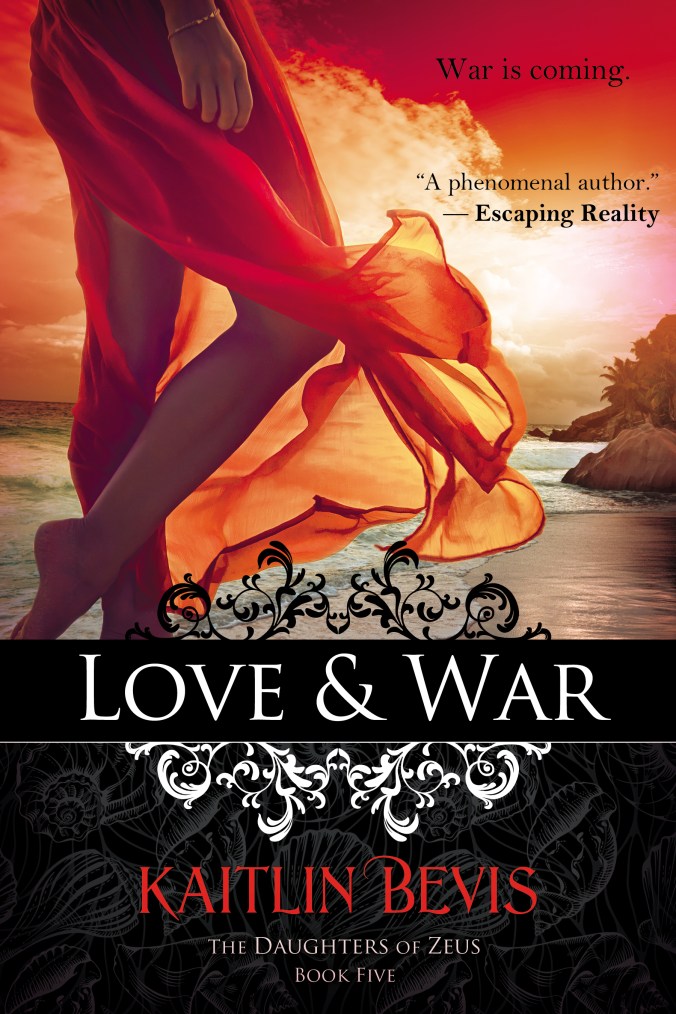
Like what you read? Preorder Love and War today!

Juggling Multiple Viewpoints

smilies-1607163_1920

In season four of writing excuses, my favorite episode was one that focused on juggling multiple viewpoints. I primarily write in first person single narrative, however every now and then, my story leads to a place where I *have* to have another viewpoint character or two.

In Iron Queen, I had to add in Hades and Aphrodite because Persephone wasn’t where the action was. The story from her POV wouldn’t have explained how the gods found her, what was happening on their end, or the struggles they went through. If I’d only done her and Hades or her and Aphrodite, I would have been missing places where the three characters diverged,because plot wise it made no sense for Aphrodite and Hades to stick together during the entire search for Persephone given the fact that Aphrodite was a liability. Hades’s POV was needed to show Zeus going after the gods. Aphrodite’s POV was needed to show Zeus going after the demigods. Both were very important threads.

But it’s not always location based. In Love and War and Venus Rising, I had to add Medea because while Aphrodite and Medea are on the same island, Medea knows things Aphrodite can’t and make no sense plot wise for Aphrodite to learn. I needed an insider. I needed someone on the demigod side otherwise it was going to be a very short, very one-sided story.

I write them all in first person for my current series because that’s been the format so far for my series, but writing multiple viewpoints works best in third limited. I got some complaints about the change in format from Iron Queen, and I’m anticipating them for Love and War. But the story demands it, so all I can do is try to jump POV’s better.

Cue writing excuses. Some of their advice was obvious. Make it obvious who your POV character is right off the bat. My chapter names were the character names, I always had someone refer to them by name within the first few chapters or some other major identifying (“watching my wife chase after a human boy was hell” could really only be one character). And by giving them different voices. I worked very hard on those different voices and some readers will say I succeeded, others wills say I failed. So that’s something I still need to work on. It’s doubly hard for Aphrodite and Medea because the entire point of their characters is that they mirror each other. They are super similar characters that are just at different points in their development. They will be each other’s roads not taken. Eventually. And to do that, there needed to be some pretty heavy similarities.

They had a ton of great advice and pitfalls and over all it was a very informative episode of writing excuses. Take a listen here or read he transcript here.

FAQ Friday: Why doesn’t Persephone recognize references to herself?

If Persephone is learning mythology, why doesn’t she recognize references to herself in the myths she’s learning about in school?

Because Persephone lives in an alternate universe where the myths are still unfolding. There IS no Persephone in mythology yet. She’s THE Persephone. Not a reincarnation, not a cyclical version of herself trapped in a recurring myth. There has never been a Persephone before her that had any mythological relevance and there won’t be one after her. That’s also why she doesn’t recognize Orpheus’s name or many of the other names of famous mythological figures she encounters. She recognizes the name Demeter, but she thought the name of her mother’s flower shop was just a play on the ancient goddess as Demeter doesn’t go by Demeter in the modern day (literally no other character that wasn’t a god ever referred to her by name, so I didn’t have a chance to explain that without it seeming info dumpy until she introduces herself to one of Apollo’s priestesses in book 3).

I tried to show that Persephone is set in a previously Persephone-less world by opening with her teaching talking about THE myth that’s used to explain the origin of Winter. In our society, that myth is the Persephone myth. In this one it’s not. They used a similar (and yes, existing. Boreas and Oreithyia are mythology figures and that is their story even outside the world of my book) myth. That’s the myth that school children everywhere learn instead of the Persephone one. Because there is no Persephone one. It hasn’t happened yet.