The Four Principles of Puppetry

child-1381797_1920


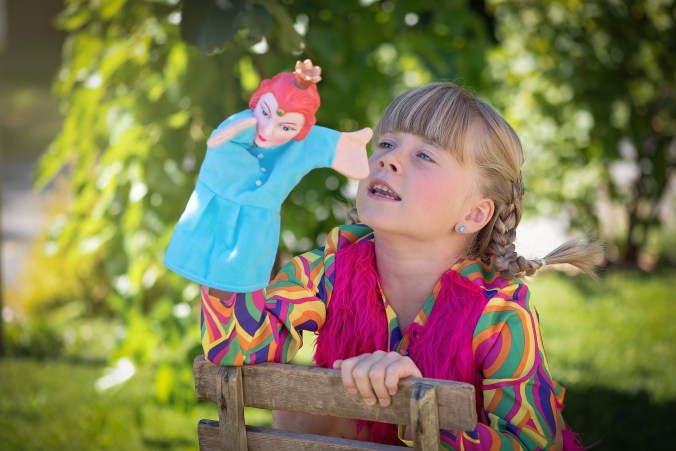
I’m almost caught up with the current episodes, but it’s been several seasons now and my favorite episode hasn’t changed, so I thought I’d share it with you. It’s The Four Principles of Puppetry with Mary Robinette Kowal. Mary explains what the four principles of puppetry are and how they relate to writing in general, and her insight is amazing. It completely changed the way I looked at character action. You can listen for free here or read the transcription here.


FAQ Friday: Why Does Persephone Go by Kora?

hello-1502386_1280

In Persephone, and certain parts of Daughter of Earth and Sky, Persephone goes by her middle name, Kora instead of Persephone. This is actually a nod to the original myth. Before Persephone’s abduction to the Underworld, she was only referred to in mythology as Kore or Kora, which translates to girl or maiden.

In other words, in the myth she didn’t get a name until she became someone important.

Names mattered a lot in Greek Mythology. The gods had entirely different names or titles for different roles they played. So it only made sense to make sure that names mattered a lot in my series.Every book title is one of Persephone’s titles, and there’s a lot of character development that goes into Persephone choosing to abandon her more “normal” sounding nickname, and embracing the name Persephone. At first she lets people call her Persephone in the Underworld because she figures she won’t be there long enough, and the people there don’t matter to her enough, to bother correcting them. But over time, the people there and her time there come to matter so much, than in book two when she’s returned to the living realm, it feels strange when people call her Kora. By book three, when she’s completely given up clinging to both her idealized version of her human and the parts of her divine life she likes, and embraced her actual life, the name Kora is never uttered again because she became Persephone.

Using different names for different roles, particularly related to age, isn’t unique to Greek culture.  Childhood nicknames are common. When I was really little, my nickname was Katie, and it’s telling who still calls me that. Older family members. Because to them, that’s who I’ll always be. When I hit my teenage years, I decided to go by Kat, which I loved. But as I grew up, introducing myself as Kat started feeling strange. So everyone in my adult life calls me Kaitlin except for a few friends from high school, because to them that’s who I’ll always be. I was a different person entirely in high school, and THAT was a different person from the little kid known as Katie.

Outside of age, the names I go by today show a lot about my relationship with the person using them. People who call me Ms. Bevis for instance don’t know me at all. But the person who calls me Mommy knows me on an entirely different level than all my friends that call me Kaitlin. And that’s a whole different relationship than the man who calls me hon. Names matter.

What names do YOU go by? What do they say about you? What do they say about the people using them?


Writing Excuses: Endings

0aHT_Z2t

As you all know, I’ve struggled with my endings. Ending a book is hard. But my favorite episode in Writing Excuses season 2 focused on endings. How to write them, what to do, what not to do. The most useful tidbit that I got out of this is how Howard approaches his endings. He waits until he’s about ¾ of the way through an arc, then goes through the story with his writers group and asks “what promises have I made to the reader?”

Honestly, that’s genius. If I did that in my writer’s group, I’d instantly have 9 different opinions on how the book should end. People would make connections I hadn’t thought of in ways I hadn’t thought of it. It’s a great exercise, and one I intend to use going forward.

But not with a series, because 1. I can’t ask my writers group to go back and read the last 6 books. And 2. Series introduce their own ending problem.

When I wrote Venus Rising, my ending kept falling flat. I went through the book and asked myself what promises I made to the reader, and realized I was meeting all of those. So I went through the trilogy, what promises was I making? Well, I’d met all those, so what was the problem?

The problem was that this book, standing alone by itself didn’t make the promises I’d made to the reader in books 1 and 2 matter. If I’d ended the series at book 2, the ending I’d written would have resonated perfectly. But because book 3 was written without including more than a scene or two referencing some of the sub plots that were wrapped up in book 3 (because I didn’t have a POV character in the place where all the sub plot stuff was happening) the ending lost all its power. So identifying, yes, I’m keeping these promises is important, but identifying, well, I am keeping this promise but I didn’t make this promise this book, is also important. In the case of Venus Rising, it’s going to take some restructuring, possibly the addition of another POV character, at minimum more scenes with this specific group of characters to make those aspects of the ending feel like they matter.

You can listen to this episode of Writing Excuses here or read the transcript here.


FAQ Friday: Roman VS Latin Names

question-mark-160071_1280

Why is a Professor teaching a group of high school students, and shouldn’t he be using using the Roman names since it’s a Latin class?

Professor Homer is modeled after two of my high school teachers, a certain professor (and that title was a matter of pride to him, so we did use it despite being a high school) and my Latin teacher. My Latin teacher was the sweetest old man you’d ever meet, and he felt it was important to distinguish between Roman and Greek deities. Minerva is not just Athena with a different name. She’s an entirely different god. There’s tons of similarities between them in the same way there’s a ton of similarities between Samhain and Halloween. There are enough differences distinguish between the two holidays just like there are enough differences to distinguish between the two gods.

**I do need to add that while they are different gods, even within their own specific culture they could be worshiped for different roles by making slight variations on the name. So the blending of the gods worked very well because both cultures believed that there were many different aspects to each god. Add that to the oral tradition and the far flung reach of each deities worshipers, and you get some major variations in personality and sequence/existence of events.**

Anyway, I decided to take the same approach my Latin teacher did with my stories by sticking with the spellings of the version of the myth that inspired me most. Professor Homer only tells one myth in the entire series, and that’s the abduction of Oreithyia. The earliest myth of Boreas and Oreithyia I could find was from one of the Simonides fragments (534 to be specific) and it features an Athenian Princess, so to me it made sense for him to stick with the Greek names.

However, if it makes you feel better about him as an educator, he did go over the proper Roman names and roles at the beginning of class. The story just picks up after that classroom lecture.

Writing Excuses Season 1

2015-OCT-Podcasts-Writing-Excuses-logo-300x300

I’ve almost caught up on all the episodes of Writing Excuses. Writing Excuses is a fantastic podcast about the ins and outs of writing featuring writing god, Brandon Sanderson, and some of his friends.

Ahem, I mean, featuring the best selling author Brandon Sanderson, an award winning comic creator, Howard Taylor, the young adult author of I am not a Serial Killer by Dan Wells, and in later seasons the incredible, award winning Mary Robinette Kowal.

I’m almost caught up with the current episodes,so I figured now would be a good time to go back and recap what I’ve learned from Writing Excuses. Each season has thirty some-odd episodes and covers a vast array of topics, so rather than recapping ALL of that, I’m just going to talk about one favorite episode per season.

For season one, my favorite episode was probably episode 2, Blending the Familiar and the Original. I’ve heard Brandon Sanderson talk about this before,and I think it’s a very important concept.

The very best story ideas are ones that take something old and make it new. Buffy the Vampire Slayer took the whole high school is hell and all the social issues that went with that and added the twist of no, seriously, high school is hell. Now the whole supernatural high school thing is its own cliche, so to make the same thing happen again, he’d need to take supernatural high school is hell and then add a twist on top of that.

I did the same thing without realizing it when I wrote Persephone. The greek gods are a familiar thing, modern day teenagers are a familiar thing, but when I combined them and created a world where the myths are still happening in modern day, not happening again, not happening to descendants, but actively happening for the first time now and all the characters we associate with ancient times exist now, I made something different.

For better examples and tons of great tips and tricks creating something out of the familiar and the strange listen to the podcast here  or read their summary/transcript here.


Track my progress

Screen Shot 2016-07-29 at 8.15.53 PM

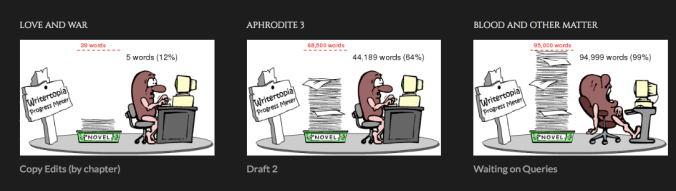
Did you know that you can see exactly where I am on all my writing projects? At the bottom of this page, you’ll see three word count trackers for three different projects I have going right now. I update those trackers at the end of every day. So you’ll always be up to date.

A few disclaimers. With the exception of the third Aphrodite book, none of my projects are trackable via word count right now. Love and War is going through the editing process right now. So I track it by what chapter I’m on (I promise the book is more than 39 words), because that’s a better indicator of where I’m at with that book. When I finish with whichever round of edits I happen to be on (they all blend together at the end), I update with “Waiting on X round of edits.”

Blood and Other Matter is a project that I’m querying right now. Hence the status waiting for queries. There’s not a lot for me to do with that book until I hear back from the agents who have requested the full manuscript. If any of them give me feedback, I’ll incorporate it into the book.

So if you want to know where I’m at with a given project, just scroll down! I update daily. Want your own super cool progress meter? Check it out here. 

I’m out of myths!

question-mark-160071_1280


I am once again out of myths that I can talk about without revealing spoilers for books that have not yet been released. While there are tons of myths in and out of Greek mythology that I haven’t touched yet, I really don’t have the time to do enough research to write a blog on them right now. I’m knee deep in edits, deadlines, and life. Plus, my blog is pretty disorganized, which I’d like to fix.

So, what I’m working on now (as I’m sure you’ve noticed with all the Master Posts) are consolidating my blog series. And it’s occurred to me, I’ve missed a pretty significant set. Myths featured in each book. I’ve blogged about each myth from each book, but I’ve never actually explained how and where they fit in. So I’m working on a master post for myths that popped up in Persephone. This involves me going over each chapter of Persephone and combing for mythological references. And while I was working on that, I realized this is also a great opportunity to answer questions I’ve been asked (or have been mentioned in reviews) so I can include those in the master post about each specific book.

Posts featuring those questions will be posted to my blog on Fridays and any myths I’ve missed will be taking the place of Mythology Monday until the master post is complete.


Harry Potter and the Cursed Child Teen Book Club

hp15_q4_square_ls_pottermore


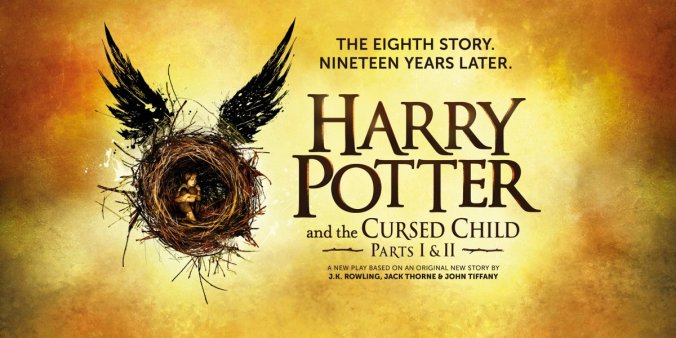
Tonight at 7:00 at the Athens Barnes and Noble, I will be leading a book club on Harry Potter and the Cursed Child.

If you’re in the area come join us! If not, there’s another way to participate. Post comments below with discussion prompts and your thoughts on the book.


Hero’s Journey Master Post

the_hero__s_journey_by_dunlavey

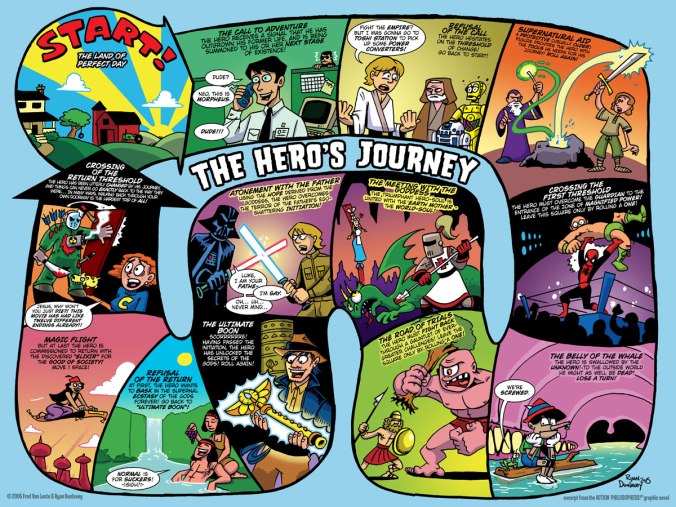
The hero’s journey pops up in virtually every story ever told. So it’s important to get at least a basic familiarity with the major steps. I’ve compiled a list of blogs I’ve written on the topic.

The first thing established in the hero’s journey is the ordinary world. Sometimes called the slice of life, this sets up what the day to day life of the hero looks like before he or she receives their call to adventure. The call to adventure is the moment when everything changes. The known becomes unknown, and whether the hero accepts the call or not, this is the point where they enter the extraordinary world.

The hero then embarks on the road of trials, where their skills will manifest in surprising ways and they’ll slowly build confidence in their emerging abilities until they meet with utter failure at the moment they needed success most. Typically there’s a death here and we enter the darkest part of the journey, the belly of the whale.

This moment is what separates heroes from villains. See, a good bad guy had their own journey. But when they reached their low point, they didn’t find humility and a new determination to succeed. They missed the transformation into a hero. When all the skills, lessons, and red herrings along the way come together to matter in a big way.  The journey ends with the road back, often fraught with its own perils to show just how much the hero has changed and how far they’ve come.

There are seventeen steps to the hero’s journey. I’ve only covered a handful, but there are tons of great resources out there for aspiring writers. Here’s a few of my favorites.

Hero with a Thousand Faces, by Joseph Campbell. This is THE source book about the hero’s journey. If you really want to learn all the intricacies of the journey, start here.

The Hero’s Journey in Game of Thrones: Jon Snow breaks down Snow’s journey. You can pretty much type in hero’s journey in insert any movie, book, show here and get the steps broken down. But this blog had some great visual resources as well.

The Writer’s Journey breaks down the steps and includes guidelines for writers to adapt the hero’s journey into novel form.


Writing on Wednesday: Author Appearances

This summer, I finally dipped my toe into the wonderful world of author appearances. I spoke on a panel at Jordan Con, went to a local author event at my local library, and participated in B-Fest at Barnes and Noble. I’ve got to say, it’s kind of addictive. I’ve been on the lookout for author events ever since. Here’s a brief summary of each one.

logo

I didn’t plan for this to be an author appearance. I went for Brandon Sanderson and a pitch panel. But while I was there I noticed a local author panel on the agenda, and asked the coordinator how I might get involved in the future. To my surprise, she invited me to participate that day. Fortunately, I had my books on hand (I’ve learned to always keep a box in my trunk, you’d really be surprised how often it’s come in handy).

It was a small gathering of people, but they had great questions (mostly about the publishing process), and I met a fantastic author named Michael J Allen (check out his books here) and a few other people from my hometown, Columbus Georgia, which was a nice surprise (Jordan Con was in Atlanta).

All in all, this was the perfect panel to break the ice with this whole in person thing. I didn’t have time to get nervous, there weren’t a lot of people so it was really more conversational than speechish, and I met some great people. I’ve already talked to them about going back next year.
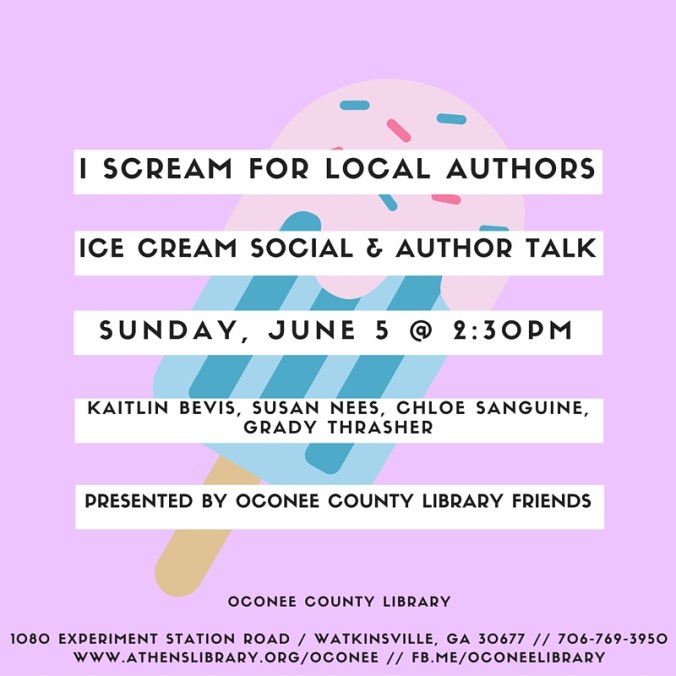
I SCREAM FOR LOCAL AUTHORS

My library held an ice cream social meet and greet for people to meet local authors. This was a bit more crowded. There were four authors, counting myself, so people would go table to table, eating ice cream and talking. Again, most of the questions were on writing in general, but that’s fine. I can talk about writing all day. Plus I sold a few books, met some great local authors (Grady Thrasher, an amazing children’s writer who really hit it off with my daughter, Erica Jantzen, a super friendly writer of women’s fiction, and the amazing Phyl Campbell, an incredibly prolific writer who I convinced to join my writers’ group.) I sold a few books and got my books into more library branches here, made some author friends, and met some teenaged writers who are seriously going places.

CjqHUF_WEAAqWDv

I’m glad I had some events under my belt before I went to this, because I had a better idea of what to expect. This was my first official signing, but mostly it was an author talk. I didn’t have the safety net of other authors this time, it was just me, the amazing staff at Barnes and Noble, and ten teenage girls all dressed up for the Selection Prom (the event prior to mine). I’d met one of the girls before. She was a fan who’d reached out to me via my daughter’s gymnastics coach, so we’d grabbed coffee and I signed her books. I was so glad she was there because she always has great questions and great book recommendations. But I shouldn’t have been nervous, because the other girls were all just as excited about reading. This time instead of talking about the publishing and writing process, we just talked about books. My books, other books on Greek mythology, and then YA books and trends in general. I can talk about books all day.

I sold and signed a ton of books, and I got my books on the shelf in Barnes and Noble, so that was pretty awesome.

Biggest Takeaways

In person events are great. I really enjoyed meeting readers and writers, no matter what side of the table they were on. The biggest benefit I got out of these events was having done the events, if that makes sense. Author signings and appearances were this kind of nebulous thing always floating around inside my head. I worried about what would happen if no one came, if I didn’t have anything to talk about, or just being in front of a crowd in general. But those concerns were ill-founded. My audience is young adults. I’ve taught in a classroom full of teenagers held against their will until the bell rang. In comparison, chatting with teens who are willingly hanging out because they’re excited about reading is a cake walk (not to mention a thousand times more fun). I learned that a small turn out isn’t a bad thing, it gives you the opportunity to really get to know the people who did come. As for being nervous about running out of stuff to talk about, my books, books in general, and writing are endless sources of conversation for me, so that was a silly concern.

I can’t wait to find more events.