Mythology Monday: Hestia

pixabay

pixabay

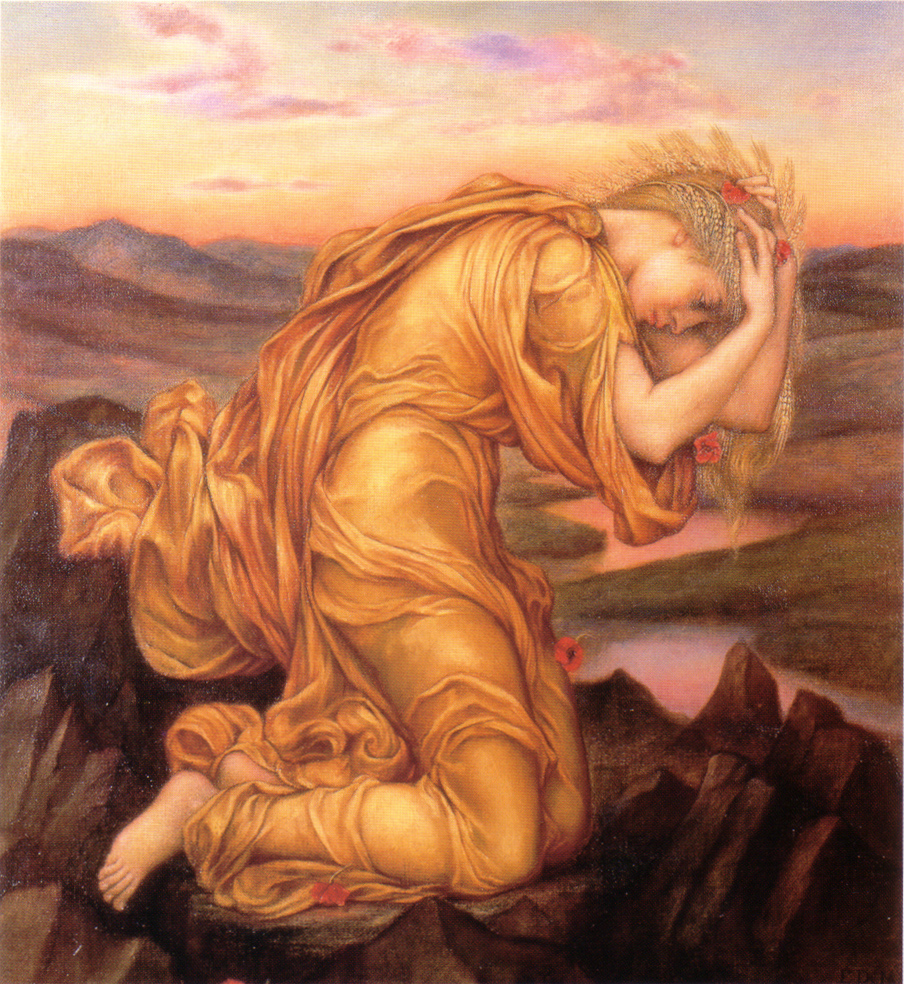
Hestia arrived right on time. The goddess was soft-spoken and diminutive. After looking askance at my papasan chair with her smoldering gray eyes, she created a side room for our lessons that contained a simple wooden table and two wooden chairs. The most interesting thing in the room was the fireplace.

Then she took one of the seats, motioning for me to take the other. In her soft voice she gave me a brief rundown on all the living gods and proceeded to tell me the history of the gods of Olympus. She spoke for precisely one hour and fifty minutes, leaving ten minutes for questions.

~@~

Hestia was one of the original six children of Cronus and Rhea. She was the goddess of the hearth and home. The Romans called her Vesta. She is both the oldest and the youngest daughter (born first, thrown up last). However, I replaced that bit of her with Demeter for story telling purposes. Hestia never married, swearing to always be a virgin (hence the vestal virgins). She chose no symbol for herself, and for a god as widely worshiped as she was (every house honored Hestia) was remarkably quiet and drama free. When any offering was made to any god, a small offering to her preceded it. In my story, she teaches Persephone the history of the gods.

Mythology Monday: Mother’s

h7h4t

In honor of Mother’s day next week, I’m dedicating this week to the amazing mom’s in Greek mythology. Ancient cultures may not have had the most respect for women in general, but they respected the role of motherhood. Here’s the top three mommy myths in Greek mythology. By the way, I’m leaving both Hera and Gaia off this list because in my opinion they sucked as mothers.

Demeter

I’ve already went into Demeter’s myth at length several Mythology Mondays ago, but I can’t leave her out of this list.

She was by all accounts, an awesome mom. She took great care of Persephone, protected her, and kept her out of the drama of Olympus, no small feat.

When her daughter went missing, she scoured the earth to find her and didn’t rest until her daughter was returned to her arms.

It’s a pretty epic myth, all things considered and in my opinion the most powerful myth about motherhood in Greek mythology.

Rhea_MKL1888

Rhea

Rhea was married to a kind of awful guy. And yes, it took him eating a couple of her kids to realize the true depths of his depravity, but eventually that mothering instinct took over and rather than allow Cronus to kill Zeus, she, at great risk to herself, snuck him away and tricked her husband. Later, she gives Zeus the tools he needs to save her other children. This decision cost her a kingdom, a husband, every bit of status she had ever gained. She wasn’t killed with the rest of the Titans but she faded into obscurity.

"For two days and two nights the boat was and hither and thither" by Walter Crane - The story of Greece : told to boys and girls (191-?) by Macgregor, Mary. Licensed under Public Domain via Wikimedia Commons - http://commons.wikimedia.org/wiki/File:For_two_days_and_two_nights_the_boat_was_and_hither_and_thither.jpg#/media/File:For_two_days_and_two_nights_the_boat_was_and_hither_and_thither.jpg

“For two days and two nights the boat was and hither and thither” by Walter Crane – The story of Greece : told to boys and girls (191-?) by Macgregor, Mary. Licensed under Public Domain via Wikimedia Commons – http://commons.wikimedia.org/wiki/File:For_two_days_and_two_nights_the_boat_was_and_hither_and_thither.jpg#/media/File:For_two_days_and_two_nights_the_boat_was_and_hither_and_thither.jpg

Danae

Danae was a princess whose child was fated to kill her father. Her dad locked her up so no man could reach her, but that didn’t stop Zeus. As punishment for getting knocked up, her father locked her and her baby in a coffin and threw them out to sea so Poseidon would get the blame for killing them, not him. Poseidon didn’t cooperate so mom and son, Perseus, made it to shore, where a king fell in love with her. She wasn’t interested in marriage (no doubt emotionally scarred from her horrible treatment with her father), but the king raised Perseus and agreed not to pursue her for awhile anyway. When Perseus grew up, the king lost patience and tried to marry Danae, but Perseus used Medusa’s head to turn him to stone.

That tells me a few things about Danae. The main one being she’s an awesome mother. Perseus loved her enough to go to great risk and kill a father figure for the love of his mom. That means rather than shutting down or blaming Perseus for all the trouble he brought her, she kept mothering on like a good human being. Given her insane childhood, that’s kind of awesome, so props to Danae.

So there you have it. My top three favorite Mom myths in Greek mythology. What’s your favorite Greek mother?

For Real Friday: Snooping

l-80434

Posting this a day early because of the cover reveal tomorrow.

Dream walking, telepathy, or some variation of getting into someone’s innermost thoughts appears in fiction all over the place. To me, that particular plot device has always been a really interesting commentary on privacy in general.

With most psychic abilities in fiction, there are three levels of acceptance from characters without the power.

1) Ignorance. They have no way of knowing someone is observing. To me, this is the most frightening way to portray these powers in fiction because they are so often treated as harmless.  *note* There is a difference between wild-power and controlled power in this scenario. A character bombarded by everyone’s thoughts no matter what they do is in a different position than one in control of those powers and just using them for kicks.

2) Acceptance. They are not only aware of the other character’s power, but they use it to their advantage to communicate with the other character. Boundaries are in place and accepted and safeguards are typically introduced to prevent unwanted or unintentional snooping.

3) Fear. The character in power actively uses their abilities to hurt or unnerve them, respects no boundaries, and are otherwise powerless against the character in power.

There’s several real life counterpart for each of these scenarios. Take the Facebook for instance. You can Facebook stalk people online without them ever being aware you exist. Technically they aren’t harmed by your creepy lurking, so life just goes on. You can also unintentionally Facebook stalk people because every now and then Facebook changes their settings and suddenly you’re seeing personal statuses of people you aren’t friends with because a friend of yours is friends with them and made a comment on their status.

There’s acceptance. You can friend someone on Facebook. Send them messages, work Facebook to your mutual advantage and communicate.

Then there’s fear. You can seriously stalk people through Facebook. Research where those pictures were taken, get schedules, and cross the internet boundary into the real world.

Pre-internet there were other means of distance stalking but they took quite a bit more commitment than today. So it’s unsurprising to see so many books and movies and TV shows dealing with these magic based snooping abilities today than say, twenty years ago. Don’t get me wrong, the plot device was still there, but there’s a reason it’s used so much more now.

If you want to know what a society fears, read their fiction.

Way Back Wednesday: Dreamwalking

l-4998

Dreamwalking was a thing long before I wrote Persephone. Here’s a few examples of Dreamwalking that I grew up with. Can you think of any to add to the list?

Roswell

Roswell was my very first introduction to the concept of dream walking, so I’m sure it heavily inspired my idea of what dreamscapes looked like. One of the characters, Isabel could walk into people’s dreams if she had a picture of them. She pretty much could only observe and wasn’t noticed by the dreamer.

A Nightmare on Elm Street

Creepiest horror concept ever. Definitely inspired the darker side of my dream walking.

The Wheel of Time series

The Wheel of Time series had a pretty interesting concept for dream walking. There was a neutral dreamscape called a dream world that most dream walkers hung out in. But if someone dreaming felt intensely about the dream walker they could be pulled into dreams, and within those dreams they were vulnerable to the dreamers.

Mythology Monday: Hypnos

art-645612_640

“You have absolutely no talent for dreamwalking,” Hypnos hissed in frustration.

“I’ll say,” Hades muttered from the divan.

“Maybe if my target was actually sleeping,” I snapped.

“I can only sleep so much in a day. If I sleep any longer I’ll be in a coma.”

“Let’s try again.” Hypnos took a deep breath. “Hades, sleep.”

Hades fell mercifully silent, and I sank into the soft leather couch. The room Hypnos had selected to teach me dreamwalking looked like it should belong to a therapist. Aquamarine curtains covered the windows, casting the room in a soft blue glow.

I closed my eyes and felt Hypnos’ powers settle over me, pulling me through layers of sleep. Hades. I directed my thoughts. I could sense the energy of other sleeping deities. It was a weird sensation, like catching a glimpse of something out of the corner of your eye only to have it move before you turned your head.

The minds of the gods twinkled in the darkness, reminding me of stars scattered in the vast emptiness. Hypnos had spent the last month getting me to the point where I could sense who was who. It was easier to identify gods I’d met. Thanatos was a guarded cloak of darkness; Hypnos shone like the sun; Hestia smoldered in the night; Charon cast an amicable glow. I found my mother, green and thriving, and Boreas’ frozen fortress.

Despite the name, dreamwalking was nothing like walking around. I couldn’t keep my distance from gods I didn’t like, or get close to another. They all existed, suspended in this disorienting space; the only thing that changed was my awareness of them. If I stopped concentrating on them, they faded into darkness and I could slip into my own dreams without fear of Boreas following me.

Boreas hadn’t tried anything since that last awful dream. Maybe Hades was wrong. Maybe Boreas would back off, now that I was protected on all fronts. I doubted he wanted Hades to come after him, but maybe being unprotected in my sleep had been too much for him to resist.

“Persephone!” Hypnos’ frustrated voice startled me as it flooded my consciousness. Right . . . . I was supposed to be concentrating.

Since it was the middle of the day, there weren’t as many gods to navigate. It was easy to find Hades. He was a bundle of dark energy. I concentrated on sending a small pulse of energy his way. It was a weird feeling, gathering the energy in my mind and aiming it at someone without intention.

To do anything else with my powers, intention was half the battle. I had to keep my mind on exactly what I was doing and what the desired outcome was. It was the difference between planning an arrangement—placing every flower just so to complete my vision—and throwing a flower in the general direction of a vase.

After several tries, I found myself in the library. The bookshelves blurred around me and I rubbed my eyes.

“Thank the gods,” Hades said. He was in hyper focus in the center of the blurry room.

“Okay.” Hypnos clapped his hands. He looked at Hades and then around the library with an eyebrow raised in question.

Hades shrugged, turning his head toward me. “You did it.”

“I did!” I grinned. “Now what can I do?”

“Nothing,” Hades and Hypnos said simultaneously. I frowned at them.

“I can continue to work with you if you like . . . ” Hypnos sounded less than thrilled at the prospect. “But I have to be honest, you have absolutely no natural talent for dreamwalking. It’s not your fault; it’s just not in your bloodline.”

“Oh.” My ego deflated. I’d never been bad at anything before. I always picked up whatever sport or skill I’d been trying to learn like it was second nature. But those were human skills. Divine stuff was different. Even learning to use my own powers was difficult, and dreamwalking was Hypnos’ specialty. I nixed my half-formed plan to leave my mind unguarded and ambush Boreas in a dream. He’d had much more practice at this than I had.

“Thank you, Hypnos,” Hades said.

“My pleasure. You two should be waking in a few minutes. I’ll see you later.”

He vanished and I looked at Hades. “He left! What if I get stuck or something?”

“Getting out is easier than getting in. I think Hypnos needed a break.” Hades snickered, picking up a book. “I’ve never seen him stressed. You’re really terrible at this.”

~@~

Hypnos was the god of sleep. He was called Somnus to the Romans. His twin brother was Thanatos, and his parents were Nyx and Erebus. In mythology, he had three children. Morpheus, the god of dreams, Phobetor, the god of nightmares, and Phantasos, the god of apparitions/waking dreams. In my universe, Hypnos hasn’t had kids yet, so he’s still god of sleep AND dreams. Hypnos looked young, and was often portrayed in the nude with wings on his head. He lives in a cave near the Underworld that the River Lethe flows through. Hypnos doesn’t do much in mythology. He’s pretty quiet so there isn’t a lot to say about him. I enjoy writing him though, because I feel like his solemn seriousness is such a good counter balance for my snarky characters.

For Real Friday: Death Toll

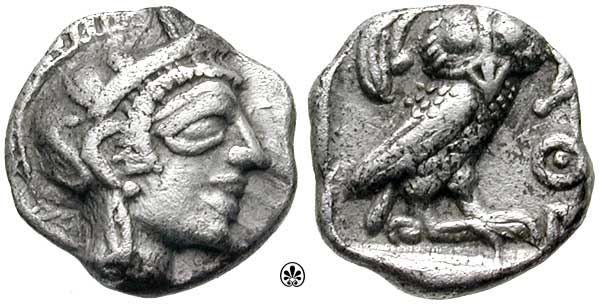
"SNGCop 053" by Classical Numismatic Group, Inc. http://www.cngcoins.com. Licensed under CC BY-SA 3.0 via Wikimedia Commons - http://commons.wikimedia.org/wiki/File:SNGCop_053.jpg#/media/File:SNGCop_053.jpg

“SNGCop 053” by Classical Numismatic Group, Inc. http://www.cngcoins.com. Licensed under CC BY-SA 3.0 via Wikimedia Commons – http://commons.wikimedia.org/wiki/File:SNGCop_053.jpg#/media/File:SNGCop_053.jpg

 Hades pulled an old iron coin out of his pocket. It was about the size of a dime, but thicker and more misshapen and lumpy. Like it was trying really hard to be round but couldn’t quite succeed. A centurion was stamped on one side of the coin, and a bird with huge talons was stamped on the other.

“What is that?”

“An obol. Just a knickknack from one of the shops. A demigod walked out of the Underworld with one of these once, and suddenly all of Greece was using them for currency. They had this crazy idea they could use them to bribe Charon.” 

~@~

People are terrified of death. Always have been. Because of this fear, we cling to stories, real and otherwise. But we also do something else, something really interesting that transcends every culture and unites us into this deeply human trend.

We try to bribe death.

Every single culture, every single religion, every single subset of people have a similar story. Whether we’re bribing death with deeds or commitments or coins, the idea is still there. If we provide our ferryman with enough incentive, he’ll take us right up to the gate instead of losing us somewhere along the way.

It’s an interesting universal fear and one that spawned the existence of ghost stories. We’re terrified of getting lost. Of being stuck. We don’t know what comes after death and in most stories these bribes don’t even guarantee you a spot in the good afterlife. They just convince your ferryman to take you to the gate. Why is that? Being stuck on the wrong side of the river wouldn’t seem like a fate worse than Tartarus. Being a restless spirit able to see the loved ones you’ve left behind seems like a step up from the great, gaping, unknown. Does it go back to our fear of being a Cassandra figure? Unheard, unseen, but there, helpless to do anything to alter event? Is it really better to be gone all together than reduced to an observer?

Why is ever ghost story ultimately about moving on and letting go? Why do we need to bribe death to make sure he takes us with him?

Way Back Wednesday: The Ferryman

l-79294

Charon didn’t have an active role in a lot of myths, but he makes appearances all over the place. That didn’t stop in ancient days. The ferryman is an archetype. A neutral character who serves to transport the protagonist from one place to another and give off a generally creepy vibe.  You’d be surprised where Charon popped up in recent history.

The Clash of the Titans

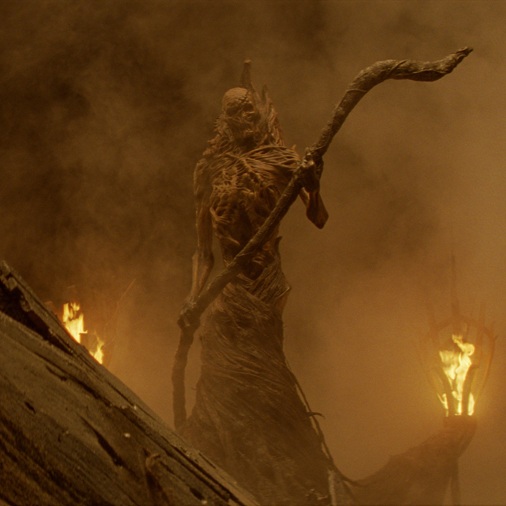
Charon appears in the original clash of the titans as a skeleton. It was a creepy moment and not one I saw fit to rewrite with my own version of Charon.

The Amber Spyglass

Another creepy ferryman, in a heart wrenching moment, he unwillingly ferries Lyra and Will across the river to the land of the dead.

Peter Pan

In a play on words, the fairies typically act as ferrymen for children who “fall out of their prams” or get lost. The children are taken to Neverland, a wonderful land that sounds a lot like a child’s paradise. It doesn’t take much to read between the lines here. Peter later acts as a ferryman to children who died, traveling with them for part of the way so they wouldn’t be frightened.

Have you seen any examples of ferrymen that stuck with you in books or movies? Comment below.

Mythology Monday: Charon

peer-173435_1280

 Dinner chatter began on the far side of the table, seeming to revolve around Charon recounting his day on the ferry. I stared down at the white tablecloth, trying to remember which of the silver utensils I needed to use for the first course. A silver plate was placed before me with a fried pink oyster mushroom served with grapefruit. It was topped with an orange nasturtium blossom. “So . . . ” I turned to Moirae, who glared daggers at me, and quickly turned back to Hades. “Uh, what did you do today?”

He looked surprised by the question. “It’s barely been an hour since I last saw you.”

“It’s called small talk,” I snapped. “You should try it some time.”

He sighed. “Fine. I spoke with Hestia about your history lessons, arranged for you to begin self-defense lessons with Charon—”

“What?” Charon piped up from his end of the table. “When did that happen?”

“Just now,” Hades said around a bite of chicken. “I’m multitasking.”

“Why does she need to learn self-defense?” Aeacus asked. I

popped the flower into my mouth, savoring the spicy flavor. I wondered how they’d known I was a vegan. Everyone had something different on their plates. Maybe it was just a cool Underworld trick, like the rooms decorating themselves.

“You’re going to have Charon teach her?” asked Thanatos. “He won’t be able to shut up long enough to teach her a single move. I’m way better at self-defense.”

“Not everyone can kill someone just by touching them,” Hypnos pointed out.

“You’ll be busy guarding Persephone any time she leaves the palace.” He looked at me. “You’re perfectly safe in all but the public areas of the palace. Only certain souls can enter the living quarters. Just stay out of the public sections, the ballroom, the front lobby, the banquet hall, and the court room, unless either myself, Cassandra, or Thanatos are with you.”

“Hah!” Thanatos laughed at Charon. “You may be the self-defense guru, or whatever, but I’m the one people want around if there’s any real trouble.”

 Charon snorted. “Give us a week, Thanatos. Persephone will be able to kick your bony ass across the Styx.”

The table erupted into cacophony. Everyone was talking over everyone else, adding wagers and jesting with each other. Lethians deftly ducked between the dueling deities, serving the main course. A plate of corn-filled phyllo tulips and eggplant topped with tomato sauce was put in front of me and I took a nervous bite.

“You’re on!” Thanatos replied. He gave me a devilish grin. “One week, Persephone.”

“That’s okay,” I squeaked. I didn’t want to go hand to hand against Death. No one heard me.

 ~@~

Charon is the ferryman of the Underworld. He takes the newly departed from the entrance of the Underworld across the River Styx. In most versions of his myth he charges a coin (usually an obelisk, and some myths say two) for the passage. This was the reasoning behind putting coins on the eyes of the dead. People didn’t want their loved ones stranded in the Underworld. My version of Charon charges no such fee, and he’s also much more friendly than his mythological counterpart.

He’s yet another child of Nyx and Erabus, so I guess he’s Thanatos’ and Hypnos’ half-brother. His name means “keen gaze” which may refer to that fixed, unmoving gaze that corpse have (you’re welcome for the creepy imagery of the day). There’s not a lot of active mythology about Charon. He’s present in a ton of artwork and is mentioned in most epics or heroic quests, but other than taking people back and forth he doesn’t have a very active roll.

He’s supposed to be ugly and unkept, with a long, straggly, greasy beard. My Charon is cleaner, but I suppose hand rowing a ferry full of people back and forth over a misty, swampy river multiple times a day could take a toll on your appearance.

For Real Friday a day early: Schizophrenia and Other Mental Disorders in Fiction

inadequacy-447731_1280

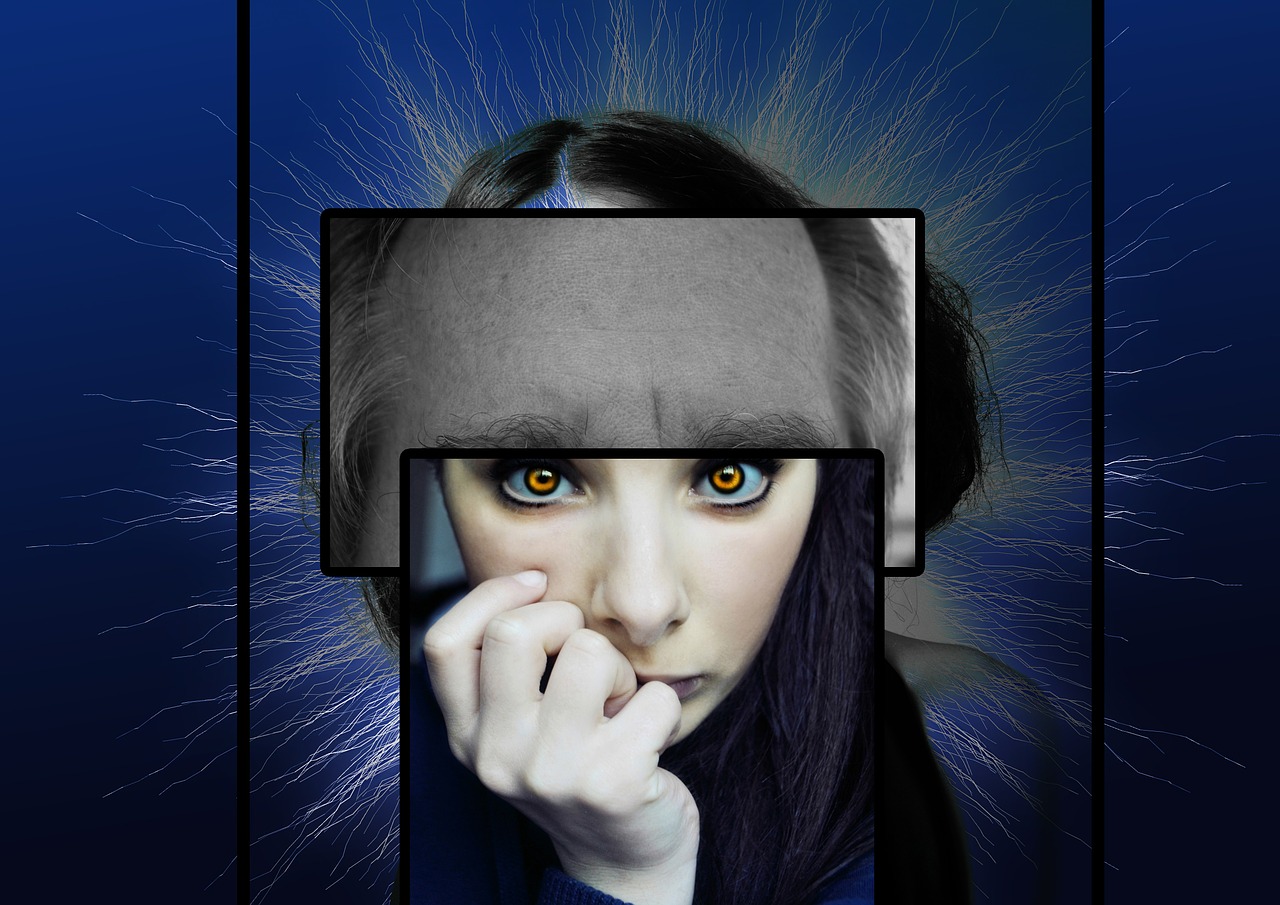
Posting early in honor of tomorrow’s cover reveal. When I portrayed Moirae as schizophrenic, I ran into a problem. Schizophrenia is not multiple personality disorder. Despite the media’s portrayals as schizophrenics being dangerous individuals with Jekyll/Hide syndrome, that’s actually an entirely different mental disorder. So why did I keep the same description? Because she doesn’t have multiple personality disorder either.

People with multiple personalities don’t have personalities that converse with each other. They experience black outs when the other personality is in charge. That’s not Moirae either. Because there’s a magical element there, she is all three people at once. Since one personality isn’t dominant and because they interact, that goes more toward the auditory hallucinations of schizophrenia. In the end, I wasn’t sure what to call her and after lengthy talks to my writer’s group and my editors, schizophrenic stuck, both because the symptoms were more true, though still not quite right with the illness and because on a colloquial level Persephone was a sixteen year old. She would have called it schizophrenic. She never said the word out loud so no one would have corrected her.

All the same, I was careful to never depict Moirae with the more stereotypical attributes associated with mental illness because books and movies do enough damage without me adding to them. She’s never violent and scary and she’s not some wonderful manic, pixie dream girl either. She’s a character, not quite as fleshed out as I’d like because the pacing of the story never really allowed for me to develop her like I wanted but hopefully future installments will let me do more with her, who just happens to have three voices in her head vying for attention at once and that does impact her life in a very big way but she still has a personality, friends, and a life.

Later in the series (as in not yet published) we learn Aphrodite suffers from anxiety (there’s a very plot oriented reason this hasn’t shown up in its entirety in Iron Queen, but you’ll have to read Venus and Adonis to learn why). That was another area I had to be careful because panic attacks and all the other symptoms that come with anxiety aren’t cute and it drives me nuts when plots give characters these very real issues just to make them vulnerable in the moment and then never revisit them or worse, treat it as a cute quirk.

That being said, I totally understand why authors polarize mental disorders, especially in POV characters. It’s not just that its easier to either romanticize or vilify them. It’s to some degree healthier. Moirae was one thing because she only existed on the periphery, Aphrodite on the other hand…I was in her head for a year writing Venus and Adonis and it was hell. Rewarding, yeah because at the end of the day, I think I might have done an okay job writing her experience. But mentally draining. So draining, I had to take a break between writing Venus and Adonis and Love and War to write an entirely different book that didn’t deal with anxiety. I *had* to.

All the same, the constant romanticizing/vilifying mental disorders is damaging both as representation of mental disorders and for people suffering with them. Scrubs did a good episode on this with an episode that had Michael J Fox playing a character with OCD. The episode begins by playing into the trope. Being OCD makes him a better doctor, he’s a magical and wise character who can solve everyone’s problems. But as the episode progresses, it goes into the dark/realistic side of OCD and it’s a really impactful moment.

Representation matters. And because I’m about to dive back into Aphrodite’s head to write Love and War, I’d really like some input. What are some books, shows, or movies that you really appreciate for their depictions of characters with mental disorders? I’d love to give them a read.

Mythology Monday: The Fates

schizophrenia-388869_1280

Dinner was awkward, mostly because I finally got to meet Moirae. The “Fates” were embodied in this schizophrenic woman. She was middle-aged and average height, average build, average looking—brown hair, brown eyes, brown skin so light she could be any ethnicity. She referred to herself as “we,” and apparently had three voices vying for attention in her head at any given time. The past, present, and future; the young, middle-aged, and old; and the maiden, mother, and crone in one. Good times.

I sat next to Cassandra, and she moved me to an ornately carved wooden chair to the immediate right of where Hades would sit, heading the table. The banquet hall was surprisingly homey. I’d been expecting something as grandiose as the throne room. The floor was divided into wooden squares. The wooden paneled walls had sporadically placed paintings depicting different gods. Feeling out of place, I squirmed in my seat, watching as everyone else gathered around the table. Moirae turned in her chair to glare at me.

“It’s her,” she hissed, and then nodded in agreement with herself.

“Persephone,” I said helpfully. “Pleased to meet you.”

“You are the reason we’re down here.”

I looked at Cassandra for clarification and she shrugged. Leaning over, she whispered, “There’s a reason Hades keeps me around. She may be able to see the future too, but I’m way easier to talk to.” When I nodded in agreement, eyes wide, Cassandra laughed. “Okay, that’s not the only reason. She can’t see anyone who’s been marked.”

“Marked?”

“When a god gives someone a blessing or a curse, it interferes with their fate. They drop out of Moirae’s sight. She can’t see gods, either; that’s why Hades needs me.”

I nodded again, amazed at how badly I’d misjudged Cassandra. She was without a doubt the most important soul in the underworld. No wonder she felt comfortable taunting Hades; her position here was completely safe. I turned back to Moirae. I was dreading the answer, but had to ask, “How am I the reason you’re down here?”

“We are the fifth generation of Fates. We took our sisters’ place before the fall of the gods. Hecate, your mother, and you are meant to release us and be the sixth generation of Fates. Instead, you will choose to remain in the realm of the living. Hecate with her witches, your mother with her foolish crops. And you . . . ” She sneered. “What will you do while shirking your duties?”

I blinked. “I . . . uh . . . what? I haven’t even come into my powers yet!”

“You will.”

“There’s something to be said for a self-fulfilling prophecy,” I muttered, shaking my head. If she wanted to be mad at me for something I hadn’t even considered doing yet, fine. I wouldn’t have to feel bad for not stepping up as the next Fate later. Good. I didn’t want to be a Fate.

~@~

Pretty much every mythology has some version of the three women that control the threads of life.

They were called the Moirai. The main three in most myths were Clotho (the spinner), Lachesis (the allotter) and Atropos (the unturnable). The Moirai always belonged to the Underworld but through their weavings directed life on the surface. Every event in life was fated. If you did something awesome it wasn’t all that awesome because you were always going to do that. If you did something horrific, it was really the fates who determined that you did that horrible thing. People were helpless at the hands of the fates, but I imagine it took the pressure off.

The names of the fates rarely changed, but their parentage changed depending on the myth. In early mythology they were the daughters of Nyx (Night) and Ananke (Necessity.) Later myths say Zeus is their father, and their mother is Themis.

That there are three fates isn’t coincidence. Ancient Greeks were big fans of the whole mother-maiden-crone relationship so pretty much all female goddesses were part of one of these triads. Persephone, Demeter, and Hecate are one set of triple goddesses, or Artemis, Selene and Hecate, as are Athena, Brigid, and Gaia. The three furies and the three graces form two other triple sets. Athena, the virgin goddess, Aphrodite (the erm… experienced goddess), and Hera, who generationally would be considered their mother or grandmother standing in for the crone, formed another triad during their doomed beauty pageant.

I try to explain the reoccurrence of triple goddesses in my story by putting the fates as a temporary position. So the weavers would have been the first generation, Gaia and group the second, Moirae the schizophrenic the third (okay, she was never referred to as schizophrenic but there is a myth where she appeared as a single entity embodying all three of the fates, so I took that to the logical place in my head), and Persephone, Demeter, and Hecate presumably are a future generation as far as Moirae is concerned.

In my universe, Persephone and group are never going to take their place as fates, so Moirae is pretty mad about that. She can’t see the future of other gods, but she can see her own, and her position as the Fates isn’t going anywhere.

My fates don’t actually direct anything either. Free will prevails. The fates judge where souls go in the Underworld. Moirae can see the past, present, and future act of every mortal being that hasn’t been touched by a divine hand. So she can tell if drinking from the Lethe will reform a soul or if a soul truly belongs in Tartarus based on all their actions, including things they haven’t done yet.

It’s a bit of a different interpretation, but I think it works.