Mythology Monday: The Fates

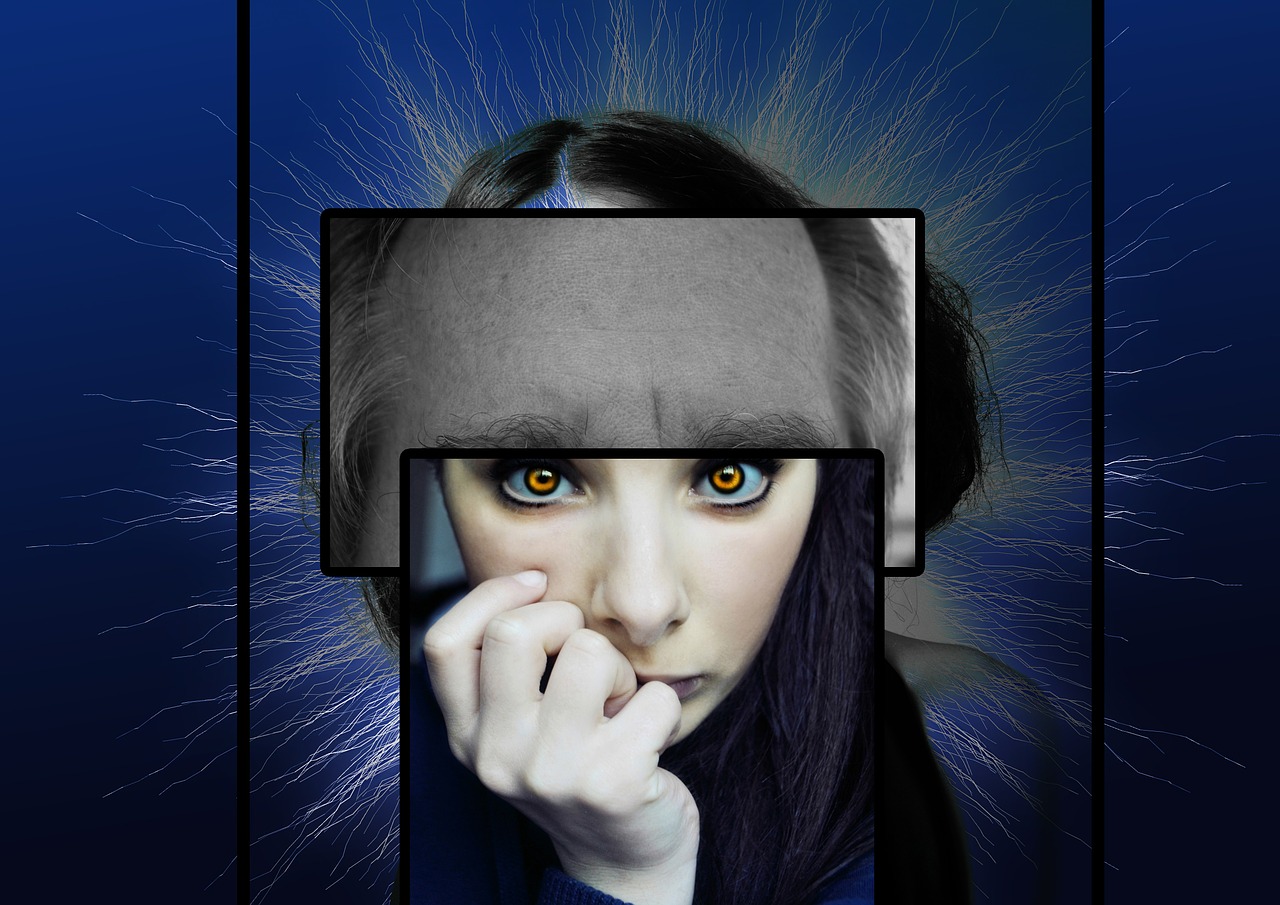
schizophrenia-388869_1280

Dinner was awkward, mostly because I finally got to meet Moirae. The “Fates” were embodied in this schizophrenic woman. She was middle-aged and average height, average build, average looking—brown hair, brown eyes, brown skin so light she could be any ethnicity. She referred to herself as “we,” and apparently had three voices vying for attention in her head at any given time. The past, present, and future; the young, middle-aged, and old; and the maiden, mother, and crone in one. Good times.

I sat next to Cassandra, and she moved me to an ornately carved wooden chair to the immediate right of where Hades would sit, heading the table. The banquet hall was surprisingly homey. I’d been expecting something as grandiose as the throne room. The floor was divided into wooden squares. The wooden paneled walls had sporadically placed paintings depicting different gods. Feeling out of place, I squirmed in my seat, watching as everyone else gathered around the table. Moirae turned in her chair to glare at me.

“It’s her,” she hissed, and then nodded in agreement with herself.

“Persephone,” I said helpfully. “Pleased to meet you.”

“You are the reason we’re down here.”

I looked at Cassandra for clarification and she shrugged. Leaning over, she whispered, “There’s a reason Hades keeps me around. She may be able to see the future too, but I’m way easier to talk to.” When I nodded in agreement, eyes wide, Cassandra laughed. “Okay, that’s not the only reason. She can’t see anyone who’s been marked.”

“Marked?”

“When a god gives someone a blessing or a curse, it interferes with their fate. They drop out of Moirae’s sight. She can’t see gods, either; that’s why Hades needs me.”

I nodded again, amazed at how badly I’d misjudged Cassandra. She was without a doubt the most important soul in the underworld. No wonder she felt comfortable taunting Hades; her position here was completely safe. I turned back to Moirae. I was dreading the answer, but had to ask, “How am I the reason you’re down here?”

“We are the fifth generation of Fates. We took our sisters’ place before the fall of the gods. Hecate, your mother, and you are meant to release us and be the sixth generation of Fates. Instead, you will choose to remain in the realm of the living. Hecate with her witches, your mother with her foolish crops. And you . . . ” She sneered. “What will you do while shirking your duties?”

I blinked. “I . . . uh . . . what? I haven’t even come into my powers yet!”

“You will.”

“There’s something to be said for a self-fulfilling prophecy,” I muttered, shaking my head. If she wanted to be mad at me for something I hadn’t even considered doing yet, fine. I wouldn’t have to feel bad for not stepping up as the next Fate later. Good. I didn’t want to be a Fate.

~@~

Pretty much every mythology has some version of the three women that control the threads of life.

They were called the Moirai. The main three in most myths were Clotho (the spinner), Lachesis (the allotter) and Atropos (the unturnable). The Moirai always belonged to the Underworld but through their weavings directed life on the surface. Every event in life was fated. If you did something awesome it wasn’t all that awesome because you were always going to do that. If you did something horrific, it was really the fates who determined that you did that horrible thing. People were helpless at the hands of the fates, but I imagine it took the pressure off.

The names of the fates rarely changed, but their parentage changed depending on the myth. In early mythology they were the daughters of Nyx (Night) and Ananke (Necessity.) Later myths say Zeus is their father, and their mother is Themis.

That there are three fates isn’t coincidence. Ancient Greeks were big fans of the whole mother-maiden-crone relationship so pretty much all female goddesses were part of one of these triads. Persephone, Demeter, and Hecate are one set of triple goddesses, or Artemis, Selene and Hecate, as are Athena, Brigid, and Gaia. The three furies and the three graces form two other triple sets. Athena, the virgin goddess, Aphrodite (the erm… experienced goddess), and Hera, who generationally would be considered their mother or grandmother standing in for the crone, formed another triad during their doomed beauty pageant.

I try to explain the reoccurrence of triple goddesses in my story by putting the fates as a temporary position. So the weavers would have been the first generation, Gaia and group the second, Moirae the schizophrenic the third (okay, she was never referred to as schizophrenic but there is a myth where she appeared as a single entity embodying all three of the fates, so I took that to the logical place in my head), and Persephone, Demeter, and Hecate presumably are a future generation as far as Moirae is concerned.

In my universe, Persephone and group are never going to take their place as fates, so Moirae is pretty mad about that. She can’t see the future of other gods, but she can see her own, and her position as the Fates isn’t going anywhere.

My fates don’t actually direct anything either. Free will prevails. The fates judge where souls go in the Underworld. Moirae can see the past, present, and future act of every mortal being that hasn’t been touched by a divine hand. So she can tell if drinking from the Lethe will reform a soul or if a soul truly belongs in Tartarus based on all their actions, including things they haven’t done yet.

It’s a bit of a different interpretation, but I think it works.

Persephone Cover Reveal Coming Soon

Save the date for the cover reveal of the all new cover of Persephone, soon available for the first time ever in print.

Mark Persephone to-read on Goodreads and Check in on the Facebook event  on Saturday, April 18th for an author Q&A and giveaways throughout the day.

For Real Friday: The Afterlife

l-78510

Last week, I said that if you want to know what a society fears, tap into their fiction. We write our fears into stories that we can control. But if you want to know what terrifies a society, tap into the stories they’re afraid might be fiction. For humankind, as long as we’ve been aware of death, those stories have to do with the afterlife.

The fear of what comes next inspires us to make the most out of now. It also inspires us to be on our best behavior just in case that dictates the quality of the time after our time. Then there’a the fear that there is nothing after our time, and with that fear we do an interesting thing.

We bury it. People don’t think about death. Not really. There’s this odd kind of willful denial that even as we plan for it, are aware of it, and let our ideas of the afterlife dictate our behavior, we don’t really think about it. It’s an omnipresent fact to our existence but rarely do we dwell. It’s always a shock when it happens, either the death itself or the diagnoses that tells us its coming.

Part of that is self-preservation. The knowledge that time is running out doesn’t change the fact that it is. Being sad about it doesn’t change the fact that it is. Seizing the moment can get you in major trouble or give you a momentary joy but it doesn’t change the fact that the clock is ticking.

Nothing does.

I don’t know my thoughts on the Afterlife, but I like the version I came up with. That life just goes on but we’re happier for it. Here’s to hoping.

Way Back Wednesday: The Underworld

l-78492

When it comes to the Underworld, there’s been no shortage of sources that could have influenced the way I saw it. Here are a few of the more prominent examples that spring to mind.

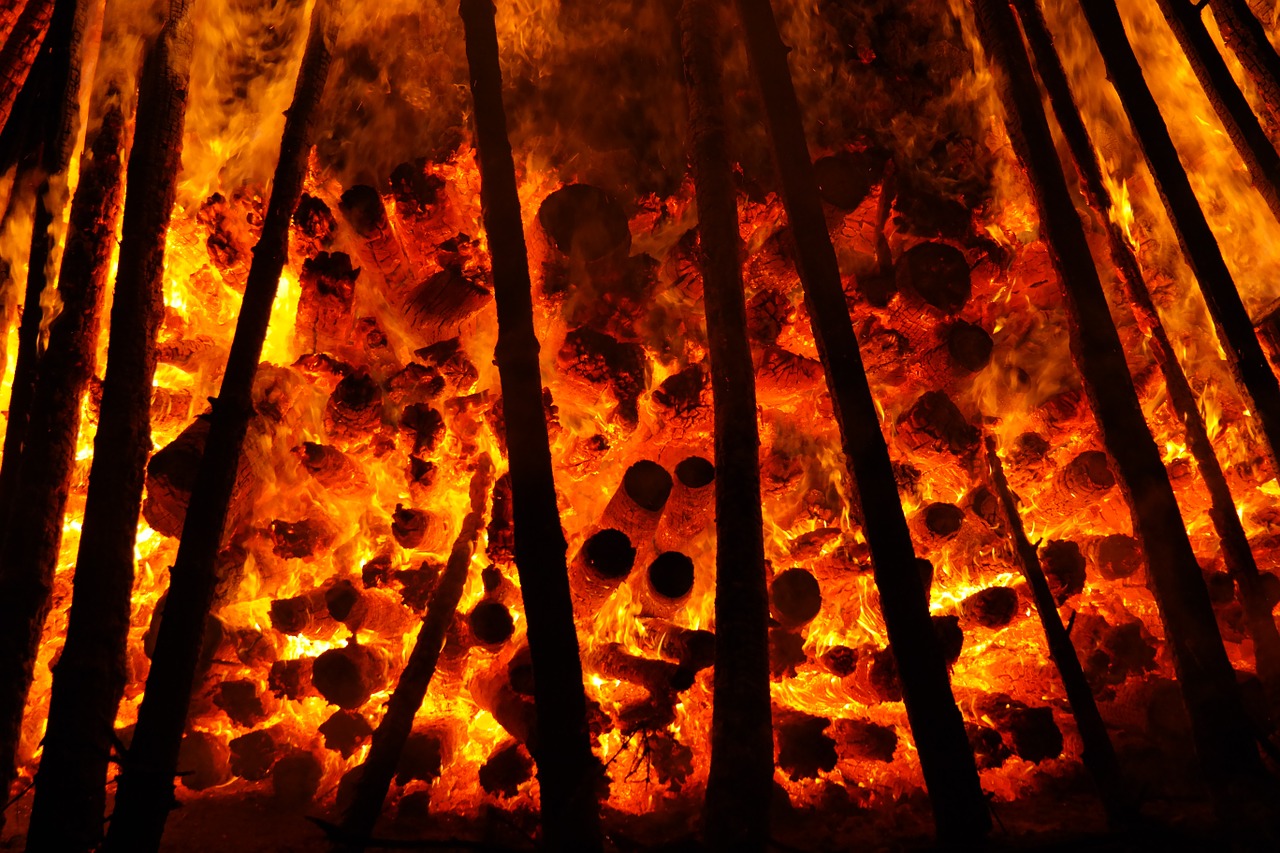
embers-142515_1280

Hell

I live in the Bible belt so this imagery was unavoidable. I made a point to stay away from the more stereotypical hell-scape stuff, given that the Greek Underworld was an entirely different place, so the biblical version of Hell didn’t so much influence what my Underworld was like, but what it wasn’t.

The Inferno

As an English grad who lives in the Bible belt this was another set of imagery I couldn’t escape when considering the Underworld for my book. Especially since Dante linked the Greek Underworld with the biblical one. Much of Tartarus was modeled after Dante’s vision.

The Forbidden Games Trilogy

When it came to Tartarus, what wasn’t inspired by Dante was inspired by the bleak outside of the Shadow World, right down to the shambling, creepy figures and the hot/cold terrain. That imagery really stuck with me all these years later.  I really owe L.J Smith a debt of gratitude. I read so much of her work growing up. She’s the author that inspired me to become a writer. There’s this theory in writing that there’s always some writer you’re subconsciously inspired by/ holding your work up against. For me that is absolutely her.

What Dreams May Come and Hook

Here is no doubt where my living realm based layers of the Underworld were no doubt inspired from. You have the happy layer and the creepy layer but it’s all one afterlife. I have to be honest, I watched this movie once, ever, when I was like twelve or thirteen years old, so all I really have are basic impressions that for some reason keep mashing up with Neverland from Hook. So that unlikely combination is likely what inspired the whole if you imagine it, it will be there thing that existed in my Underworld.

The Amber Spyglass

The Underworld in this book was clearly inspired by Dante, but it held truer to the Greek version. Again, this is more a vision of Tartarus than of Elysium or Asphodel, but the bleakness of the landscape stuck with me long after I set down this book.

The Lovely Bones

This haunting book no doubt inspired the normalcy of the suburbs in my version of the Underworld. If you haven’t read this book, go read it now, before you have children. Because it’s honestly an amazing story and an incredible look at death. I just can never, ever, ever read it again now that I have a daughter.

What do you think of when you hear Underworld? And what have you read or watched that inspired it?

Mythology Monday: The Underworld

20121101-192544.jpg

I blinked, taking in the glass walls overlooking a picturesque landscape. I stared at the sky, blue as forget-me-nots. Splashes of fuchsia flowers bloomed against the emerald green grass. Dazzling aquamarine rivers wound their way through lavender mountains. “I thought—”

“That is would be all underground and cave-like? Yeah, that’s a common misconception. Everything that dies comes to the Underworld. It’s a separate realm, and it’s huge. It would take eternity to see it all, but from here I can give you the highlights.”

“Okay.” I was in complete awe of the beauty of this place. I didn’t see the sun, but felt the sensation of sunlight flooding through the windows.

“So that—” Cassandra pointed at one of the beautiful rivers winding its way through the landscape “—is the River Lethe. Don’t drink the water, bathe in it, or even touch it.”

“Why?” I gazed longingly at the translucent water and pressed my hand against the cool glass. I’ve always hated swimming, and all the water I’d ever drank came from a faucet, but something about the sparkling water called to every fiber of my being.

“You’ll forget things. Sometimes when a soul comes here, their death was traumatizing, or maybe their whole life sucked. This river gives them a chance to forget the things that would otherwise haunt them.”

“Like Oreithyia?”

Cassandra hesitated. “She’s an extreme case. There are different levels of memory loss. The Lethe can take away all memories associated with a singular event or person, or wipe away their entire lives, and everything in between. Some memories go deeper than others. Boreas knew she would be coming here so he . . . made it difficult. He doesn’t like to be forgotten.”

I didn’t ask how. I was having a hard enough time dwelling on what could have happened to me. I didn’t need further details.

“We also use it on people who’ve done bad things in life,” Cassandra continued. “We take away all their memories, and they serve in the palace or around the Underworld until their sentence is up.”

That didn’t seem like much of a punishment. “Why?”

“For most people, their circumstances contributed to whatever crime they committed. This gives them a blank slate. When they finish their sentence they can live the rest of their afterlife in peace. Of course it doesn’t work like that for everyone, but between me and Moirae we can usually tell who should go straight to Tartarus.”

I didn’t want to hear anything about Hell. It was bad enough it was so close by. “Who’s Moirae?”

Cassandra smirked. “You’ll meet her later. Anyway, the point is, don’t drink from the Lethe.”

I nodded, staring at the Lethe. I wished I could forget the last forty-eight hours, but that wouldn’t change anything. I would still be here and Boreas would still be— My head shot up. “Could we give that water to Boreas? Make him forget he ever saw me?”

She shook her head. “It doesn’t work on deities. You haven’t grown into your divinity yet, but when you do you’ll be immune too.”

“Oh,” I said, disappointed.

“That was a good idea, though,” Cassandra said encouragingly. After a moment’s pause she pointed above the Lethe. “Do you see that mountain up there? That’s Olympus.”

“I thought Olympus was supposed to be in the sky.”

“It fell thousands of years ago when people stopped believing in the gods. Most of them died then. They live above the Elysian Fields on their mountain now.”

“Could I meet them?”

Cassandra shrugged. “You can’t go into the Elysian Fields, but the gods get bored easily. They may come to you. You’re new and interesting.”

I wasn’t sure how I felt about that. So far, having the gods take an interest in me had been nothing but trouble.

Cassandra turned me to the left and pointed at another river. “That’s the Styx, and you see those houses over there?”

I nodded.

“Those are the Asphodel Fields. I call them the suburbs.”

I could see why. Pastel-colored houses lined the streets, with postage stamp green lawns surrounded by picket fences. “It looks nice.”

“Pretty much everyone ends up in the Asphodel Fields. You have to be really awesome to end up in the Elysian Fields, and really horrible to end up in Tartarus. Most people live normal lives, and live a normal afterlife.”

“It’s not what I pictured.” I thought back on the Divine Comedy essay I’d written for English class.

Cassandra leaned against the glass wall. It was so clean it looked as if there was nothing stopping her from falling through the bright blue skies. “The Underworld’s just like the living realm, only more peaceful. We still have stores, but no money changes hands. People had things they loved to do up there, and now they can do it down here without any pressure.”

“I wouldn’t want to work in my afterlife.” I stretched. “I’d relax and . . . well, I don’t know what, but I wouldn’t work.”

“Well, the people sentenced to the Lethe do most of the work, but the shops are run by hobbyists. Most people don’t want to do anything resembling work at first,” Cassandra said with a smile, “but eventually they get bored and start learning how to do new things or perfecting a skill they already had.”

“I guess.” I wasn’t convinced. “Can I meet Charon?”

“Maybe later. He’s on the other side of the river right now. See his little boat? The new batch of souls should arrive with him soon.” She pointed to a speck bobbing on the Styx.

I peered closely at the River Styx. In the center was a small island of trees. I could just barely see a long wooden canoe-like boat gliding around the island.

“Anyway,” Cassandra continued, “there’s a few other rivers beyond the Styx, but you have no reason to visit them. If you go past the suburbs you’ll run into a river made of fire called the Phlegethon; that marks the boundary to Tartarus.”

“Sounds like a great place for a swim,” I muttered.

Cassandra laughed. “It’s not as bad as you’d think. There’s a fail-safe, so it doesn’t burn the souls on this side of the river. It actually feels pretty cool.” She paused, considering. “But then I am already dead. No telling what it would do to you. Anyway, you can go anywhere in the suburbs, the palace, and the gardens, but no matter where you are, stop when you get to water.” I almost wanted to object—who was Cassandra to tell me where I was allowed to go?—but I suppressed the feeling. Beyond the river of fire was Hell. Not a place I wanted to go sightseeing. I didn’t want to risk touching the Lethe, and if I recalled correctly, Cerberus, Hades’ three-headed monster dog, guarded the other side of the Styx. If Cassandra said an area was off limits, I didn’t intend to take any chances.

~@~

The Greek Underworld was very well mapped out. Given the number of living heroes that passed through (Odysseus, Aeneas, Hercules, Orpheus, ect) it should be. I made an effort to explain why the heroes could go back and forth by classifying demigods as inbetweeners. They can come and go, it’s why the heroes could visit the Underworld and why we have ghosts. It makes sense to me.

So upon entrance to the Underworld you find yourself on a dock of the Acheron/Cocytus river (it’s unclear which as one flows into the other, one is for sorrow the other for lament, which is sorrow). It’s made of tears of the dead, which makes it a saltwater river. Give Charon two coins (not required in my version) and hop a ferry to the River Styx (river of hate). There’s a marsh in the center of the Styx where the three headed dog Cerberus (still missing in my version) sorts out the souls and sends them either to the Asphodel fields, Tartarus, or Elysium.

Most souls end up in the Asphodel fields. The Titans and the very very very bad souls go to Tartarus. Tartarus is separated from the rest of the Underworld by a river of fire called the Phlegethon. Once upon a time Styx and Phlegethon were in love but were eternally separated. In the Underworld one flows to the other so they can always be together.

Elysium is paradise/heaven. In my version Olympus is located there as well. It’s separated from the rest of the Underworld by the River Lethe (river of forgetfulness). Souls would drink from this river and forget their lives.

Hades lives in a big castle with his judges and advisors. Outside of the castle is the Grove of Persephone, where sad trees live.

There are a few more rivers, but how many and what they are called varies myth to myth. If you add Dante’s Inferno in there there are quite a few circles of hell to add, but for my purposes I’m ignoring those. I had a lot of fun with the geography of the Underworld. It was fun to tweak the myths to fit the setting I needed for the story.

For Real Friday: Strong Female Characters

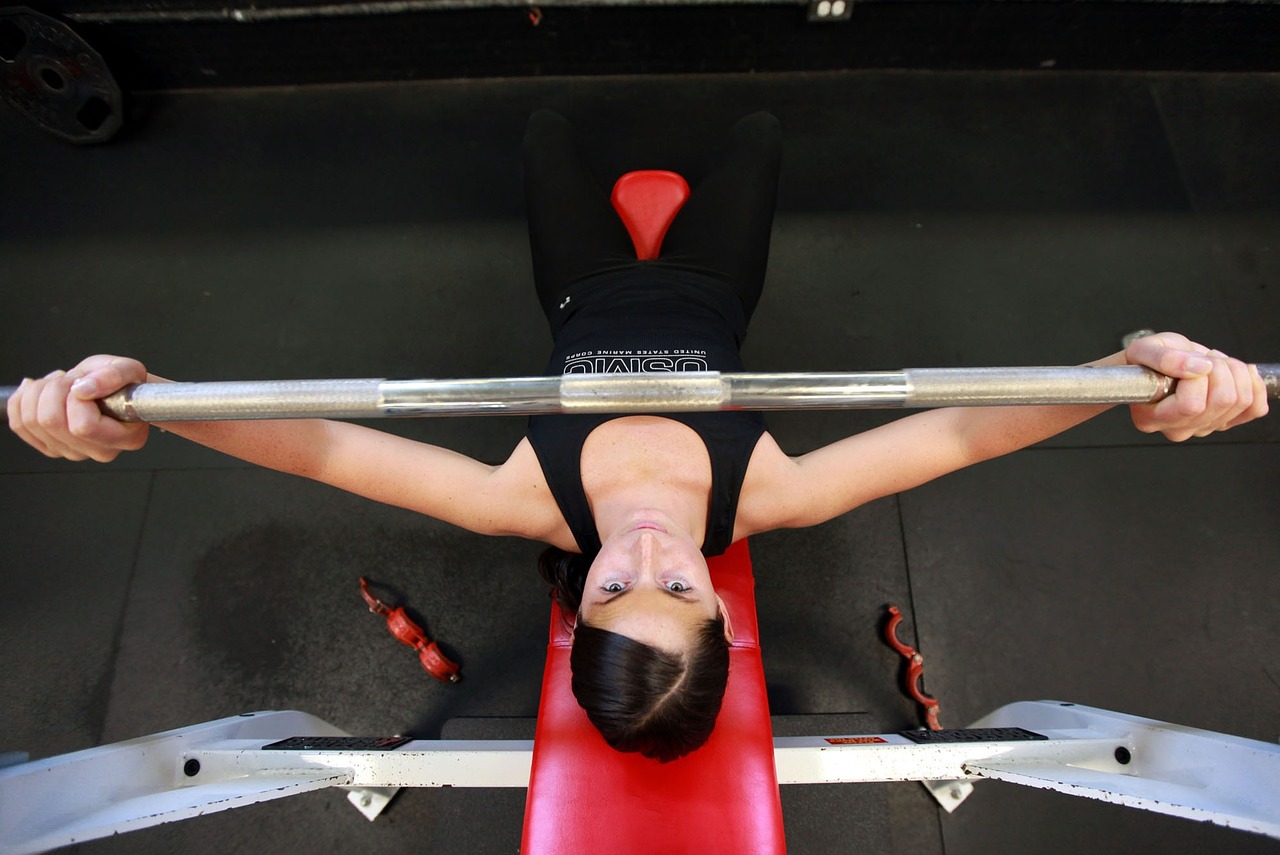
weights-652486_1280

On Wednesday I explained that as far as I’m concerned, Artemis was the original strong female character. When I think of modern day examples that best reflect Artemis, Buffy the Vampire Slayer springs to mind. But lately, strong female characters have gotten some bad press lately.

This article and this article (seriously read them, they’re great)  explains the issue with the strong female character better than I could, but it basically boils down to the fact that strong female characters have become a gimmick. Someone the hero can impress and use as a bench mark to move past or someone who’s given a moment of beating someone up to make viewers happy before the hero has to save her. This, by the way, is not Buffy the Vampire Slayer at all and by the way, Buffy does not fall into the other strong female character trap, which is to make her the only type of female character. Buffy is strong but she’s also multi dimensional, there’s more to her than that she can kick but and on top of that, the cast is exploding with examples of different female characters with different strengths, weaknesses, and complexities.

If the Greek myths had been written today, I’d want Artemis to be a Buffy figure. A single, strong and otherwise complex character who exists to do more than just motivate the hero and who is just one example of what a goddess could be like out of many. Part of my motivation for writing the Daughters of Zeus series was to do just that.

Persephone is an (I hope) complex character with different strengths and weaknesses. People in the book keep calling her strong and brave and all these wonderful things that shallow-strong characters are supposed to be, but she’s the first to point out that they’re wrong. She’s not strong in the physical sense, not because of lack of ability, but because until she ended up down in the Underworld, it never occurred to her to try to be. She’s not the brightest crayon in the box but she’s resourceful. She’s naive and idealistic and that naive idealism helps and hurts her at different points in the plot. Her plot is a romance and but she exists outside of her relationship with Hades. She has strengths but she also has flaws, enough of them that some readers can’t stand her, which is a great thing. A character that everyone loves is a flat character. Universal appeal doesn’t exist in three dimensional characters.

Aphrodite isn’t a strong character at all. She’s weak. She’s one-hundred percent defined by her relationships. She’s confident to a fault and on the surface seems very shallow, but inside she’s dealing with a lot of pain and that confidence and those relationships are the only thing holding her together while she deals with that, and that’s okay because there are people like that and they deserve to see themselves in fiction too. Also, she’s not static, she’ll grow as her series does, but in ways that are very different than Persephone.

Artemis is strong and confident and unlike both Persephone and Aphrodite she’s not trying to live up to some self-imposed ideal, she’s completely happy with who and what she is. Her arc won’t deal with growth but with other things I can’t get into because of spoilers. She’s had relationships but they don’t define her and they aren’t important enough to the plot to bear much mentioning.

There’s different ways to be strong and there’s room for all of them in fiction. Don’t settle for shallow “strong” characters who don’t even pass the sexy lamp test.

Way Back Wednesday: Artemis

Artemis is the original strong female character. But I never really thought of her when I was watching movies or reading books growing up. Now, yes. She’s all over the place. Katniss for example. But when I was younger? For a super cool, self-sufficiant moon/hunting goddess, she didn’t get nearly enough time in the spotlight.

Part of that is because her history is more convoluted than most. The Greek gods and the Roman Gods were not the same gods. They were similar but they weren’t actually the same deities. With some gods, the differences were so minute it hardly mattered. But with others, the differences were pretty vast. Merging Artemis and Diana is problematic on a lot of levels, and that’s ignoring all the other goddesses she absorbed along the way. Recreating her character for my series was hard and it involved a lot more research than I had to do for Persephone or Aphrodite (both of whom required a ton of research so when I say more, I don’t mean I was slacking on those two goddesses). I’m happy with the version I created and I look forward to exploring her more when she gets her own trilogy. Here are a few of the inspirations for bits and pieces of her.

The Sailor Scouts

Sailor Moon herself was more like Selene than the goddess of the hunt, but if you take the major definining traits from each of the Sailor Scouts you’ve got a pretty good picture of the very multidimensional goddess.

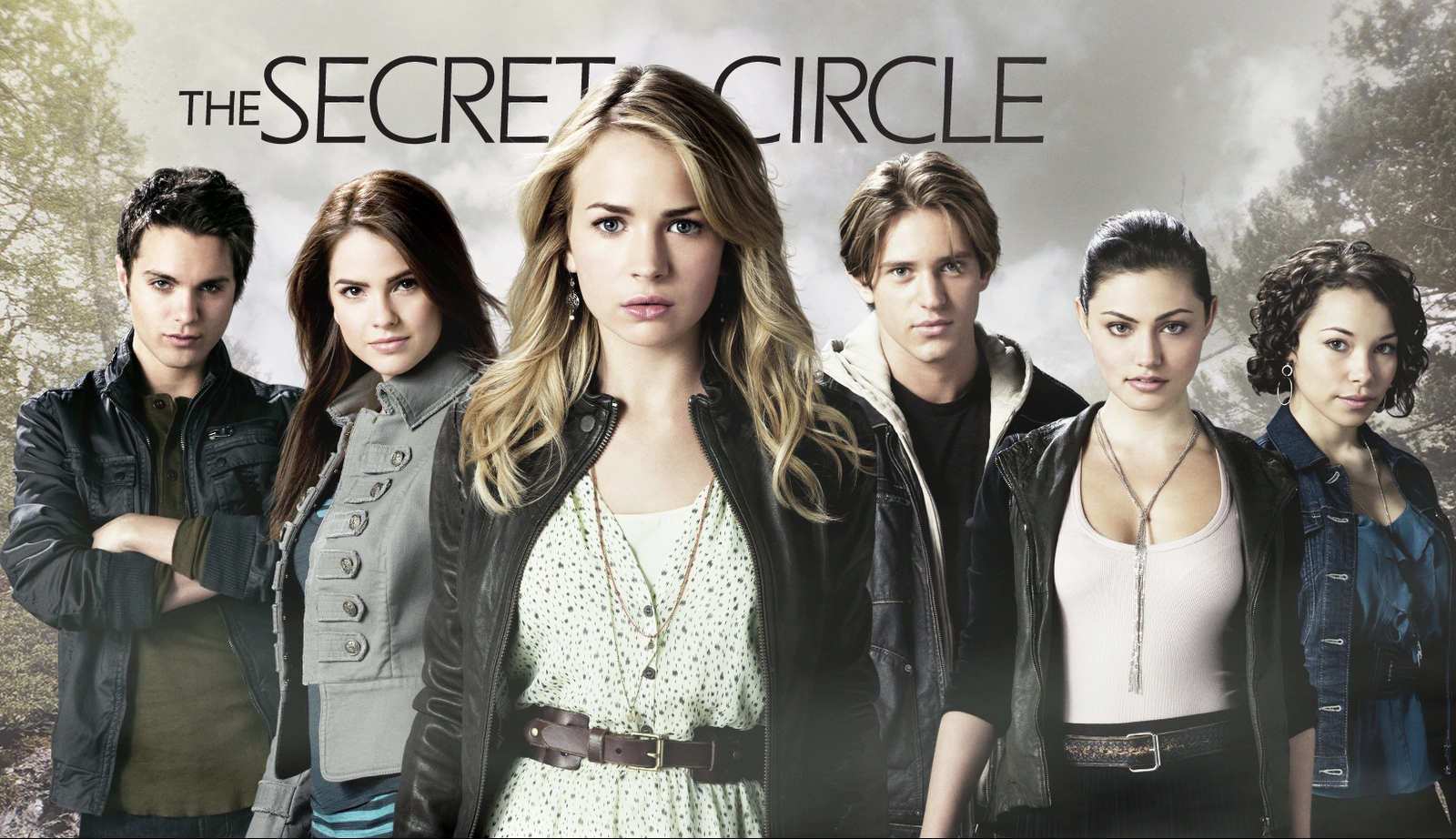
Diana and Deborah from Secret Circle

L. J Smith made a point to model the characters in this series after the major goddesses.  Diana has more traits of the Roman version, Diana, while Deborah embodies the fierceness of the Greek version of Artemis. Together they created the foundation of my idea of that goddess.

And last of all, the character who essentially is the goddess….

Buffy the Vampire Slayer

She literally embodies all things Artemis. I have to be very careful when writing Artemis scenes not to make the two too much alike. She’s the idea I have in my head for the goddess of the hunt. She’s strong, she’s beautiful, she’s absolutely  in her element in the night, she’s brave, she’s sometimes wise but mostly passionate and quick tempered, and she’s short and witty. It’s an amazing character all around and I honestly think Artemis was an inspiration for Buffy.

How about you? Any Artemis like characters in books, movies, or TV shows that you have to share? There are a *ton* out now. What’s your favorite?