Paranormal Reading Challenge

20130717-115056.jpg

I’ve signed up for another one! Sorry, but these seem fun. Read along with me.

The following guidelines come from this blog:

http://megantalksbooks.blogspot.com/p/2013-tour-of-paranormal-reading.html

Welcome to the 2013 Paranormal Reading Challenge hosted by Megan Likes Books and Auntie Spinelli Reads! There are so many awesome sub-genres of paranormal books, that it’s easy to find one you like and stick with it. So that’s why I decided to make a reading challenge with the goal of reading about all kinds of paranormal creatures.

The goal is to read one book featuring each of the following paranormal creatures:

Vampires
Werewolves/Shifters
Fey
Angels/Nephilim
Mermaids
Dragons
Zombies
Demons
Witches/Wizards
Ghosts
Aliens
Other (ie: sirens, unicorns, centaurs, timetravel etc.)

Guidelines:
1. This challenge runs from January 1, 2013 to December 31, 2013.
2. You must have a blog to able to participate, since reviews must be added to the linky.
3. When you sign up with the linky, please put the link to your post about joining the Paranormal Reading Challenge.
4. You’re welcome to list your books beforehand or just add as you go.
5. Sign-ups are open until December 1, 2013
6. At the beginning of each month, I will post a kick-start post, each month featuring a different category of paranormal creature. This post will also include a linky to include your reviews from that month.
7. Each review you link will qualify you for an entry into the monthy giveaway and if your review includes the feature paranormal creature of that month, you get a bonus entry.
8. Each book can only count for one category, even if it contains more than one paranormal creature. For example, Twilight contains both vampires and werewolves, but you can’t use it for both the vampires and werewolves/shifters categories.
9. Everyone who completes the challenge will be entered into a grand prize giveaway at the end of the year.
10. If you read multiple books from one category, feel free to add them to the linkies. Don’t stop at just one!
11. Book can count for other challenges.

Its pretty late in the year, but luckily, I’ve read a few of these that can count. Book titles link back to the reviews.

January – Vampires– Ever After by Kim Harrison. There are vampires in it.
February – Angels/Nephilim– Angelfall by Susan E.E
March – Fey — Glass Frost by Liz DeJesus, it has fairies in it. Review to come
April – Demons– The Soul Screamers series by Rachel Vincent
May – Aliens– I’m counting the Mistborn series for this one as their planet is located in a different place than this one 😉
June – Zombies– Delirium series by Lauren Oliver (review to come) What? They even call the lobotomized people zombies, it works.
July – Witches and Wizards
August – Mermaids
September – Dragons
October – Ghosts
November – Werewolves/Shape-shifters
December – Other

Fairy Tale and Myth Retelling Challenge

20130717-114842.jpg

This looks fun! I’m a bit late to the party, but the idea is to read as many fairy tales and mythology retellings as you can within a year and write reviews to them each month.

Here’s the rules…. the official sign up is here: http://anarmchairbythesea.blogspot.co.uk/2012/12/announcing-telling-tales-challenge-2013.html

The challenge runs from January 1st, 2013 to December 31st, 2013. You can sign up at any point throughout the year.
Again, any genre counts as long as it is in some way related to fairytale and/or mythology. Once again, if you are unsure, as long as you can make an argument for its’ inclusion, it counts!
Re-reads count, and you are more than welcome to overlap books with other challenges.
Please leave me your email address in the comments if you want to participate (I promise not to harrass you, it’s just so that people get a reminder every now and again about the monthly link ups, and also so I can contact you for competitions etc).
Please link up your reviews every month in the posts which will go up on this blog.
In your sign up post, please indicate the level you aim to complete. You are entirely welcome to change this as the year progresses. You can make your lists beforehand, or as you go. Whichever you prefer!
When you sign up, please leave the link to your sign up post, rather than just to your blog in general.
You don’t have to have a blog to participate – you can review on Goodreads, Amazon, wherever, just let me know where you will be reviewing!
That’s it!

The levels are as follows:

Pixie – read 2 books
Troll under the Bridge – read 5 books
Princess – read 10 books
Prince Charming – read 15 books
Evil Queen – read 20 books
Dragon – read 30 books
King/Queen of the Silver Screen – read any number of books and watch the film adaptations

.

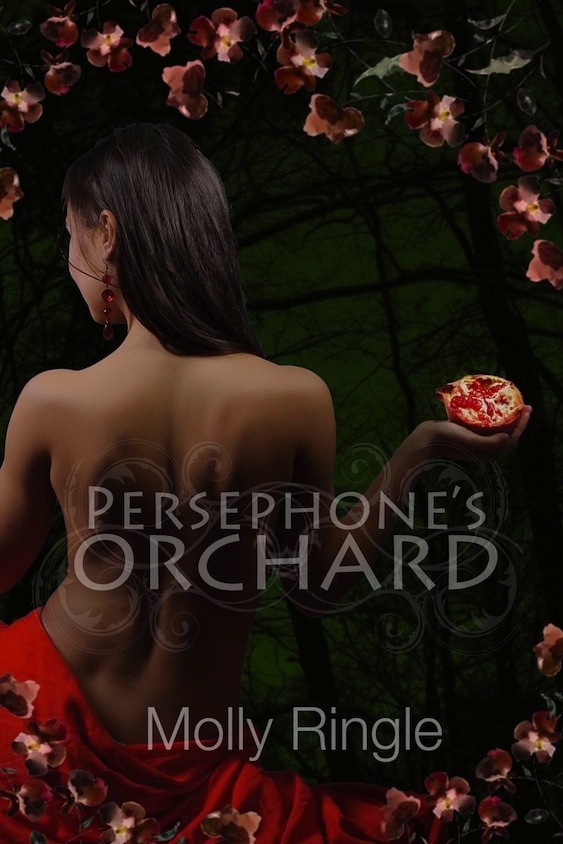
I’m going for Princess level. My first book will be Persephone’s Orchard and that review will be posted this Thursday 🙂

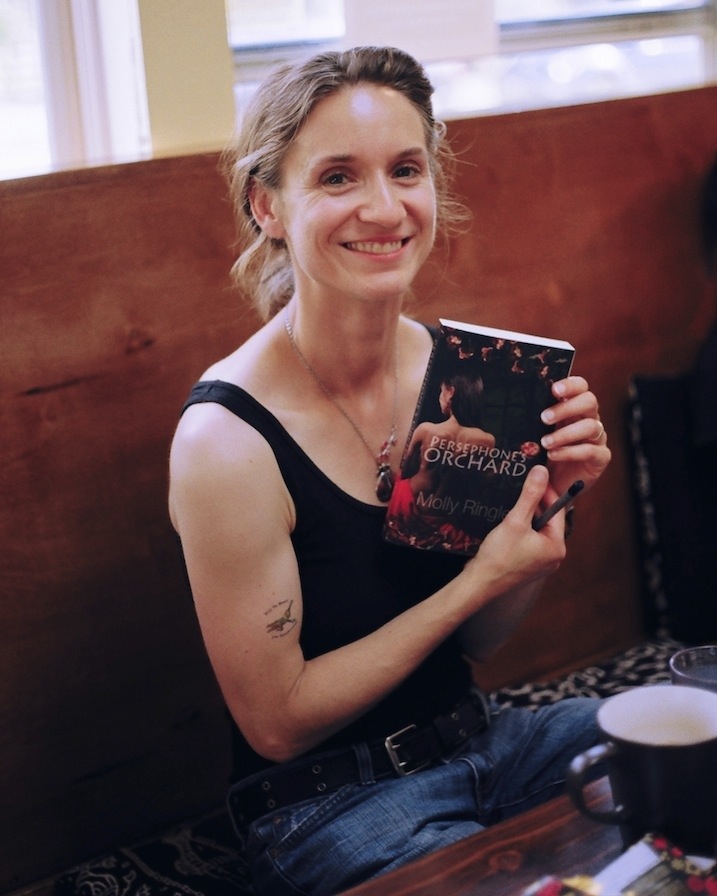
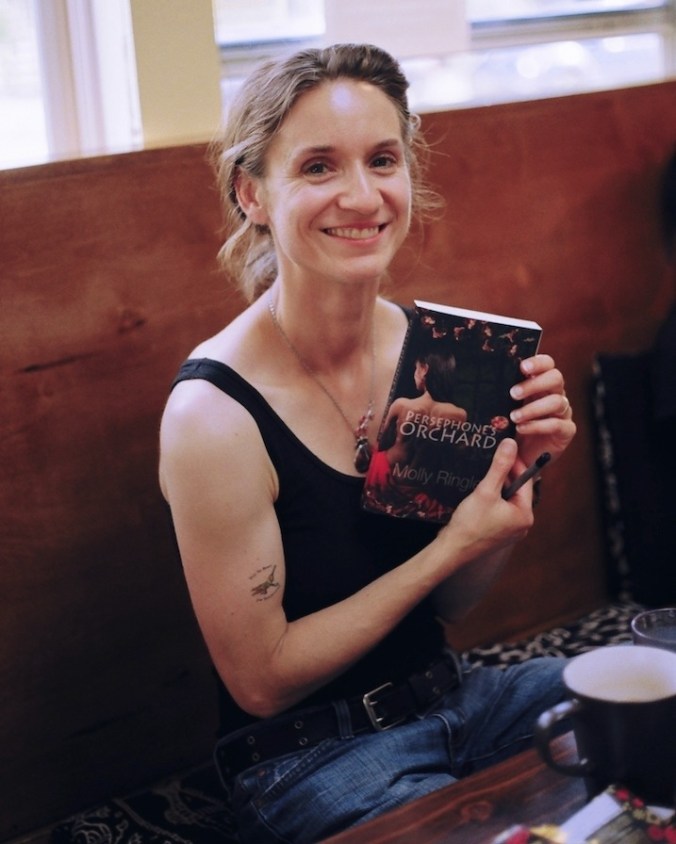
Mythology Monday: Guest Post- Molly Ringle’s version of Persephone

20130713-102709.jpg

We’re taking a break from Hercules for a very special guest post from author Molly Ringle. She wrote her own version of the Persephone myth in a book called Persephone’s Orchard (wordpress won’t let me underline for some reason so lets see if italics works). I’ll include her version of the myth first, then a bit about the book. Tune in Thursday for a review of Persephone’s Orchard

Molly Ringle’s Version of Persephone:

There is no single “original” myth for Persephone and Hades, nor for most of the other myths. We have a variety of surviving sources, often with varying and conflicting details. What I’ll tell here draws from various versions, though predominantly from the Homeric Hymn to Demeter, one of the earlier sources we know about.

One day Hades, the lonesome and grim god of the Underworld, caught sight of Persephone, a goddess of spring and daughter of the gods Demeter and Zeus, and fell promptly in love with her. Deciding he must have her, he dispensed with the usual introductions, and abducted her from the field where she was picking flowers. He caused the earth to split open, and dragged her down into its depths in his chariot pulled by black horses. The chasm then closed again, and Persephone officially became a missing person in the world above.

Her mother Demeter went wild with grief at the disappearance of her daughter, and while racing around looking for her, dropped her duties of making the Earth fertile and healthy. The weather went cold; the land went barren; people began to starve. This was, apparently, the first instance of winter. And no one liked it. So once Zeus figured out where Persephone had disappeared to, he insisted upon her return, for otherwise Demeter would refuse to save the Earth, and humanity would freeze and starve to death.

Persephone was happy to see the messenger Hermes come to the Underworld to summon her back, but it turned out her return to the surface would only be temporary. She had eaten a pomegranate seed from the land of the dead (the Homeric Hymn says Hades slipped it straight into her mouth, sneakily), and was therefore obliged to return to the Underworld for part of every year. She honors this obligation, and this is why winter, too, returns to Earth each year.

Queen of the Underworld

It’s a horrible thing, a woman being kidnapped and trapped into a marriage in the land of the dead. We can all agree on that. What has always interested me, though, is how it doesn’t resemble the average kidnapping. Hades doesn’t tie Persephone up and throw her in a closet and abuse her. Quite the contrary. Instead, he gives her new powers. He makes her queen of the realm. He tells her she can punish anyone who doesn’t properly worship her, in any way she sees fit. And he asks her, please, to think of him kindly, and to consider that he’s not such a bad guy as husbands go.

It all still sounds a bit psychotic from our modern point of view, but nonetheless, in his possibly twisted way, he loves her, and honestly wants her to love him. That’s the point that has stuck with me all these years, and made me (like hundreds of other writers) come up with a version of the story that gives their relationship a fair chance at happiness.

My changes to the myth

My story, Persephone’s Orchard, uses somewhat less magic than the old myths, in which the gods can do virtually anything they wish by a wave of the hand. I love the myths, but I find it easier to plot stories where magic is limited and can’t solve everything, so I tempered the magic to a few key abilities and places. The Underworld is certainly a place of magic, where even the plants growing there (for example, pomegranate trees) exhibit properties that their living-world counterparts do not. But my immortals are nearly regular humans in most ways, other than exhibiting unusual strength and longevity. As with vampires, you can kill them if you try really hard, so they do have to be on the lookout for anti-immortal vigilantes. (But, unlike most vampires, the gods in my story are warm to the touch. And, no, they don’t sparkle. Unless they’re wearing lots of those beautiful Underworld gemstones.)

But perhaps the most important change I made, as hinted at already, was to remove the majority of the non-consensual portions of the myth of Persephone and Hades. Instead I have a Hades less prone to kidnapping, and a Persephone who’s actively curious about that dark and forbidden place called the Underworld, and who chooses to visit there, against her mother’s wishes. And that which is forbidden is always so much more tempting.

About her Book:

The Greek gods never actually existed. Did they? Sophie Darrow finds she was wrong about that assumption when she’s pulled into the spirit realm, complete with an Underworld, on her first day at college. Adrian, the mysterious young man who brought her there, simply wants her to taste a pomegranate. Soon, though she returns to her regular life, her mind begins exploding with dreams and memories of ancient times; of a love between two Greeks named Persephone and Hades. But lethal danger has always surrounded the immortals, and now that she’s tainted with the Underworld’s magic, that danger is drawing closer to Sophie.

* * *
Molly Ringle has been writing fiction for over twenty years. With her intense devotion to silly humor, she was especially proud to win the grand prize in the 2010 Bulwer-Lytton Fiction Contest with one (intentionally) terrible sentence. Molly grew up in the Pacific Northwest, and lives in Seattle with her husband and children. Her studies include a bachelor of arts in anthropology and a master of arts in linguistics. She was a Tri-Delta in college, in an old sorority house that was supposedly haunted, which inspired some of the central ideas for The Ghost Downstairs. She also loves folklore and mythology, and is working on new novels about the Greek myths. Persephone’s Orchard is the first in the series. When not writing, she can often be found experimenting with fragrances, chocolate, and gardening.

Website: http://mollyringle.com/
Facebook: https://www.facebook.com/MollyRingle
Goodreads: https://www.goodreads.com/author/show/2905269.Molly_Ringle
Twitter: https://twitter.com/mollyringle
Blog: http://lemonlye.livejournal.com/
20130713-102703.jpg

Thursday Review: Devil Bones by Kathy Reichs

20130613-143816.jpg

The Blurb: Following her most successful book to date, Kathy Reichs — international number one bestselling author, forensic anthropologist, and producer of the Fox television hit “Bones” — returns to Charlotte, North Carolina, where Temperance Brennan encounters a deadly mix of voodoo, Santeria, and devil worship in her quest to identify two young victims.In a house under renovation, a plumber uncovers a cellar no one knew about, and makes a rather grisly discovery — a decapitated chicken, animal bones, and cauldrons containing beads, feathers, and other relics of religious ceremonies. In the center of the shrine, there is the skull of a teenage girl. Meanwhile, on a nearby lakeshore, the headless body of a teenage boy is found by a man walking his dog.

Nothing is clear — neither when the deaths occurred, nor where. Was the skull brought to the cellar or was the girl murdered there? Why is the boy’s body remarkably well preserved? Led by a preacher turned politician, citizen vigilantes blame devil worshippers and Wiccans. They begin a witch hunt, intent on seeking revenge.

Forensic anthropologist Temperance Brennan — “five-five, feisty, and forty-plus” — is called in to investigate, and a complex and gripping tale unfolds in this, Kathy Reichs’s eleventh taut, always surprising, scientifically fascinating mystery.

With a popular series on Fox — now in its third season and in full syndication — Kathy Reichs has established herself as the dominant talent in forensic mystery writing. “Devil Bones” features Reichs’s signature blend of forensic descriptions that “chill to the bone” (“Entertainment Weekly”) and the surprising plot twists that have made her books phenomenal bestsellers in the United States and around the world.(

My thoughts:
Okay, so I’m officially moving on from free books picked up at book exchanges and sticking with books in genres I know I like. But the thing is, I thought I would like this one. I like mysteries, I like medical thrillers. This book seemed like it would be an awesome combination of both. It’s not that it’s not enough like the show Bones, it may not be, but I don’t watch that show so the disappointment couldn’t stem from that.

I just didn’t like the writing style. Entire conversations passed like this.

He asked me how it went. I told him. He said that’s too bad. I said I know.

Not “how did it go?”
“Meh, not so great,” I said bringing it up to speed.
“Too bad.” He shook his head and gave me a sympathetic look.

Nope, entire conversations told in summary that included what the characters said verbatim. Why? That doesn’t shorten anything. And it wasn’t just when she was catching up people on events. This happened to.

I picked up the phone and said hello. He sounded upset when he said hello. I asked what was wrong. He told me xyz had happened on the station. Oh, I responded. That is upsetting. We talked for a few more minutes before he said goodbye. I hung up the phone.

Arg! She has an eleven book contract (at least) in PRINT and a TV show. What?!

Every single chapter ended with a “If I’d only paid attention to xyz, I could have prevented so much pain.”

Seriously! That kind of “foreshadowing” is just lazy.

There was tons of “intro to xyz” info dumps. Whether it be aspects of forensics or the tenants of religions. Then the protagonist would have a conversation where she reiterated every single fact from the pages of info dumping. I would have rather just had the conversations. I’m glad she researched stuff, but I really didn’t feel the need for a wikipedia type entry on every single thing she looked up down to random bands. I also felt like it was hitting me over the head with morals. You know, I never considered Wiccan’s to be satanists before this book, but thanks for repeatedly assuming I’m a bigot. I would say that she trying to teach another character or make some self-discovery, but the protagonist never really seemed to think there was a link between Satan and wicca either and it was exposition not dialogue so who else could the writer be trying to convince. To see THAT type of mini-moral packed into a story well, I recommend reading Dime Store Magic by Kelley Armstrong.

Apparently this was book 11 in the series, so I guess one good thing is that I was able to pick up the book and make sense of it without the rest of the series. But I won’t be reading anymore by this author.

Mythology Monday: Hercules Labors 7-9

20130617-162800.jpg

The seventh labor of Hercules was to capture the Cretan Bull. The Cretan Bull was in some versions of the myths, the parent of the minotaur discussed in Minos’ Mythology Monday a few weeks ago. That whole myth may just be an early version of the Zeus /Europa myth, but that’s another story.

Anyway, Minos wanted to get rid of the bull that seduced his wife, so he sent for Hercules. Minos offered to help, but Hercules declined in favor of sneaking up on the bull and strangling it into unconsciousness with his bare hands. He shipped the bull back to his king, who wanted to sacrifice it to Hera, but Hera didn’t want anything Hercules killed, so it as set free to roam in Marathon. Theseus (he’s popped up in a few of our myths so far, and we’ll learn more about him later) later killed it and sacrificed it to either Apollo or Athena depending on who told the myth.

The eighth labor of Hercules was to steal the Mares of Thrace (or Diomedes, but I prefer Thrace because of Gattlestar Gallactica), four man-eating horses that belonged to Diomedes, King of Thrace and son of Ares. Also, he was a giant.

Fun fact, Alexander the Great traced his horses lineage back to one of these horses.

The horses had names: Podagros (the fast), Lampon (the shining), Xanthos (the blond) and Deimos (the terrible). They were tied up to a bronze manger and were insane thanks to their diet of human flesh. They also may have breathed fire. In some versions of the myths, Hercules brought a few boys with him to keep the horses occupied while Hercules dealt with the giant. Some versions had only one boy, Abderus, some versions had no boys. The boys that may or may not have come were eaten in the versions of the myths they took part in. Hercules got pissed, and fed Diomedes to the horses.

Eating made the horses calmer, so Hercules bound their mouths shut and shipped them back to his king, who dedicated them to Hera, or Zeus, or set them free, or sacrificed them. Sorry for all the maybes, but there are a TON of Herculean myths to wade through. Either way, the horses descendants were used in the Trojan war.

The ninth labor was by far the most offensive. Hercules had to steal Hippolyta’s girdle. Hippolyta was the Queen of the Amazons, and a daughter of Ares. There are two versions of this myth, one with Hercules alone, and the other with Theseus.

Okay, for Herc alone, Hippolyta was so impressed with him that she gave him the girdle, and went to visit him on his ship. Hera disguised herself as an amazon and got the others all riled up and convinced that Herc was abducting their queen so they attacked, were defeated, and Herc gave the girdle to his kings daughter.

Her and Theseus went down almost the same, except that Theseus may have actually been trying to abduct her or she might have been going with him willingly, setting aside her throne for her love. They got married, and Theseus left her for a chick named Phaedra (some versions of the myth have Phaedra not coming about until after Hippolyta’s death). Hippolyta stormed the wedding and attacked and was killed. But maybe it was actually not her at all, but her sister, as some of the myths claim.

Either way, Hippolyta pops up in Chaucer’s “A Knight’s Tale,” AND Shakespeare’s

    A Midsummer Night’s Dream

married to Theseus.

Hercules is getting just a few more mythology Monday’s, he has many adventures to come. Then I promise, the Hercules show will be over and I’ll move on to other myths.

Winner!

Colleen won the anniversary giveaway! Congratulations Colleen!

Bookmarks are being mailed out tomorrow for those who requested them. If you have not gotten them by next-Monday, let me know and I’ll resend. If they are damaged at all, let me know and I’ll resend. Enjoy guys, and I’m looking forward to another great year 🙂

Giveaway Day!

It’s a happy couple of days for me. Today is the Fourth of July which means fireworks! Yay! Also, Persephone has been out for an entire year!

It’s been a good year. I went from being unpublished, to having an entire trilogy come out. I’ve met really great readers and a ton of other writers. I want to celebrate.

So…giveaway. For those of you who have read my series, I’m giving away signed bookmarks. US only, I’m afraid. No requirements for that giveaway, just send me your address in a private message, and I’ll get a bookmark in the mail. But be sure to send our friends over to this blog, because I’m giving away my entire trilogy to one lucky winner. All you have to do is follow me on twitter, facebook, and this blog. Comment below (here at http://www.kaitlinbevis.com, not twitter, facebook or goodreads otherwise I can’t enter the entry into the random number generator), and I’ll choose a random winner at the end of the day Saturday. Winners will be posted Monday.

Enjoy 🙂 And thanks for making this a great year!

Mythology Monday: Hercules labors 4-6

20130611-143923.jpg

Hercules’ next labor was to capture the Erymanthian Boar. The boar was a huge, violent creature that roamed the mountains and depending on the myth was responsible for the death of Adonis. Hercules traveled to the mountains, and on the way got a group of centaurs drunk. Things got out of hand, as drunken parties so often do, and Hercules ended up having to kill them all with his poisoned arrows.

One centaur, Chiron, could’t die because he was immortal. But the poisoned arrows still hurt, so in exchange for the pain of the arrows, he took Prometheus’ place as snack for the golden eagle. Herc killed the eagle with his arrows, so Chiron told him to trap the boar in a snow drift. It worked, and the boars tusks were put on display at a shrine of Apollo.

The next labor was simpler. Clean the Augean Stables in a day. Augeas was the King of Eliis, and he had more cattle than anyone in the whole word, but had NEVER cleaned his stables (30 years old, over 1,000 cattle, gross). That was bad, because in addition to being numerous, the cattle were also divinely heathy so they created a lot of manure. Herc was promised ten percent of the cattle if he succeeded.

Her rerouted two rivers and blasted the stables clean. Augeas didn’t deliver 10% of the cattle, so Herc killed him. But because the rivers did the work, and because he was paid, this labor was thrown out, which is part of the reason ten labors became 12.

Instead, Herc was sent to defeat the Stymphalian birds. These were man-eating birds with bronze beaks and sharp metallic feathers. They were also Ares’ pets. Even their poop was highly toxic. They had recently moved to a swamp in Arcadia to escape a pack of wolves, and were troubling a nearby town.

But the birds lived in a swamp. How could Herc get to them without sinking? Athena gave him a noisemaker he shook to frighten all the birds into the air, where they were shot at with…. you guessed it, poisoned arrows. They flew far away and became Jason’s problem, but that’s another story.

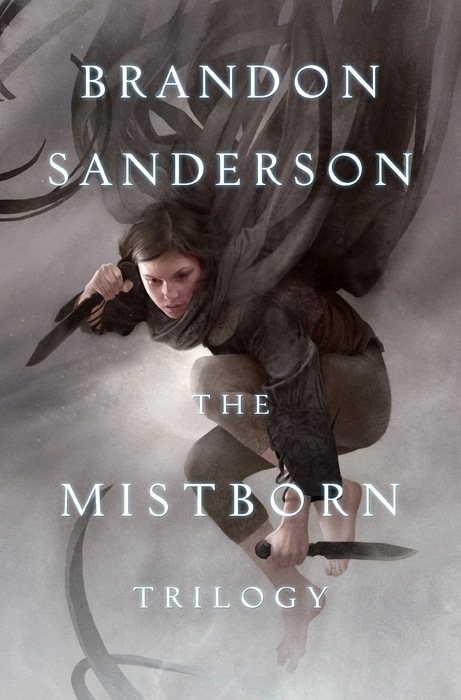
Thursday Review: The Mistborn Trilogy by Brandon Sanderson

20130530-230550.jpg

I won this trilogy at a conference in February, and am SO glad I read them. Here’s the blurb to book 1.

Brandon Sanderson, fantasy’s newest master tale spinner, author of the acclaimed debut Elantris, dares to turn a genre on its head by asking a simple question: What if the hero of prophecy fails? What kind of world results when the Dark Lord is in charge? The answer will be found in the Mistborn Trilogy, a saga of surprises and magical martial-arts action that begins in Mistborn.

For a thousand years the ash fell and no flowers bloomed. For a thousand years the Skaa slaved in misery and lived in fear. For a thousand years the Lord Ruler, the “Sliver of Infinity,” reigned with absolute power and ultimate terror, divinely invincible. Then, when hope was so long lost that not even its memory remained, a terribly scarred, heart-broken half-Skaa rediscovered it in the depths of the Lord Ruler’s most hellish prison. Kelsier “snapped” and found in himself the powers of a Mistborn. A brilliant thief and natural leader, he turned his talents to the ultimate caper, with the Lord Ruler himself as the mark.

Kelsier recruited the underworld’s elite, the smartest and most trustworthy allomancers, each of whom shares one of his many powers, and all of whom relish a high-stakes challenge. Only then does he reveal his ultimate dream, not just the greatest heist in history, but the downfall of the divine despot.

But even with the best criminal crew ever assembled, Kel’s plan looks more like the ultimate long shot, until luck brings a ragged girl named Vin into his life. Like him, she’s a half-Skaa orphan, but she’s lived a much harsher life. Vin has learned to expect betrayal from everyone she meets, and gotten it. She will have to learn to trust, if Kel is to help her master powers of which she never dreamed.

Readers of Elantris thought they’d discovered someone special in Brandon Sanderson. Mistborn proves they were right.(

My thoughts:
Brandon Sanderson created an entirely unique fantasy world that uses metals and allomancy instead of sword and sorcery. A reviewer on goodreads summarized allomancy better than I can (I ramble) here goes:
“Speaking of the magic that was probably the most intriguing part of the book for those who have read a lot of fantasy and get the same magic systems over and over. Magic is fueled by trace minerals that are ingested by those with the power. A Misted can only ingest one type of metal but a Mistborn can take as many trace minerals as desired (there are a standard 8 with some surprises). Mistborn are rare even in the nobility and as a result are highly prized by the powerful”

The plot had so many twists and turns that I felt out of breath when I finished. I took a LONG break between book two and three because I knew once I picked book three up, I wouldn’t be able to put it down.

I loved the people in his world, and the ending was perfect. I could almost hear Kelsier saying “there’s always another secret” as I turned the last page. Even little inconsistencies I’d picked up on through the series (how would super enhanced eye sight help you see through mist exactly?) were answered. I will admit that I saw the end coming for books two and three, but knowing it was coming only made me more anxious to get there. It was great anticipation. I really enjoyed these books, and I think most of my readers would really enjoy it too.

Mythology Monday: Hercules’ labors 1-3

20130604-135308.jpg

Mad with grief, Hercules took the Oracle of Delphi’s advice to perform 10 impossible tasks for King Eurysteus. He was tricked into doing the last two. In return for completing the labors, his sins would be forgiven and he would be granted immortality.

*side note: most of the monsters in these myths were the children of the Titans Typhon and Echidna)

The first task (order varies depending on who writes the myth) was to slay the Nemean Lion. It had golden super-fur/body armor that could not be cut with any weapon. It also had claws sharp enough to shred metal. Sometimes the lion could shape shift into a beautiful woman and would feign injury, drawing in the would be heroes and then shifting into a lion and killing them.

Hercules blocked the exit of the lion’s cave and then either strangled the lion, or shot it with in an arrow in its mouth. He ran into a problem when he tried to skin the lion because nothing could cut its fur. Finally, Athena took pity on him and pointed out the lions claws were rather sharp, so Hercules used them to skin the lion.

This skin became his cloak/armor.

Next, Hercules sent to kill the hydra. You guys know this one, it had nine (or three, or a thousand) heads and every time you chopped off one, three (or two) more grew in its place. Remember, myths varied by who told them (hence the parenthesis). The hydra’s breath and blood were poisonous and the reptilian creature lived in a lake that sat above an entrance to the Underworld.

Hercules shot flaming arrows at the creature, but that just pissed it off. He may or may not have beat it with his club, stabbed it with his sword, or cut off several heads with a sickle. Whatever weapon he used, it soon became apparent that more heads grew every time he chopped one off. Unfortunately, the hydra couldn’t die so long as it had one head.

Hercules may have asked Iolaus or Athena for aid, and came up with the brilliant idea of cauterizing the wounds before more heads could grow. He either used fire or the creatures own blood dipped on his sword to cauterize the wound. Then he used the creatures blood to turn all his cool weapons into cool poisonous weapons.

Sadly, in killing the hydra, Hercules rendered that river uninhabitable. All the fish died and the nearby villagers either starved or moved.

The last labor I’m covering today was for Hercules to obtain a doe belonging to Artemis. It had golden antlers and bronze and brass hooves. It could outrun even the swiftest of arrows. Hercules chased it across Greece for a full year. Eventually he trapped it a. while it was sleeping, b. with a net, or c. with an arrow shot between its legs, tripping it. He apologized to Artemis and promised to return the doe once he showed it to the King. Artemis didn’t hold a grudge, ruining Hera’s plot to anger the goddess.

When Hercules showed the deer to the King, he wanted to add it to his collection of woodland creatures, but he was unable to keep up with the deer, so it escaped and returned to Artemis.

Over the next few weeks we’ll cover the rest of Hercules’ labors and other tasks. I promise we will get back to general mythology soon.