For Real Friday: The Afterlife

l-78510

Last week, I said that if you want to know what a society fears, tap into their fiction. We write our fears into stories that we can control. But if you want to know what terrifies a society, tap into the stories they’re afraid might be fiction. For humankind, as long as we’ve been aware of death, those stories have to do with the afterlife.

The fear of what comes next inspires us to make the most out of now. It also inspires us to be on our best behavior just in case that dictates the quality of the time after our time. Then there’a the fear that there is nothing after our time, and with that fear we do an interesting thing.

We bury it. People don’t think about death. Not really. There’s this odd kind of willful denial that even as we plan for it, are aware of it, and let our ideas of the afterlife dictate our behavior, we don’t really think about it. It’s an omnipresent fact to our existence but rarely do we dwell. It’s always a shock when it happens, either the death itself or the diagnoses that tells us its coming.

Part of that is self-preservation. The knowledge that time is running out doesn’t change the fact that it is. Being sad about it doesn’t change the fact that it is. Seizing the moment can get you in major trouble or give you a momentary joy but it doesn’t change the fact that the clock is ticking.

Nothing does.

I don’t know my thoughts on the Afterlife, but I like the version I came up with. That life just goes on but we’re happier for it. Here’s to hoping.

Way Back Wednesday: The Underworld

l-78492

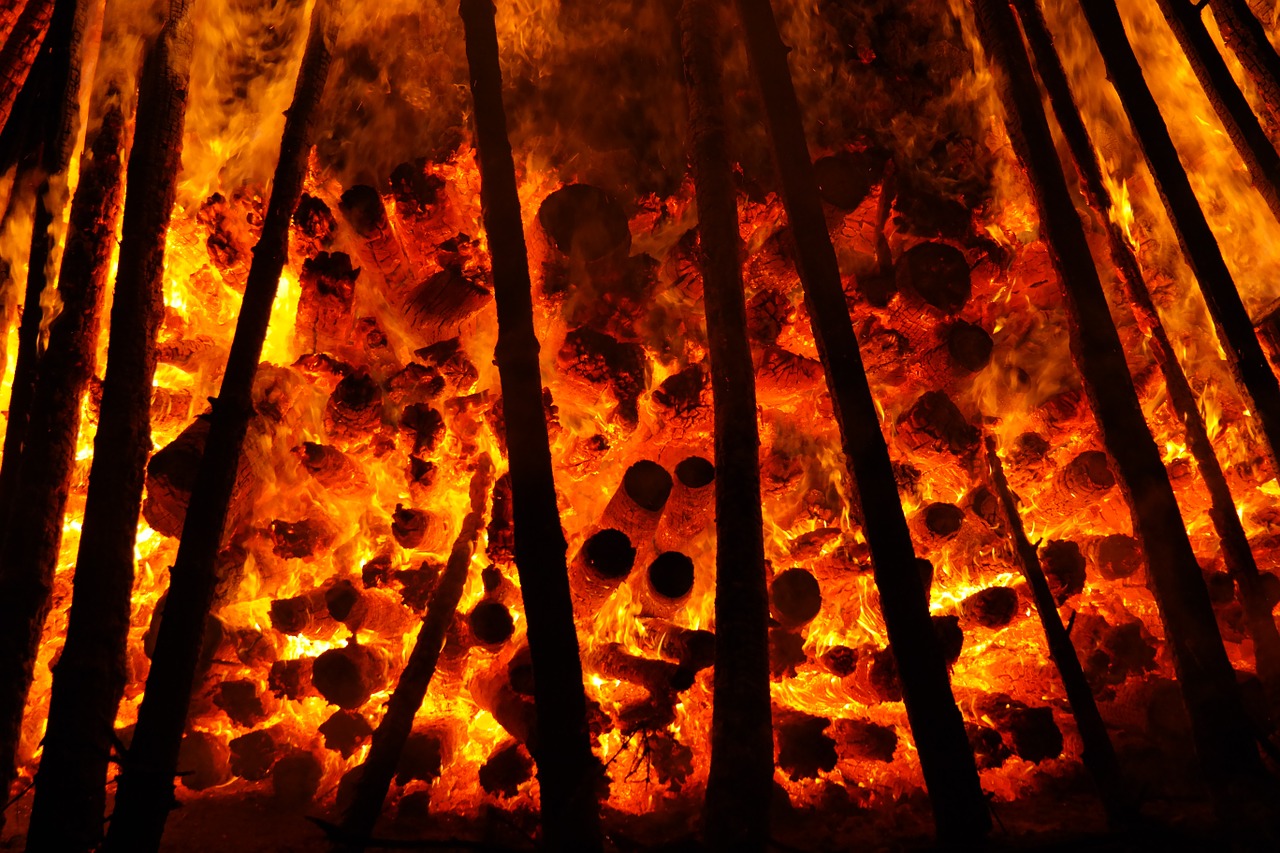
When it comes to the Underworld, there’s been no shortage of sources that could have influenced the way I saw it. Here are a few of the more prominent examples that spring to mind.

embers-142515_1280

Hell

I live in the Bible belt so this imagery was unavoidable. I made a point to stay away from the more stereotypical hell-scape stuff, given that the Greek Underworld was an entirely different place, so the biblical version of Hell didn’t so much influence what my Underworld was like, but what it wasn’t.

The Inferno

As an English grad who lives in the Bible belt this was another set of imagery I couldn’t escape when considering the Underworld for my book. Especially since Dante linked the Greek Underworld with the biblical one. Much of Tartarus was modeled after Dante’s vision.

The Forbidden Games Trilogy

When it came to Tartarus, what wasn’t inspired by Dante was inspired by the bleak outside of the Shadow World, right down to the shambling, creepy figures and the hot/cold terrain. That imagery really stuck with me all these years later.  I really owe L.J Smith a debt of gratitude. I read so much of her work growing up. She’s the author that inspired me to become a writer. There’s this theory in writing that there’s always some writer you’re subconsciously inspired by/ holding your work up against. For me that is absolutely her.

What Dreams May Come and Hook

Here is no doubt where my living realm based layers of the Underworld were no doubt inspired from. You have the happy layer and the creepy layer but it’s all one afterlife. I have to be honest, I watched this movie once, ever, when I was like twelve or thirteen years old, so all I really have are basic impressions that for some reason keep mashing up with Neverland from Hook. So that unlikely combination is likely what inspired the whole if you imagine it, it will be there thing that existed in my Underworld.

The Amber Spyglass

The Underworld in this book was clearly inspired by Dante, but it held truer to the Greek version. Again, this is more a vision of Tartarus than of Elysium or Asphodel, but the bleakness of the landscape stuck with me long after I set down this book.

The Lovely Bones

This haunting book no doubt inspired the normalcy of the suburbs in my version of the Underworld. If you haven’t read this book, go read it now, before you have children. Because it’s honestly an amazing story and an incredible look at death. I just can never, ever, ever read it again now that I have a daughter.

What do you think of when you hear Underworld? And what have you read or watched that inspired it?

For Real Friday: Strong Female Characters

weights-652486_1280

On Wednesday I explained that as far as I’m concerned, Artemis was the original strong female character. When I think of modern day examples that best reflect Artemis, Buffy the Vampire Slayer springs to mind. But lately, strong female characters have gotten some bad press lately.

This article and this article (seriously read them, they’re great)  explains the issue with the strong female character better than I could, but it basically boils down to the fact that strong female characters have become a gimmick. Someone the hero can impress and use as a bench mark to move past or someone who’s given a moment of beating someone up to make viewers happy before the hero has to save her. This, by the way, is not Buffy the Vampire Slayer at all and by the way, Buffy does not fall into the other strong female character trap, which is to make her the only type of female character. Buffy is strong but she’s also multi dimensional, there’s more to her than that she can kick but and on top of that, the cast is exploding with examples of different female characters with different strengths, weaknesses, and complexities.

If the Greek myths had been written today, I’d want Artemis to be a Buffy figure. A single, strong and otherwise complex character who exists to do more than just motivate the hero and who is just one example of what a goddess could be like out of many. Part of my motivation for writing the Daughters of Zeus series was to do just that.

Persephone is an (I hope) complex character with different strengths and weaknesses. People in the book keep calling her strong and brave and all these wonderful things that shallow-strong characters are supposed to be, but she’s the first to point out that they’re wrong. She’s not strong in the physical sense, not because of lack of ability, but because until she ended up down in the Underworld, it never occurred to her to try to be. She’s not the brightest crayon in the box but she’s resourceful. She’s naive and idealistic and that naive idealism helps and hurts her at different points in the plot. Her plot is a romance and but she exists outside of her relationship with Hades. She has strengths but she also has flaws, enough of them that some readers can’t stand her, which is a great thing. A character that everyone loves is a flat character. Universal appeal doesn’t exist in three dimensional characters.

Aphrodite isn’t a strong character at all. She’s weak. She’s one-hundred percent defined by her relationships. She’s confident to a fault and on the surface seems very shallow, but inside she’s dealing with a lot of pain and that confidence and those relationships are the only thing holding her together while she deals with that, and that’s okay because there are people like that and they deserve to see themselves in fiction too. Also, she’s not static, she’ll grow as her series does, but in ways that are very different than Persephone.

Artemis is strong and confident and unlike both Persephone and Aphrodite she’s not trying to live up to some self-imposed ideal, she’s completely happy with who and what she is. Her arc won’t deal with growth but with other things I can’t get into because of spoilers. She’s had relationships but they don’t define her and they aren’t important enough to the plot to bear much mentioning.

There’s different ways to be strong and there’s room for all of them in fiction. Don’t settle for shallow “strong” characters who don’t even pass the sexy lamp test.

Mythology Monday: Demeter

IMG_7488

I kept trying to get over seventeen years of deception. But somehow knowing it was in my best interest wasn’t enough to forgive her for keeping my divinity…my life…everything about me a secret. She’d let me think I was human, but I wasn’t, and some part of me had always felt different from all the people around me, so I’d just grown up thinking I was a freak. That something was wrong with me. As much as I wanted to make things right between me and my mom again, I didn’t think that was something I could get over.

I took a final look at my mother’s silhouette in the doorway and tightened my grip on the steering wheel.
Hades followed my gaze. “She was trying to protect you.”
“I know. That’s the worst part. I’m just tired of her deception. I mean, keeping the fact that I was a goddess from me my whole life was one thing, but to still keep something from me? That’s just…” I couldn’t put words to the feelings that were bothering me.
“You wanted her to be as honest as you’ve always perceived her to be.”
“Yes.”
“It could be worse.”
“How?”
“My father ate me.”

~@~

The treatment of Demeter in retellings is always interesting to me. I’ve read versions where she’s an overprotective helicopter mom who loved her daughter more than words can express, and I’ve read versions where she was more possessive of Persephone than caring. Persephone was hers and no one else could have her. But she’s always, always, always, portrayed as an extreme, borderline irrational, over-protective parent, and that never made sense to me.

It is true that Demeter kept her daughter from the rest of the Pantheon, and she turned down several offers from gods to court Persephone. But the Pantheon was horrible. Almost every goddess in Greek mythology suffered rape or sexual assault, including Demeter, who was raped by Poseidon in horse form (don’t ask). The gods of the pantheon lied, cheated, and fought with no regard for the people caught in the middle. Demeter’s experience with the gods of Olympus was not a pleasant one. It makes complete sense she’d keep her daughter as far away from them as possible.

When Demeter’s daughter went missing, she scoured the earth in search for Persephone in the guise of an elderly woman named Doso. At one point in her search, she stayed with a lovely woman who had an infant son. As a thank you, Demeter planned to make the child immortal by anointing him in ambrosia and burning away his mortal self over an open fire. His mom walked in on her baby roasting over the flames and flipped out. Demeter backed off the immortality bit and instead taught the child ( Triptolemus) to farm then returned to her search.

See, At first she didn’t know that Persephone was in the Underworld or that Zeus had a role in putting her there. And for a while, no one told her. That seems cruel, and it is, but here’s the thing about Demeter.

She was terrifying.

Demeter once cursed a man with eternal life an eternal hunger because he trampled her fields and threatened one of the Melissae (Priestesses of Demeter). She was an incredibly powerful goddess that predated the Pantheon. The Greek’s and Roman’s worked her in where they could, which is why her role varies from telling to telling, but one thing came across loud and clear in every myth. If you mess with Demeter, there are serious consequences.

Eventually, Demeter did discover Persephone’s whereabouts, who told her varies depending on the myth, but the first thing the proud goddess did upon finding out was ascend to Olympus and ask Zeus to help her retrieve their daughter. When he refused, she begged, not realizing Zeus was half the equation that put her there.

That’s when she learned the terrible truth. Her daughter had been sold to the Lord of the Underworld by the very father Demeter had worked so hard to shelter her child from. Demeter was enraged so she hit Zeus where it hurt. His worshipers. Demeter showed Zeus exactly why it was a bad idea to mess with her. She needed to show him how much the pantheon depended on living in her good graces. So she went on strike. Crops stopped growing and people started starving. Tragic for the people, but Demeter was speaking the language the gods understood. Collateral damage. It worked. Zeus relented and sent Hermes to retrieve the Goddess of Spring.

Unfortunately, since Persephone had eaten the food of the Underworld, she couldn’t escape completely. She had to return every year for 3-6 months depending on the myth. During that time, Demeter mourns and crops stop growing.

In my version of Persephone, Demeter shelters her daughter by not telling her that she’s a goddess. She wasn’t planning on keeping it from her forever. Just long enough for her to have a normal childhood. Since in my version, the gods are mostly dead and the humans are unaware of their existence, Persephone needed to know how to blend. Demeter deceives Persephone in a lot of ways, violates her trust, and actually put her child in danger due to her ignorance, but she did it out of love. I tried to keep it balanced. I tried not to portray her as an extreme helicopter mom or an over possessive proud woman living vicariously through her daughter, but as a mom, struggling to make the very best choices for her child. Sometimes succeeding, and sometimes failing.

I try not to judge Demeter in either my version or the original myth. If my daughter went missing, I wouldn’t hesitate to scorch the earth if I thought that would bring her back. If telling my daughter the truth could possibly hurt her, I’d hesitate. What would you do in Demeter’s place?

I try not to judge Demeter in either my version or the original myth. If my daughter went missing, I wouldn’t hesitate to scorch the earth if I thought that would bring her back. If telling my daughter the truth could possibly hurt her, I’d hesitate. What would you do in Demeter’s place?