Ask Me anything: Mirja

Question mark in a blue bubble. Repeating icon for the frequently asked questions in the Daughters of Zeus series a young adult greek mythology retelling by Kaitlin Bevis

Using my Ask Me Anything page, Mirja said,

My name is Mirja, and I am currently writing a research paper for school on “The Modern Adaptation of the Hades and Persephone Myth in Contemporary Literature.”

I admit your Persephone Trilogy is something I just picked up about a year ago, a teacher of mine told me about it, but it became one of my favourite Hades and Persephone retelling books, and I fell so in love with it that, along with other books I read over time, it inspired me to write my research paper on this topic.

In my paper, I explore how and why this myth is reinterpreted, transformed, and often romanticized in modern literature. Specifically, I aim to analyze how the myth of Hades and Persephone is received and potentially reinterpreted, why this particular myth has been chosen as the foundation for a modern novel, and what factors or reasons contribute to its transformation.

I would be incredibly grateful if you could answer a few questions about your approach:  

Thank you for your interest! I’m glad you enjoyed the books, and I’m pretty excited that your professor recommended them! I’d love to answer your questions

First up:

“What made you choose the Hades and Persephone myth as the foundation for your novel?  

To me the Persephone myth always felt unfinished. Every version I heard growing up told the story from Demeter and Hades’s perspective. We’d get cameos from random humans suffering the unexpected winter, bits of Zeus and Hermes, and from the goddess herself, pretty much nothing. No motivations, no feelings, just the facts. She ate six seeds. She didn’t pass the sexy lamp test. Even her name, which prior to being abducted was the Greek word for “girl” didn’t give her an identity. She was entirely defined by her importance to everyone else. I wanted to know her story, so I wrote it.

“How do you interpret the original myth? Many people see it as a story of abduction and a toxic relationship between Hades and Persephone, what are your thoughts on that? “

As told now, the myth of Hades and Persephone is a horror story. A woman is kidnapped, raped, and forced to live with her rapist for a portion of every year. Toxic isn’t a loaded enough word to describe that. It’s no surprise she goes from the whimsical girl picking wildflowers in the field to the terrifying Iron Queen Orpheus describes. But it’s not just willful ignorance of those facts that leads to the many romanticized versions of the myth. The version we’d consider the “original” is a conglomeration of oral retellings from multiple regions of Greece, which was almost certainly adapted from an even more ancient legend. Each region had their own twist, their own customs, and their own interpretations. Demeter and Persephone actually predate the vast majority of the Greek pantheon, and were reinterpreted to fit into what became the classic myths once they came around later. A great source to trace the various spin offs that became the myth we’re more familiar is the book, Life’s Daughter, Death’s Bride by Kathie Carlson.

 Why did you choose to alter certain aspects of the story?  

I chose a route that allowed me to honor as many version of the myth as possible without taking Persephone to a darker place than I was prepared to write. I introduced Boreas as the villain because his myth is strikingly similar and allowed me to use the entire structure and threat of rape/abduction/winter and to make it very, very clear that there’s nothing romantic about that version of the story. With Boreas as the villain, Hades could rescue Persephone rather than abduct her, but rather than rescuing a willing bride from an overbearing mother as some versions of the myth suggest, he’s rescuing her from the most toxic version of his myth. Though he does help her see some of her mom’s protective tendencies are a bit problematic, so there’s shades of that version in there as well.

Why do you think modern audiences are so drawn to these new versions of the myth?

I think there’s something vital missing from the conglomeration of the different versions of this myth into the one told today, and that when something is missing from a story, our narrative driven brains can’t help but try to finish it, whether that happens through reading or writing or painting or any other artistic expression, I think the Persephone myth is everywhere because we’re all trying to fix it.

What factors have contributed to its growing popularity?  

Social media. Persephone is not a newly popular myth among writers, audiences are just much more visible and connected now. As someone who was reading YA lit, romance, fantasy, sci-fi, and horror in the 90’s, I can promise you that references, thinly disguised retellings, or outright retellings were everywhere. I read enough stuff that predated me to find it there as well. Heck, the myth even had a “revival” in Hellenistic Greece. Something about that myth resonates, and it’s never stopped being popular.

Do you believe contemporary pop culture—particularly trends like Dark Romance and platforms such as BookTok—has influenced the way the myth is perceived today?  

Short answer: Yes. Long answer: I’m a big believer in reader’s response theory, which is the idea that a reader brings meaning, intended or otherwise, to the text with them. Every reader/viewer/listener/participant in any form of media brings their own experiences, beliefs, emotions, and culture to any story they’re exposed to. Separating out that response to the author’s intent requires a lot of contextual knowledge about the author, the society they grew up in, trends, polarizing issues, and a great deal of conscious effort. Even then, the consumer can’t perfectly separate their personal interpretations and biases from that media.

Retellings occupy a pretty fascinating space in media because they’re almost always a response to the original myth from a person in an entirely different context than the first version originated from, and any reader reading a response is going to respond with their own context in mind, creating this crazy layering effect. Stack a few centuries of retellings on that (and keep in mind, no one alive has actually interacted with the original because the first Persephone myth was an oral retelling, and even the region that originated in is a pretty intense debate), and in one tiny myth, we have what might be the world’s longest conversation.

In what ways do you think the Hades and Persephone myth continues to shape literature and popular culture?  

Persephone is at its core a cautionary tale full of universal roles I can’t see going anywhere as long as people are people. As long as there are overprotective parents who are willing to scorch the earth to shelter their children from a terrifying world, Persephone is going to echo in popular culture. As long as there are children who want to be freed from the very constraints they take comfort in, there’s going to be debate about whether or not she was a willing participant in her abduction. As long as people who feel more at home in the solitude of shadows can look at someone completely their opposite and feel like its their first time seeing the sun, there’s going to be sympathy for Hades, and as long as there are monsters who prey on innocents, there’s going to be condemnation for him. The Persephone myth is going to be referenced, alluded to, and outright retold as long as there are stories.

I hope this helps with your research! Good luck!
Review: Khthonios by M.M Kin

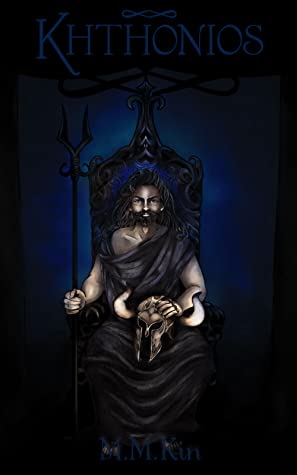
book cover for M.M Kin's Khthonios. Features Hades, holding a horned helmet as he sits on a dark throne against a blue background.

I love reading Greek mythology retellings, and Kin’s novels are no exception. I’ve known since her Seed’s series that she puts an amazing amount of detail, all painstakingly researched, into her novels, but I was curious how she was going to handle that in Khthonios, because based not the summary, there were two major hurdles to overcome in writing this book. 

The first is that Khthonios is a prequel story which begins with the death of Uranus and covers the rise and fall of Kronos, the imprisonment and freedom of the “Big Six” and Hades’s eventual rise to the Lord of the Underworld. There is precious little out there that covers this fascinating time period, but Kin managed to include the existing lore (real mind-benders, like Kronos eating his children) in a way that felt logical and true to the world. 

The second is that prequels represent a real challenge for character development, because as an author, there’s this fixed point you can’t cross in your earlier work. But you’re learning more about your characters as you write and they’re going through things that will impact their development. Often prequel characters either feel stagnant or more developed than their later counterparts, but Kin handles that development deftly. These characters felt consistent, and the story gave insight into some of their eccentricities in the later books. 

As always, Kin utilizes incredible detail and imagery. Her writing style in this book reminded me a bit of of the early chapters of Miller’s Circe. I think this may be my favorite book in her world yet.

You can learn more about Kin and her books by viewing her page on amazon or smashwords.


FAQ Friday: How will SPOILER impact Persephone in the long run.

Question mark in a blue bubble. Repeating icon for the frequently asked questions in the Daughters of Zeus series a young adult greek mythology retelling by Kaitlin Bevis


Super spoilerific post for anyone who has not yet read Iron Queen. Fair warning…

A reader who just finished Iron Queen emailed the following. “This can’t be where Persephone’s story ends! The pantheon hinted that Zeus killing his parents might have been part of what drove Zeus crazy. Plus she’s a triple realm-ruler now, and she lost her mother, and Hades seemed to be a bit unhinged at the end. So what’s in store for her in the future? Are we ever going to see that?”

Short answer:

Yes.

Longer answer:

The sanity thing was just Athena speculating. Zeus was unhinged from birth. Something about his father attempting to kill him, his mother hiding him by tying him upside down to a tree for years, and spending his early years training him to kill his father. The whole slicing his dad open and rescuing his siblings thing only to find himself at once their savior and an outsider to their very tight inner circle, formed by years of being all they had in The Before was also fairly hard on his psyche.

As for the weight of ruling three realms, losing her mother? That gets explored quite a bit in the Aphrodite trilogy. Persephone’s adapting to her new role as queen of the Pantheon and her grief/trauma from everything that happens in Iron Queen. She gets a few POV chapters in Venus Rising to really emphasize that arc, but the Pantheon as a whole has to do a lot of adjusting throughout the trilogy. In the Persephone trilogy, the gods of the Pantheon were separate entities. They were used to working around each other, but they hadn’t truly worked with each other in centuries until the end of Iron Queen. Now they’re realizing they can’t just ignore each other until a big epic battle. That’s the very mentality that left them vulnerable to Zeus. There’s a lot of growing and adjusting that needs to happen.

As for Hades…this is lightly addressed in Aphrodite, and addressed more in depth here, but broad strokes, he’s not unhinged. He’s just mildly traumatized. He went through a lot in Iron Queen. Dealing with Zeus brought up a lot of horrible memories for pretty much everyone in the Pantheon. He also felt every second of Persephone’s torture, and he had to rip her arm off, and she’s waking up from nightmares where Zeus wore his face. That’s a lot to deal with even without the fact that he’s dealing with the fact that Zeus, Demeter, and Apollo are dead. They don’t think of each other as siblings, but that is millennia of history, good and bad. Then there’s the fact that he just kind of destroyed Zeus’s soul, and there’s some emotional baggage with that. And he also witnessed one of his worst fears (that his past will hurt the people he loves), come true for Poseidon.

It’s a lot. And I included that final scene to show that what happened with Zeus didn’t just happen to Persephone. She and Aphrodite weren’t his only victims, and they aren’t the only ones who need to come to terms with the events of Iron Queen. If Hades, the guy with millennia of experience getting over horrible things and a library full of self-help books, is rattled, you can bet every other god in the entire mythology is. And that will be explored quite a bit in the Aphrodite trilogy.


FAQ Friday: Why Joel?

Question mark in a blue bubble. Repeating icon for the frequently asked questions in the Daughters of Zeus series a young adult greek mythology retelling by Kaitlin Bevis

A reader asked why Persephone would have ever bothered with Joel when she had Hades. 

Spoilers ahead.

She was charmed. If you go back and read Daughter of Earth and Sky a second time, keeping an eye out for charm, you’ll notice Persephone’s thoughts shift every time she meets either Joel’s or Aphrodite’s eyes. It’s subtle, but well-crafted charm is supposed to feel like it’s your idea. The problem is, up until this book, we don’t see charm applied with expertise. We see charm used through brute force, which works but is obvious, even to the person being charmed. Zeus and Aphrodite are good at charm.

Here’s an example:

“I could do my run at three instead,” he (Joel) suggested. “We could run together.”

“Do you have time for that? With college about to start and everything?” I didn’t want to sound too reluctant, but I really enjoyed the solitude my runs provided.

“For you, I’ll make time.” He gave me an easy grin. “Just not right now. I should head out. Do you need help getting to your car? Or can you drive? I could take you home . . . ”

I laughed at his hesitation. I lived a bit outside of town, and gas wasn’t cheap. “I’m fine. I’m meeting someone later, so I should stick around.”

“Great.” He sounded relieved. He met my eyes. “Are we on for tomorrow?”

“Sure!” I needed to practice being human before school started, and Joel was about as normal as a human could get.

See how she shifts from not wanting to give up her private runs to actively looking forward to running with him? That’s how charm is supposed to work. And that’s why “Joel” stood a chance. Mind control.

FAQ Friday: Why not teleport?

Question mark in a blue bubble. Repeating icon for the frequently asked questions in the Daughters of Zeus series a young adult greek mythology retelling by Kaitlin Bevis


A reader asked why Persephone didn’t teleport away from danger during Daughter of Earth and Sky.

Without getting into spoilerific details, 90% of the time Persephone was in danger, someone had a firm grip on her. She can’t teleport in the living realm with anyone born outside Demeter’s realm and she can’t teleport with anyone in the Underworld that doesn’t read as a native. As for the other 10…

With the Reapers it wouldn’t have done any good. The have rights to teleport in both realms, so they would have just gone with her, and then what? She couldn’t explain what was going on to Hades, and if she stuck to the living realm, they’d already shown a willingness to retaliate with random humans.

With that last thing that happened, there was a shield in place to prevent teleportation, which is also why Hades could not interfere.

FAQ Friday: Wouldn’t it have been safer for Persephone to just stay in the Underworld?

Question mark in a blue bubble. Repeating icon for the frequently asked questions in the Daughters of Zeus series a young adult greek mythology retelling by Kaitlin Bevis


*Spoiler warning for Persephone and Daughter of Earth and Sky

A reader wondered why, if Hades and Demeter knew Zeus was still around and after Persephone, did they allow her to return to the living realm in book two?

Remember, Boreas was restricted to a relatively short season, but Zeus could wait around for all eternity. Persephone wanted to hang on to the human life she’d built. She has friends, a job, a family, and a life. And while it’s one thing to step away from that for a few months (December-March) while Boreas was at full strength, it’s quite another to say goodbye forever.

Persephone’s will in this is paramount, because I didn’t want to write a horror story about a teenage girl being forced to spend her life in the land of the dead. It’s one of the first things I changed when I rewrote the myth.

As far as what Hades wants, while other writers have tackled the whole over protective significant other forcing their loved one to stay somewhere safe (and thus destroying their relationship in the process) SO well (Seriously read the linked book. It’s so good), that’s not the story I wanted to tell. Which is why, in book one, Hades explicitly stated that he wouldn’t keep Persephone in the Underworld against her will. That’s a promise he has to honor. He does try to convince her to stay a few times. He just can’t make her.

Demeter on the other hand, would absolutely force her daughter to stay in the Underworld for her safety. For a season. Asking her to say goodbye to her daughter for all time, especially after her daughter nearly died the last time she tried to make that happen, is a bit much. Plus, Demeter’s dealing with a lot of parent guilt in book two. Every move she’s ever made regarding Persephone was for Persephone’s own good, but it backfired. Her daughter hates her for her deception, the events of book one outright would have never happened if Persephone had had an ounce of preparation, the priestess she chose for her daughter has gone rogue, the father she chose for her daughter so she’d have enough power to survive is the very thing threatening her life. Every move she made failed. So while she never shows it (she’s a goddess after all, showing weakness isn’t easy for them), Demeter spends most of book two feeling paralyzed. She knows if she pushes Persephone to stay in the Underworld, she will lose her forever on more than one level. Plus, she can’t force Hades to abide by her will, and Persephone sure isn’t going to go alone with it, so it’s a fight she couldn’t win if she wanted to. Demeter’s smart enough not to pick a losing battle.

Plus, she feels like she’s losing Persephone to Hades already. Her goal for the first third of book two is to keep her daughter out of the Underworld as much as possible. It’s only once the danger becomes explicit that she takes a major step back. She knows if she tries to force Persephone into the Underworld, that Persephone is just mad enough to dig her heels in to spite her. So she doesn’t. And she assumes that is where Persephone is spending most of her time.

At the end of the book, Persephone had every intention of waiting out the danger in the Underworld. But she couldn’t remember her charmed promises compelling her to leave the safety of the Underworld and return to Zeus. The important thing to remember about charm, is that done right, the implanted thoughts  it feels like the charmed person’s idea. So when Persephone irrationally decides to go find Orpheus and fix things, that’s her mind desperately trying to rationalize an obviously bad idea.


Mythology Monday: Chthonic Deities

Chthonic deities, Underworld, Greek mythology, Retellings, Daughters of Zeus, young adult greek mythology retelling, Hades, Persephone ,Thanatos , The Judges , Cerberus, Charon, Cronus , Erinyes , Hecate , Hermes , Hypnos , Moirai ,Nyx ,  Acheron , Arae,  Ascalaphus , Kakodaimones ,Empusa ,Epiales , Erebus ,  Keres , Lamia , Lethe , Leuce , Melinoe , Minthe , Mormolyceia (Mormos) , Oneiroi , Styx , Tartarus ,Daira, Eurynomus, Gorgyra, Lampades, Cocytus, Macaria, Menoetes, Phlegethon, Trophonius,

Orpheus spoke up. “Last time I saw you, you didn’t even know you were a goddess. How did you end up down here? You don’t look like you belong with the chthonic group. No offense,” he said to Hades.

“Not that it’s any of your business, but her parents are Olympian,” Hades replied.

“Chthonic? Olympian? What are you guys talking about?”

“Chthonic deities are gods associated with the Underworld. We tend to have darker features.” Hades motioned to his black hair. “Olympians were associated with Olympus, and were various shades of blond. The primordials tended to represent their element to the extreme, and the Titans were . . . well, titanic in size.”

I blinked. Gods were classified by appearance? I supposed it wasn’t relevant anymore with so few of us left, but the whole system seemed strange to me. None of that mattered, though, because Orpheus remembered the last time he saw me! I was sure my face was bright red. Hades sighed, no doubt bored by the whole conversation.

~@~

Chthonic deities were gods associated with the Underworld. Below are links to descriptions of the more important Chthonic Deities.

Hades | Persephone | Thanatos |  The Judges Cerberus |Charon | Cronus | Erinyes | Hecate | Hermes | Hypnos | Moirai | Nyx |  Acheron | AraeAscalaphusKakodaimones |   |Empusa |Epiales | Erebus |  Keres | Lamia | Lethe | Leuce | MelinoeMinthe Mormolyceia (Mormos) | Oneiroi | Styx | Tartarus 

And this is a list of the Chthonic deities too minor to get their own blog.

Daira (Knowing One or Teacher), was a daughter of Oceanus, sister to Styx, and a key figure in the Eleusinian mysteries. While Demeter was searching for Persephone, she visited a town called Eleusis, and drank water from a particular well. Daira was the Naiad attached to that well. She was also the mother of the king, Eleusis, by Hermes.

Daira initiated members into the mystery cult that worshipped Demeter, Persephone, and Hekate. Persephone and Hekate both sometimes borrowed Daira’s name in invocations.

Eurynomus (Wide Ruling), played an important role in keeping the Underworld clean by stripping the corpses of their skin. This underworld spirit was often depicted with blue-black skin and rode around on a vulture.

Gorgyra (Underwater Drain), may have been another name for the River Styx or in her other form, Gorgyra Orphne, Nyx. She and Acheron were the parents of Ascalaphus.

Lampades were torch bearing nymphs of the Underworld, and gifts from Zeus to Hekate because of her loyalty in the Titanomachy. The light from their torches had the power to drive people to insanity, so naturally they accompanied Hekate on all her nighttime hauntings and revels.

Cocytus was both a river (of tears) and a goddess (of sorrow) in the Underworld.

Macaria (not to be confused with the daughter of Hercules) was the goddess of blessed death. She is a daughter of Hades (no mother is ever mentioned, but the man was fairly monogamous). She might have been a kinder counterpart to Thanatos or she might have led the souls to the isle of the blessed, or she might not have been a goddess at all and might have just been an expression (go in peace). Very, very minor goddess.

Menoetes (Doomed Might) was a spirit who herded cattle in the Underworld. While Hercules was in the Underworld for his 12th labor, the two wrestled, and Menoetes lost. Fortunately, Persephone was there to save him.

Phlegethon (flaming) was one of the five rivers located in the Underworld and/or the god of the river of fire located in the Underworld. The river was made of fire and, in my universe, acted as the division between the Asphodel fields and Tartarus. I’ve heard a myth that says that he and Styx were in love. As rivers, they flowed into one another.

Trophonius (Nourisher of the Mind) was the demigod son of Apollo and Erginos. He and his brother Agamedes built the temple to Apollo at Delphi. As a reward, both brothers were told to do anything they wanted for six days, and on the seventh day, their greatest wish would be granted. Both brothers were found dead on the seventh day (possibly for stealing treasure) in a cave near Lebadeia in Boiotia. Trophonius is considered to be the cave spirit for what became a sacred site.

I hope you enjoyed this introduction to Chthonic Deities. If you enjoyed the Persephone series, follow up with the Aphrodite trilogy. Love and War is on sale today for .99 cents. 

FAQ Friday: Persephone’s age and spoilers

Spoiler warning if you haven’t read Persephone.

Question mark in a blue bubble. Repeating icon for the frequently asked questions in the Daughters of Zeus series a young adult greek mythology retelling by Kaitlin Bevis

The question asked by a reader was “I get why Persephone didn’t think to ask, but how come Hades didn’t immediately realize Zeus was still alive by the fact that he had a sixteen year old daughter?

That’s a really good question. Gods get a lot of perks that humans don’t when it comes to reproduction. For instance, children are a consensual choice between two divine partners. So, it’s not outside of the realm of possibility that god magic allowed Demeter to postpone her pregnancy until she felt she’d charmed enough priestesses to maintain worship to keep herself and her child alive. At least that’s my theory.


Mythology Monday: Melinoe

Melinoe, Greek mythology, goddess of ghosts and madness, retellings, Persephone, Hades, zeus, young adult greek mythology retelling, Daughters of Zeus


“Persephone?” I reached out to caress her cheek.

She flinched. “Don’t.” Her green eyes searched my face. “I should be able to tell.” Her voice broke. Persephone tried to pull back, but I held her fast.

My arms dropped, and I stepped away for good measure. There was no telling what she had gone through, so if she needed space, I was happy to oblige. “Tell what?” I wanted to reach out to her, to demand to know what Zeus had done and how I could fix it, but I didn’t dare. “Persephone.” It was a fight to keep my voice calm. “Tell me where to find you.”

She looked away and I jerked toward her, almost unable to restrain myself from reaching for her. Persephone flinched.

“Hey, it’s okay. Wherever you are, I’m going to find you and bring you home, okay? But I need you to point me in the right direction.”

“Stop.” She took a deep, shuddering breath, sliding her air plant pendant back and forth on the chain of her necklace. “I should be able to tell him from you. If you’re not him, if you’ve taken that from me, if you’ve broken us that badly . . . ” Iron glinted in her eyes, hard and unfeeling. “Then you won’t have to find me. I haven’t come into my powers yet, but I will. I’d be afraid of that day if I were you.”

Comprehension bubbled up within me like bile. I was going to make a way to kill him. Then I’d drag him down to hell and spend the rest of eternity making him suffer.

It wouldn’t be enough. It would never be enough. Zeus looked like me. The bastard had looked like me when he’d hurt her. “It’s me.”

She didn’t look convinced, and I didn’t blame her. I didn’t sound like myself. There was no getting past this. Even if I found a way to get her back, even if everything worked out, she would look at me now and see him.

“Everyone is ‘me.’” Persephone put the word in air quotes. “Be more specific.”

~@~

Melinoe (dark minded) was the moon goddess of ghosts and the bringer of nightmares and madness. Every night she wandered the earth, trailed by a group of wailing ghosts, waiting to strike fear int he hearts of men. One half of her body was black as pitch, the other corpse pale, a testament to her duel nature. She was born on the mouth of the Cocytus River. 

Sometimes Melinoe is described as a daughter of Persephone via Zeus pretending to be Hades. When either Hades or Persephone (myths vary, but personality wise post-abduction this sounds more like a Persephone punishment than a Hades one) discovered what happened, and enraged, rent the daughter resulting from the union, discoloring her flesh.

In my books, I split the difference. Zeus does take on Hades’s likeness in Iron Queen as a trick to drive Persephone to the madness Melinoe represents, but I don’t go physical with that because frankly, I didn’t want to write that story. Plus the whole Zeus as Hades thing is tricky because there are interpretations in Greek Mythology that Zeus and Hades were the same god, just different titles. Or Hades and Dionysus, or Melinoe is actually another title for Hekate or Persephone and the whole origin story is moot. When you mix the religions of a bunch of different regions and try to combine them into one Pantheon, things get messy.


**Before you go, I just wanted to remind you that Love and War is still on sale for .99 cents! Click here to buy it today. 

Mythology Monday: Vampires

monster-773309_1280 

Hades snorted. “These aren’t books, these are—” He paused. “Dusk? Seriously?”
“What? It’s good!”
“I considered creating a dimension of Tartarus that forced souls to watch the movie based on this book for all eternity. Complete with shrieking harpy fan girls in the audience.”
I snatched my phone back. “Have you even seen it?”
“Cassandra made me watch it.” Hades shuddered.
“It’s a great movie and an even better book!”
“It’s ludicrous. What is with this recent human obsession with vampires?”
I sat up in my chair. “Were there ever any vampires?”
“Well, there was Hecate’s daughter, Empusa. She would seduce men and drink their blood as they slept. Poseidon’s daughter, Lamia—”
“Like the Midnight World books!”
“What?”
I scooted my chair closer to him and pulled up the book on my phone. “Born vampires are called Lamia, and made vampires are called—”
“Yeah, sorry I asked. Anyway, Lamia was Poseidon’s daughter. She had an affair with Zeus and had several kids. Hera found out about it and forced her to devour her children—” I gasped and Hades paused. He looked as though he was going to say something, perhaps to defend Hera, then shrugged and continued with the story. “Afterward, Lamia continued to drink the blood of mortal children until Zeus took pity on her and removed her eyes.”
“How exactly was that supposed to help?”
“It makes it harder to catch the children.”
I shook my head. “That’s…you know what, there are no words.”
“There were also Striges, or Strix, which were birds that fed on blood, and there was that island of the blood dri—”
“Okay! I’m sorry I asked.” I held up my hands in surrender. “I meant—” I pointed to my phone “—vampires like these.”
“Refined gentlemen who occasionally drink blood? It’s a complete myth.”
I thought it was ironic to hear that from Hades while sitting in the Underworld, but refrained from pointing that out. “What’s your favorite book? Oh, let me guess. Inferno.”

~@~

In honor of my favorite holiday that’s just around the corner, I’m doing a vampire edition of Mythology Monday. There’s not a lot on vampires in Greek mythology, but here’s a few examples:

–The Odyssey features an “island of the blood drinkers.” Sounds vampiric enough for me. I mean, it’s a bit of a stretch because they were technically cannibalistic giants called Laestrygonians who would just as soon eat you as drink your blood. But they did drink blood and they had vampiric like servants I’ll go into more later, so I’m counting it.

Then there’s the Stardust witches, or rather, the mythical counterparts Gaimen referenced in his amazing novel.

Hecate had a daughter named Empusa that would seduce men an drink their blood while they slept. She’s likely an early explanation for sleep paralysis and she basically acted in mythology like a succubus. The goddess later devolved into a type of specter that was half-vampire half banshee in description.

Hades did a good job with the Lamia myth above, so I’ll just leave that there.

Mormo was a vampiric like creature who would bite bad children. She would also steal children and take them to the queen of the Laestrygonians.

Striges are an owl like vampiric children who would drink the blood of babies after they fed the babies poisoned breastmilk. They’re mostly a Roman myth. Occasional they would forgo babies and go after grown men. No breastmilk involved there, just seduction, sex, then the draining of blood.