For Real Friday: The Afterlife

l-78510

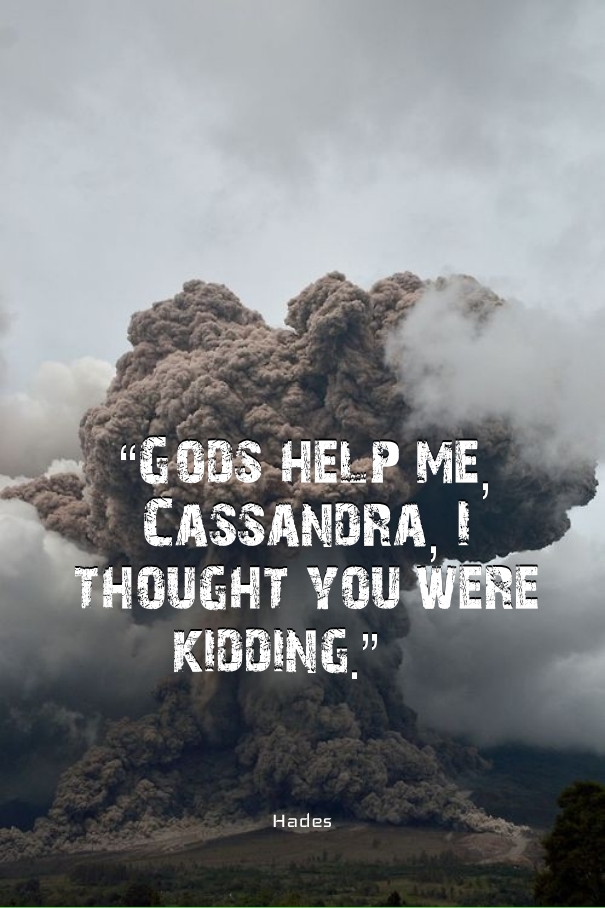
Last week, I said that if you want to know what a society fears, tap into their fiction. We write our fears into stories that we can control. But if you want to know what terrifies a society, tap into the stories they’re afraid might be fiction. For humankind, as long as we’ve been aware of death, those stories have to do with the afterlife.

The fear of what comes next inspires us to make the most out of now. It also inspires us to be on our best behavior just in case that dictates the quality of the time after our time. Then there’a the fear that there is nothing after our time, and with that fear we do an interesting thing.

We bury it. People don’t think about death. Not really. There’s this odd kind of willful denial that even as we plan for it, are aware of it, and let our ideas of the afterlife dictate our behavior, we don’t really think about it. It’s an omnipresent fact to our existence but rarely do we dwell. It’s always a shock when it happens, either the death itself or the diagnoses that tells us its coming.

Part of that is self-preservation. The knowledge that time is running out doesn’t change the fact that it is. Being sad about it doesn’t change the fact that it is. Seizing the moment can get you in major trouble or give you a momentary joy but it doesn’t change the fact that the clock is ticking.

Nothing does.

I don’t know my thoughts on the Afterlife, but I like the version I came up with. That life just goes on but we’re happier for it. Here’s to hoping.

Way Back Wednesday: The Underworld

l-78492

When it comes to the Underworld, there’s been no shortage of sources that could have influenced the way I saw it. Here are a few of the more prominent examples that spring to mind.

embers-142515_1280

Hell

I live in the Bible belt so this imagery was unavoidable. I made a point to stay away from the more stereotypical hell-scape stuff, given that the Greek Underworld was an entirely different place, so the biblical version of Hell didn’t so much influence what my Underworld was like, but what it wasn’t.

The Inferno

As an English grad who lives in the Bible belt this was another set of imagery I couldn’t escape when considering the Underworld for my book. Especially since Dante linked the Greek Underworld with the biblical one. Much of Tartarus was modeled after Dante’s vision.

The Forbidden Games Trilogy

When it came to Tartarus, what wasn’t inspired by Dante was inspired by the bleak outside of the Shadow World, right down to the shambling, creepy figures and the hot/cold terrain. That imagery really stuck with me all these years later.  I really owe L.J Smith a debt of gratitude. I read so much of her work growing up. She’s the author that inspired me to become a writer. There’s this theory in writing that there’s always some writer you’re subconsciously inspired by/ holding your work up against. For me that is absolutely her.

What Dreams May Come and Hook

Here is no doubt where my living realm based layers of the Underworld were no doubt inspired from. You have the happy layer and the creepy layer but it’s all one afterlife. I have to be honest, I watched this movie once, ever, when I was like twelve or thirteen years old, so all I really have are basic impressions that for some reason keep mashing up with Neverland from Hook. So that unlikely combination is likely what inspired the whole if you imagine it, it will be there thing that existed in my Underworld.

The Amber Spyglass

The Underworld in this book was clearly inspired by Dante, but it held truer to the Greek version. Again, this is more a vision of Tartarus than of Elysium or Asphodel, but the bleakness of the landscape stuck with me long after I set down this book.

The Lovely Bones

This haunting book no doubt inspired the normalcy of the suburbs in my version of the Underworld. If you haven’t read this book, go read it now, before you have children. Because it’s honestly an amazing story and an incredible look at death. I just can never, ever, ever read it again now that I have a daughter.

What do you think of when you hear Underworld? And what have you read or watched that inspired it?

Mythology Monday: The Underworld

20121101-192544.jpg

I blinked, taking in the glass walls overlooking a picturesque landscape. I stared at the sky, blue as forget-me-nots. Splashes of fuchsia flowers bloomed against the emerald green grass. Dazzling aquamarine rivers wound their way through lavender mountains. “I thought—”

“That is would be all underground and cave-like? Yeah, that’s a common misconception. Everything that dies comes to the Underworld. It’s a separate realm, and it’s huge. It would take eternity to see it all, but from here I can give you the highlights.”

“Okay.” I was in complete awe of the beauty of this place. I didn’t see the sun, but felt the sensation of sunlight flooding through the windows.

“So that—” Cassandra pointed at one of the beautiful rivers winding its way through the landscape “—is the River Lethe. Don’t drink the water, bathe in it, or even touch it.”

“Why?” I gazed longingly at the translucent water and pressed my hand against the cool glass. I’ve always hated swimming, and all the water I’d ever drank came from a faucet, but something about the sparkling water called to every fiber of my being.

“You’ll forget things. Sometimes when a soul comes here, their death was traumatizing, or maybe their whole life sucked. This river gives them a chance to forget the things that would otherwise haunt them.”

“Like Oreithyia?”

Cassandra hesitated. “She’s an extreme case. There are different levels of memory loss. The Lethe can take away all memories associated with a singular event or person, or wipe away their entire lives, and everything in between. Some memories go deeper than others. Boreas knew she would be coming here so he . . . made it difficult. He doesn’t like to be forgotten.”

I didn’t ask how. I was having a hard enough time dwelling on what could have happened to me. I didn’t need further details.

“We also use it on people who’ve done bad things in life,” Cassandra continued. “We take away all their memories, and they serve in the palace or around the Underworld until their sentence is up.”

That didn’t seem like much of a punishment. “Why?”

“For most people, their circumstances contributed to whatever crime they committed. This gives them a blank slate. When they finish their sentence they can live the rest of their afterlife in peace. Of course it doesn’t work like that for everyone, but between me and Moirae we can usually tell who should go straight to Tartarus.”

I didn’t want to hear anything about Hell. It was bad enough it was so close by. “Who’s Moirae?”

Cassandra smirked. “You’ll meet her later. Anyway, the point is, don’t drink from the Lethe.”

I nodded, staring at the Lethe. I wished I could forget the last forty-eight hours, but that wouldn’t change anything. I would still be here and Boreas would still be— My head shot up. “Could we give that water to Boreas? Make him forget he ever saw me?”

She shook her head. “It doesn’t work on deities. You haven’t grown into your divinity yet, but when you do you’ll be immune too.”

“Oh,” I said, disappointed.

“That was a good idea, though,” Cassandra said encouragingly. After a moment’s pause she pointed above the Lethe. “Do you see that mountain up there? That’s Olympus.”

“I thought Olympus was supposed to be in the sky.”

“It fell thousands of years ago when people stopped believing in the gods. Most of them died then. They live above the Elysian Fields on their mountain now.”

“Could I meet them?”

Cassandra shrugged. “You can’t go into the Elysian Fields, but the gods get bored easily. They may come to you. You’re new and interesting.”

I wasn’t sure how I felt about that. So far, having the gods take an interest in me had been nothing but trouble.

Cassandra turned me to the left and pointed at another river. “That’s the Styx, and you see those houses over there?”

I nodded.

“Those are the Asphodel Fields. I call them the suburbs.”

I could see why. Pastel-colored houses lined the streets, with postage stamp green lawns surrounded by picket fences. “It looks nice.”

“Pretty much everyone ends up in the Asphodel Fields. You have to be really awesome to end up in the Elysian Fields, and really horrible to end up in Tartarus. Most people live normal lives, and live a normal afterlife.”

“It’s not what I pictured.” I thought back on the Divine Comedy essay I’d written for English class.

Cassandra leaned against the glass wall. It was so clean it looked as if there was nothing stopping her from falling through the bright blue skies. “The Underworld’s just like the living realm, only more peaceful. We still have stores, but no money changes hands. People had things they loved to do up there, and now they can do it down here without any pressure.”

“I wouldn’t want to work in my afterlife.” I stretched. “I’d relax and . . . well, I don’t know what, but I wouldn’t work.”

“Well, the people sentenced to the Lethe do most of the work, but the shops are run by hobbyists. Most people don’t want to do anything resembling work at first,” Cassandra said with a smile, “but eventually they get bored and start learning how to do new things or perfecting a skill they already had.”

“I guess.” I wasn’t convinced. “Can I meet Charon?”

“Maybe later. He’s on the other side of the river right now. See his little boat? The new batch of souls should arrive with him soon.” She pointed to a speck bobbing on the Styx.

I peered closely at the River Styx. In the center was a small island of trees. I could just barely see a long wooden canoe-like boat gliding around the island.

“Anyway,” Cassandra continued, “there’s a few other rivers beyond the Styx, but you have no reason to visit them. If you go past the suburbs you’ll run into a river made of fire called the Phlegethon; that marks the boundary to Tartarus.”

“Sounds like a great place for a swim,” I muttered.

Cassandra laughed. “It’s not as bad as you’d think. There’s a fail-safe, so it doesn’t burn the souls on this side of the river. It actually feels pretty cool.” She paused, considering. “But then I am already dead. No telling what it would do to you. Anyway, you can go anywhere in the suburbs, the palace, and the gardens, but no matter where you are, stop when you get to water.” I almost wanted to object—who was Cassandra to tell me where I was allowed to go?—but I suppressed the feeling. Beyond the river of fire was Hell. Not a place I wanted to go sightseeing. I didn’t want to risk touching the Lethe, and if I recalled correctly, Cerberus, Hades’ three-headed monster dog, guarded the other side of the Styx. If Cassandra said an area was off limits, I didn’t intend to take any chances.

~@~

The Greek Underworld was very well mapped out. Given the number of living heroes that passed through (Odysseus, Aeneas, Hercules, Orpheus, ect) it should be. I made an effort to explain why the heroes could go back and forth by classifying demigods as inbetweeners. They can come and go, it’s why the heroes could visit the Underworld and why we have ghosts. It makes sense to me.

So upon entrance to the Underworld you find yourself on a dock of the Acheron/Cocytus river (it’s unclear which as one flows into the other, one is for sorrow the other for lament, which is sorrow). It’s made of tears of the dead, which makes it a saltwater river. Give Charon two coins (not required in my version) and hop a ferry to the River Styx (river of hate). There’s a marsh in the center of the Styx where the three headed dog Cerberus (still missing in my version) sorts out the souls and sends them either to the Asphodel fields, Tartarus, or Elysium.

Most souls end up in the Asphodel fields. The Titans and the very very very bad souls go to Tartarus. Tartarus is separated from the rest of the Underworld by a river of fire called the Phlegethon. Once upon a time Styx and Phlegethon were in love but were eternally separated. In the Underworld one flows to the other so they can always be together.

Elysium is paradise/heaven. In my version Olympus is located there as well. It’s separated from the rest of the Underworld by the River Lethe (river of forgetfulness). Souls would drink from this river and forget their lives.

Hades lives in a big castle with his judges and advisors. Outside of the castle is the Grove of Persephone, where sad trees live.

There are a few more rivers, but how many and what they are called varies myth to myth. If you add Dante’s Inferno in there there are quite a few circles of hell to add, but for my purposes I’m ignoring those. I had a lot of fun with the geography of the Underworld. It was fun to tweak the myths to fit the setting I needed for the story.

For Real Friday: Strong Female Characters

weights-652486_1280

On Wednesday I explained that as far as I’m concerned, Artemis was the original strong female character. When I think of modern day examples that best reflect Artemis, Buffy the Vampire Slayer springs to mind. But lately, strong female characters have gotten some bad press lately.

This article and this article (seriously read them, they’re great)  explains the issue with the strong female character better than I could, but it basically boils down to the fact that strong female characters have become a gimmick. Someone the hero can impress and use as a bench mark to move past or someone who’s given a moment of beating someone up to make viewers happy before the hero has to save her. This, by the way, is not Buffy the Vampire Slayer at all and by the way, Buffy does not fall into the other strong female character trap, which is to make her the only type of female character. Buffy is strong but she’s also multi dimensional, there’s more to her than that she can kick but and on top of that, the cast is exploding with examples of different female characters with different strengths, weaknesses, and complexities.

If the Greek myths had been written today, I’d want Artemis to be a Buffy figure. A single, strong and otherwise complex character who exists to do more than just motivate the hero and who is just one example of what a goddess could be like out of many. Part of my motivation for writing the Daughters of Zeus series was to do just that.

Persephone is an (I hope) complex character with different strengths and weaknesses. People in the book keep calling her strong and brave and all these wonderful things that shallow-strong characters are supposed to be, but she’s the first to point out that they’re wrong. She’s not strong in the physical sense, not because of lack of ability, but because until she ended up down in the Underworld, it never occurred to her to try to be. She’s not the brightest crayon in the box but she’s resourceful. She’s naive and idealistic and that naive idealism helps and hurts her at different points in the plot. Her plot is a romance and but she exists outside of her relationship with Hades. She has strengths but she also has flaws, enough of them that some readers can’t stand her, which is a great thing. A character that everyone loves is a flat character. Universal appeal doesn’t exist in three dimensional characters.

Aphrodite isn’t a strong character at all. She’s weak. She’s one-hundred percent defined by her relationships. She’s confident to a fault and on the surface seems very shallow, but inside she’s dealing with a lot of pain and that confidence and those relationships are the only thing holding her together while she deals with that, and that’s okay because there are people like that and they deserve to see themselves in fiction too. Also, she’s not static, she’ll grow as her series does, but in ways that are very different than Persephone.

Artemis is strong and confident and unlike both Persephone and Aphrodite she’s not trying to live up to some self-imposed ideal, she’s completely happy with who and what she is. Her arc won’t deal with growth but with other things I can’t get into because of spoilers. She’s had relationships but they don’t define her and they aren’t important enough to the plot to bear much mentioning.

There’s different ways to be strong and there’s room for all of them in fiction. Don’t settle for shallow “strong” characters who don’t even pass the sexy lamp test.

Way Back Wednesday: Artemis

Artemis is the original strong female character. But I never really thought of her when I was watching movies or reading books growing up. Now, yes. She’s all over the place. Katniss for example. But when I was younger? For a super cool, self-sufficiant moon/hunting goddess, she didn’t get nearly enough time in the spotlight.

Part of that is because her history is more convoluted than most. The Greek gods and the Roman Gods were not the same gods. They were similar but they weren’t actually the same deities. With some gods, the differences were so minute it hardly mattered. But with others, the differences were pretty vast. Merging Artemis and Diana is problematic on a lot of levels, and that’s ignoring all the other goddesses she absorbed along the way. Recreating her character for my series was hard and it involved a lot more research than I had to do for Persephone or Aphrodite (both of whom required a ton of research so when I say more, I don’t mean I was slacking on those two goddesses). I’m happy with the version I created and I look forward to exploring her more when she gets her own trilogy. Here are a few of the inspirations for bits and pieces of her.

The Sailor Scouts

Sailor Moon herself was more like Selene than the goddess of the hunt, but if you take the major definining traits from each of the Sailor Scouts you’ve got a pretty good picture of the very multidimensional goddess.

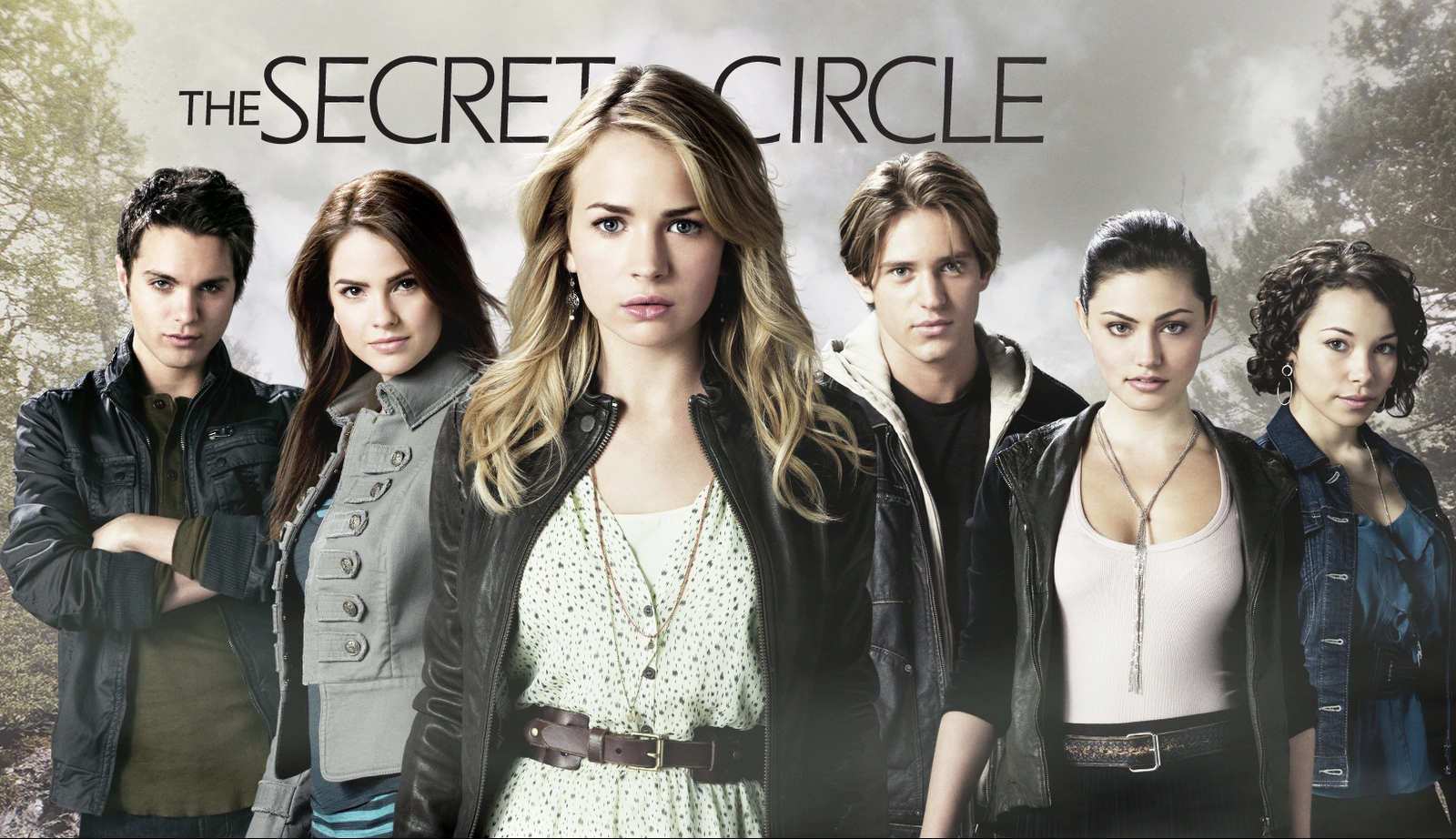
Diana and Deborah from Secret Circle

L. J Smith made a point to model the characters in this series after the major goddesses.  Diana has more traits of the Roman version, Diana, while Deborah embodies the fierceness of the Greek version of Artemis. Together they created the foundation of my idea of that goddess.

And last of all, the character who essentially is the goddess….

Buffy the Vampire Slayer

She literally embodies all things Artemis. I have to be very careful when writing Artemis scenes not to make the two too much alike. She’s the idea I have in my head for the goddess of the hunt. She’s strong, she’s beautiful, she’s absolutely  in her element in the night, she’s brave, she’s sometimes wise but mostly passionate and quick tempered, and she’s short and witty. It’s an amazing character all around and I honestly think Artemis was an inspiration for Buffy.

How about you? Any Artemis like characters in books, movies, or TV shows that you have to share? There are a *ton* out now. What’s your favorite?

Mythology Monday: Artemis

portrait-photography-657116_1280

A twig snapped beneath my foot. Swearing, I slapped at a mosquito. I didn’t care for forests, but this was where Artemis spent most of her time during hunting season. Apollo said she had a cabin out here . . . somewhere. I just needed to find it.

Another twig snapped. I frowned at my feet, but didn’t see any broken branches.

Something cold touched the base of my neck.

“Don’t move,” a gruff voice instructed.

I turned with a sigh, grabbing the gun out of the hunter’s hand before he could fire off a shot. Not that it would have hurt me more than that mosquito bite, but it could be damned uncomfortable, which made it at least as annoying.

The gun crumbled to dust in my hand, and I gave the stranger my least friendly smile. The blood drained from his face. Before I could comment on his predicament, a cry rang through the clearing.

“Diana!” The hunter spun on his heel and tore through the forest.

Diana? When Artemis’ pseudonym clicked, I swore and followed him, casting a shield as far ahead of us as I could see so our progress through the forest couldn’t be seen or heard. Before we reached a small clearing with a cabin, I threw a second shield at the hunter, freezing him in place.

I walked to the edge of the clearing. Beyond the shield, Zeus held a struggling woman just above his head by the throat. She pried at his fingers with both hands, legs kicking uselessly at the ground but finding no purchase.

“I can make this easy for you, or I can make it fun for me.” A grin spread across Zeus’ face. “Swear fealty now, and your death will be less interesting, but infinitely less painful.”

“No,” she gasped. Her body stiffened, muscles going rigid, and the smell of burnt flesh and ozone wafted through the clearing. Behind me, the hunter yelled, straining against the shield. Maybe I could sneak up behind Zeus and . . . no, shit, if he teleported with her, all bets were off. I closed my eyes, concentrating, and crafted a shield just above his head that took in the whole clearing, then dropped the shield between Zeus and myself out of necessity, but kept the one around the hunter. The last thing I needed to do was give Zeus more leverage.

Zeus started. “Hades. What a nice surprise.”

He lowered Artemis to the ground, spinning her to face me, looping his left arm around her neck, and gripping his right bicep. His right hand shoved her head forward. Grinning, he brought his elbows together in a tight chokehold. Sweat glistened against her caramel skin, plastering the dark wisps of hair that had escaped her ponytail to her face. Get me out of this, her eyes seemed to beg. I’ll owe you.

Shit.

“You’ve got ten seconds.” Zeus gave me an expectant look. “When she drops, I’m gone.”

I inclined my head to the shield around him. “Unlikely.”

Zeus’ face twisted in a scowl. “We’ll see. Are you here to surrender your realm?”

“No.” My mind raced to find a way to trap him without Artemis getting caught in the crossfire. I could create an entrance to the Underworld and pull enough of my realm through to trap him in the same type of prison that held the Titans, but she’d be stuck with him.

It might be worth it.

“Then we have nothing to discuss.” Zeus tightened his grip around Artemis’ throat, and she slumped in his arms. “Except, I’ve been meaning to get this to you.” He took advantage of Artemis’ lapse in consciousness long enough to reach in his pocket and toss something to me across the clearing in a blur of pink. Artemis regained consciousness, sputtering for breath. She lurched forward, but he had her back in the chokehold in seconds.

I caught Persephone’s phone out of reflex. It took me a second to place the picture of the mangled mass of flesh on the screen as something humanoid, much less recognize it as my wife. My stomach lurched.

“There’s some great videos on there too,” Zeus informed me. “In case you need some incentive to change your mind.” As if on cue, Persephone’s screams burst from the phone’s tiny speakers.

I yanked on the power of the Underworld, ripping it through the earth in my rage. Artemis’ eyes widened as she realized what I was doing. “I swear fealty!” she cried as the ground split beneath her. Her dark eyes met mine, and before I could say anything to stop her she added, “To Hades.”

Her power flashed through me, knocking me off balance just long enough for the shield above Zeus to flicker. He growled and threw her to the ground.

“No!” I shouted as Zeus leapt into the air and vanished.

Artemis stood and faced me, movements slow and deliberate. “You were going to trap me with him?”

I pocketed Persephone’s phone and dropped the shield around Artemis’ boyfriend.

Artemis’ gaze didn’t even flicker in his direction. “Answer me!”

“You wouldn’t like what I have to say.”

“Diana!” The hunter ran to her, but she held out a hand, keeping him at arm’s length.

“I wouldn’t like what you have to say? You were going to trap me in Tartarus with that sadistic son of a bitch, and all you can say for yourself is that I wouldn’t like what you have to say!” Her dark eyes blazed with fury. “What the hell is wrong with you, Hades? We go back, way back. I thought we were friends, but you were willing to abandon me, for what, some slip of a girl you just met?” She held her chin up, using every inch of her five feet to try to make me feel small, but I wasn’t having it.

“You could have teleported!” I threw my hands in the air. “You could have escaped before he so much as touched you. What the hell were you still doing here?” Her gaze flickered to the hunter then back to me, the movement almost imperceptible and probably unintentional. I let out a dark laugh. “Protecting your latest human pet? I kept him out of the line of fire for you, but since you were so determined to swear away your sanity, I sure as hell wasn’t going to put my wife on the line to stop you. Here—” I stepped forward, grabbing her shoulder and shoving her powers back into her before breaking the bond of fealty with a snap.

She stumbled and suddenly a hand yanked on my shoulder. “Don’t touch her!” The hunter shouted, fist flying toward my face.

I caught it in a bone-crunching grip.

“Stop!” Artemis darted between us. “Oh, Ryan—” She took his hand, and I felt a pinprick of power flow between them as she healed him. He stared at her, wide-eyed.

“What the hell is going on?”

“It’s a long story.” Her shoulders slumped, and she returned her attention to me.

“He comes with us.”

“Like hell!”

“I’m not stupid, Hades. Zeus has your wife, and you want him dead. I’m one of the few people who can make that happen.” She tilted her chin up, eyes glittering with defiance. “If you want my help. He comes too.”

~@~

On Sunday, author Susan Sipal went into great detail on Artemis’ evolution through mythology so I’ll let that stand as the Mythology Monday for today. Hope you enjoyed the snippet from Iron Queen.

Guest Blog: S. P Sipal: From Amazons to Artemis – Anatolia Rocks the Goddess

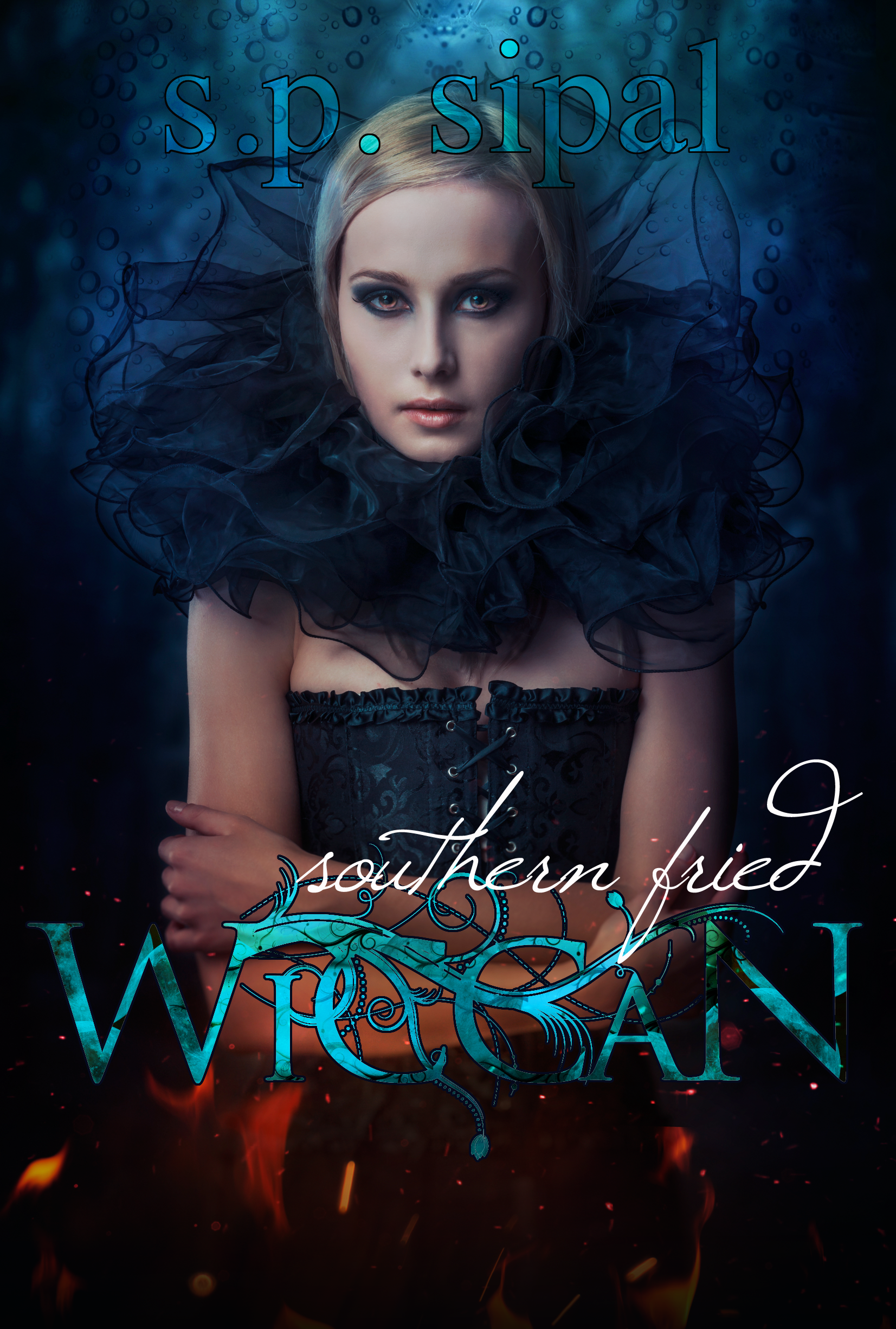
Southern Fried Wiccan S.P. Sipal

I’m pleased to introduce a friend and author of the wonderfully named young adult novel, “Southern Fried Wiccan”, Susan Sipal on my blog today. She’s going to be talking the evolution of the myth I’ll be discussing on the blog in tomorrows Mythology Monday, Artemis.

But first a little bit about Southern Fried Wiccan. I’ve posted a review here. And here’s the blurb:

Cilla Swaney is thrilled to return stateside, where she can hang up her military-brat boots for good. Finally, she’ll be free to explore her own interests—magick and Wicca. But when she arrives at her grandma’s farm, Cilla discovers that life in the South isn’t quite what she expected. At least while country hopping, she never had to drink G-ma’s crazy fermented concoctions, attend church youth group, make co-op deliveries…or share her locker with a snake-loving, fire-lighting, grimoire-stealing Goth girl…

…Who later invites her to a coven that Cilla’s not sure she has the guts to attend. But then Emilio, the dark-haired hottie from her charter school, shows up and awakens her inner goddess. Finally, Cilla starts believing in her ability to conjure magick. Until…

…All Hades breaks loose. A prank goes wrong during their high school production of Macbeth, and although it seems Emilio is to blame, Cilla and Goth may pay the price. Will Cilla be able to keep the boy, her coven, and the trust of her family? Or will this Southern Wiccan get battered and fried?

Sounds like a good read, huh? Learn more on amazon.com.

Without further ado, I’ll turn the blog over to Susan.

From Amazons to Artemis – Anatolia Rocks the Goddess

By S.P. Sipal

As a reader and a writer, I’ve been following the #WeNeedDiverseBooks campaign with a lot of interest. To me, it only makes sense that the diversity of reality is represented both on the page and on the screen. And as the mother of two kids born of a mixed ethnic, national, and religious heritage, I believe it’s important that they, and others like them, see themselves in the books they read and the heroes they admire.

But this desire to see ourselves reflected in our contemporary heroes is nothing new. Indeed, it goes back to the most ancient of days when people saw themselves in the adventures of their gods and goddesses…the novels of their day. As Cilla, the main character in my YA contemporary novel Southern Fried Wiccan discovers, being able to see yourself in the divinity you worship is quite empowering. The first time Cilla saw the Divine depicted as a young, powerful woman rather than an old, white dude was game-changing.

When Cilla gazed upon the statue of Artemis in the museum of Ephesus in Turkey, it changed her life. She realized then, in a very personal way, that a spark of the divine could live in someone like herself. It’s by no coincidence that I had Cilla experience the goddess first in Turkey.

Asia Minor, or Anatolia, the peninsula where most of modern-day Turkey now rests, is one of the major cradles of civilizations. It was here that the earliest sanctuary has been discovered, built by hunter-gatherers BEFORE settling down to farm. Here that many of the great Greek and Roman cities birthed the thinkers that pushed forward what we now call western civilizations. It was also in Anatolia that a long line of mother goddesses flourished in the hearts of her followers, worshipped by both men and women who envisioned the divine power that unites us all in the fertility of a woman’s body.

In Turkish, Anatolia is called Anadolu, translated by Dr. Rashid Ergener literally as “land of the mothers.” Anatolia is indeed filled with powerful mothers, goddesses who transformed throughout history due to cultural changes. And this, to me, is where the beauty of diversity fully blossoms. Because we can see in each of these incarnations how the people of the time adapted their goddess in their own image while still preserving a central core from the female power she preceded.

The Evolution of a Goddess:

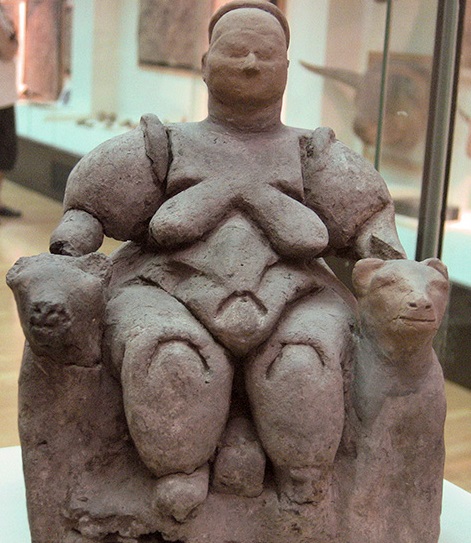
Mother Goddess Catal Hoyuk

The Mother Goddess from Çatal Höyük is one of the earliest examples of mother goddess worship from Anatolia. Found in a Neolithic settlement over 6000 years old, this ancient female gives birth in a throne-like chair supported by lions. To me, she embodies primordial female power, of both fertility and a link to the rawness of nature. And she must have to the ancients as well, because her legacy survived the permutations below to last until today.

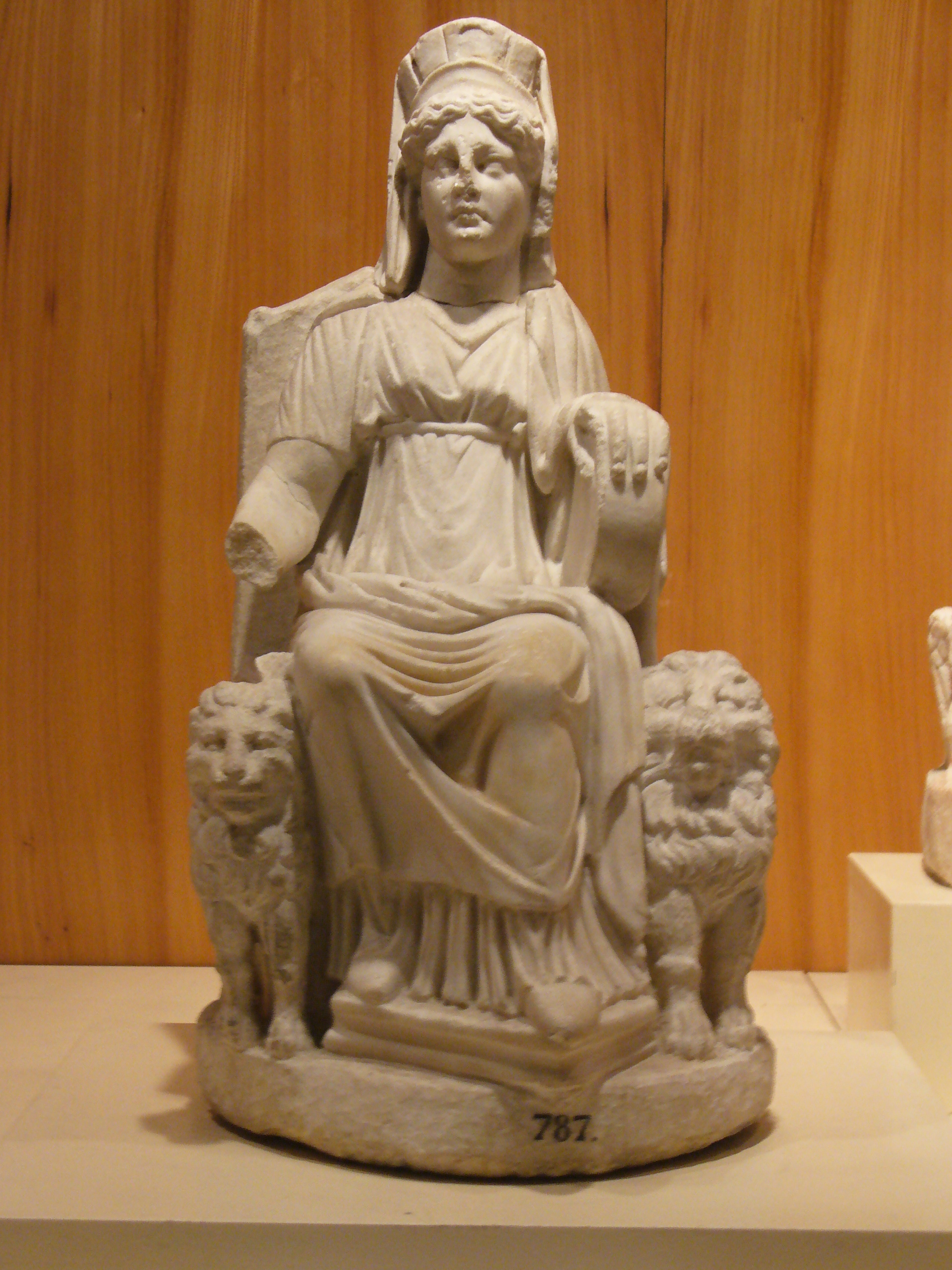
Cybele

Cybele – This Phrygian mother-goddess has lost a bit of weight and wears better clothes than her predecessor, but she still sits on a throne framed by lions and displays her divine power in all its wild and fertile glory.

Cybele’s “association with hawks, lions, and the stone of the mountainous landscape of the Anatolian wilderness, seem to characterise her as mother of the land in its untrammeled natural state, with power to rule, moderate or soften its latent ferocity, and to control its potential threats to a settled, civilised life.” (source) But it was this raw power that transformed her further, as the rising city-state rulers sought to harness her power for their own political purposes.

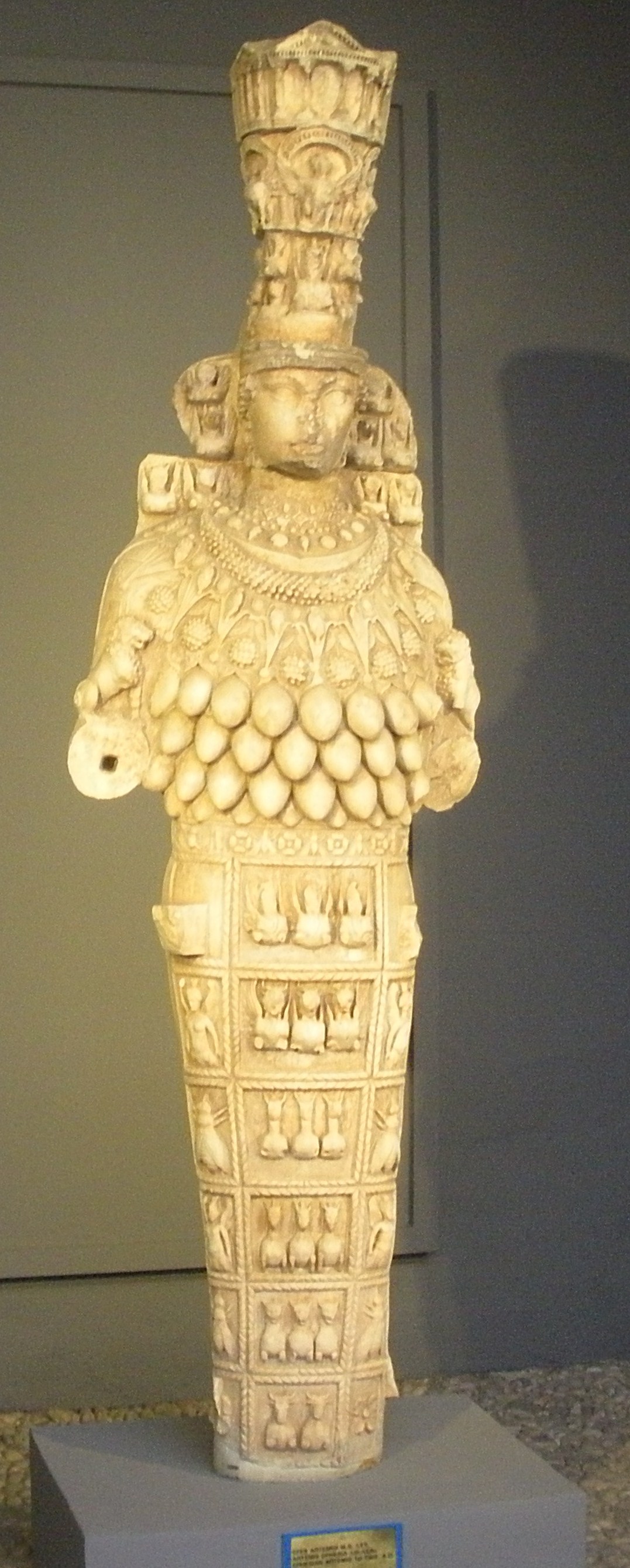
Women untamed by civilization, living on its border, was further spread through the belief in the Amazons, who, according to one legend, are said to have founded Ephesus. It was here that the Temple of Artemis, one of the Great Wonders of the Ancient World, drew worshippers for thousands of years to gaze upon this goddess in awe and wonder.

Artemis of EphesusArtemis of Ephesus – In Ephesus, Artemis was viewed from a different angle than Artemis in other parts of the Greek world. That is because she descended from Cybele and the mother goddess of Çatal Höyük above. While this goddess is standing in the pillar pose rather than seated on a throne, you can see that she is still envisioned as mistress of the animals with lion-like figures at her side as well as the stags, bees, and bulls depicted along her ceremonial clothes. Most people think the protrusions from Artemis’ chest are breasts, but there are other theories, such as pollen sacks (she was in part a bee goddess).

Hagia Sophia Virgin Mary

Mary, Mother of God – Although Mary is not considered a goddess and is indeed not from the Anatolia region, it was in 431 CE at the Council of Ephesus, home of Artemis, that she was given the title theotokos (mother of god) and depicted with many of Artemis’ attributes. With the worship of Artemis now in decline, thanks to the rise of Christianity, Artemis’ loyal followers transferred their adoration to a new face of the female divine. From this icon at Hagia Sophia in Istanbul, at the heart of the apse of the great Byzantine basilica, we see the same commanding mother on a throne of power. Bordering her (out of sight of this picture), she is garlanded with natural images of vines, flowers, berries and pears.

Four amazing females. Four inspiring images of feminine power. Each one slightly different than the one before, re-visioned and re-clothed in the costume of her own particular culture, and yet still lit by the ancient spark of universal subconscious that brought her to life.

If cultures have been reimagining the divine in their own image for millennia, why would we stop doing so today? Especially when it so profoundly affects how our children see themselves?

Thank you so much Susan for posting on my blog today 🙂 I enjoyed the read and can’t wait to see other projects you’ve got in the works. If you want to learn more about Susan and her writing, follow her websiteblog, or twitter,

More about Susan:

Southern Fried Wiccan_Author Pic_Susan SipalBorn and raised in North Carolina, Susan Sipal had to travel halfway across the world and return home to embrace her father and grandfather’s penchant for telling a tall tale.  After having lived with her husband in his homeland of Turkey for many years, she suddenly saw the world with new eyes and had to write about it.  Perhaps it was the emptiness of the Library of Celsus at Ephesus that cried out to be refilled, or the myths surrounding the ancient Temple of Artemis, but she’s been writing stories filled with myth and mystery ever since.  She can’t wait to share Southern Fried Wiccan with readers in March 2015.

For Real Friday: Voices

If you want to know what a society fears, read their stories. Not just fairy tales, not just the warnings we pass on to our children. All stories reflect some level of fear. Don’t believe me? Read zombie stories through the ages. What causes zombies? Communist pod people? Martians? Nuclear war? Viral terrorism? GMO’s? Cancer curing drugs gone wrong? The cause changes with the time as do the zombie-symptoms. Zombies themselves aren’t zombies, they’re symbols of some unknown fear that can change the people around us and will change us if we’re not lucky. Why and how are the relevant details.

Archetype myths like Cassandra or her opposite, the boy who cried wolf, are like that. They appear over and over and over again in story after story as veritable harbingers. Warnings. Why? What about these two tales has captured our collective unease?

Losing our voice.

Cassandra was beautiful, spirited, and a princess to boot. Even ignoring the fact that she was clairvoyant and literally never wrong, if any woman in her time should have had a voice, it was her. She had wealth, power, beauty, intelligence. She was confident enough to spit in a gods face when he propositioned her. She represents everything everyone strives to have, and yet she was still ignored, powerless because she was stripped of her voice. She represents that niggling little fear in the back of our mind that we should have listened. She represents that outright terror that keeps us awake at night that no one will listen. The fact that she’s a woman and she lost her voice after saying no to a man in position of power adds this whole other layer to her myth, especially when you compare her to her opposite, the boy who cried wolf.

The boy who cried wolf was a shepherd and a child hardly a prince. This is not an archetype of a powerful figure brought down to his knees, but a bored child crying out for attention. His every warning isn’t ignored. He’s responded to instantly and on multiple occasions. He didn’t lose his voice despite being right, he lost it for being wrong. He was wrong, and then he was wrong, and then he was wrong again, then too late he was right, but no one listened. He represents the same fear that worries away in our minds. We should have listened. What if they won’t listen because i’m not good enough, smart enough, or I didn’t do everything right?

They’re two sides of the same coin. The fear we didn’t listen when everything said we should have and the fear we didn’t listen when everything said we shouldn’t have. The fear that despite being the absolute best, being silenced and the fear that we’re not good enough to be heard. It’s no wonder their stories have been with us for so long.

There’s nothing more frightening than not being heard.

Way Back Wednesday: Cassandra

l-72700

Cassandra pops up a lot in modern culture, and when I was growing up, every T.V show, cartoon, book series, and movie seemed to have a nod toward her. She’s such a great stand alone character that she even moonlights in other Greek myths. Tons of people who have no idea she was a princes of Troy or Helen’s sister in law or anything about her actual origin myth know the gist of Cassandra’s story. She’s an entirely new angle (still) on a tragic character. Here are a few of the adaptations of her that stuck with me.

Hercules the animated series

Hercules features a sassy version of Cassandra with a dry sense of humor, this version of Cassandra probably influenced mine the most. Mine is much, much, much more upbeat, but the snark is very much alive in this one.

Buffy the Vampire Slayer

This one-time cameo of the cursed prophetess, Cassie, stuck with me for years after the episode aired. Whedon is very good at giving glimmers of hope and jubilation and just when you think everything is going to be okay, he swings the ax.

Goddess of Yesterday

Read this book. Seriously. This version of Cassandra is what got me wondering what her life was like in Troy. Somehow, in all the myths, I’d never connected her to Troy (which is crazy because that’s her main myth). She’s a background character in the story but an extremely well done background character.

Not exactly Cassandra but…

Woody in Toy Story, Sarah Conner in Terminator 2, Sally in Nightmare before Christmas, the scientist in Jurassic Park, Professor Trelawny, and dozens of others. Being a Cassandra is as big a trope as being the boy who cried wolf. It’s everywhere. Tune in Friday to see why this particular myth has continually resonated with our society regardless of context.

Mythology Monday: Cassandra

model-659534_1920

Cassandra caught my quizzical look and shrugged. “Problems adjusting. You just missed the latest of the new souls. It would seem none of us are quite as good with people as you are.”

That was an understatement. With any luck, Cassandra hadn’t caused any psychological scarring with her “Yeah, you’re dead, get over it” speech. She wasn’t a people person. Ordinarily, I greeted the new souls and took special care to deal with any “adjustment problems.” I enjoyed that part of my work. It was one of the few good deeds I could credit myself with. But as much as I’d love to tell myself otherwise, I wasn’t settling in the souls out of the goodness of my heart. Just lack of better alternatives. The other gods had difficulties relating to humans. But those difficulties were nothing compared to the problems the humans in my court had relating to each other. Souls lose something the longer they’re dead. They forget what it was like to worry, to be scared, to be human. Just yesterday, I’d caught Cassandra telling a frightened new soul I’d gone through a dark phase back when Dante passed through, but not to worry. I hadn’t gone off my meds for centuries.

~@~

Cassandra was a Trojan Princess and by all accounts a royal beauty. She definitely caught the eye of Apollo, her patron god. He granted her and in some versions of the myth, her twin brother Helenus the gift of prophecy and tried to seduce her, but when she spat in his face (literally) he twisted gift. She would see the future, but try as she might, no one would believe her visions. Her brother was still believed according to Virgil.

Can you imagine what it would be like to know something horrible was going to happen and not do anything to stop it? She saw the Trojan War, saw every one she cared about die. Saw herself raped in the temple of Apollo by Ajax and her own death at the hands of Clytemnestra (long story, we’ll get there in another Mythology Monday). And she could do nothing to stop it.

In some version of the story she had twin boys but they were killed. Had they lived the gift of prophesy and her curse would have been passed down to her descendants.

Cassandra pops up in other myths from time to time (like Hercules) each time she is portrayed as being insane and her warnings are never taken seriously. She’s also popped up in books, movies, and television shows for centuries.  But every incarnation I’ve ever seen of Cassandra focused on one thing.

Her life sucked.

But that was life. My Cassandra’s a bit different because she’s dead. And she’s having a great time. She still has the visions, but that whole bit about no one believing her so long as she lived no longer applies. She’s Hades’ most trusted advisor, and she practically runs the Underworld. She’s over the top cheerful, but she’s got a healthy sense of snark. She doesn’t put up with much drama and has a very practical way of looking at things.

Overall, she’s one of my favorite characters