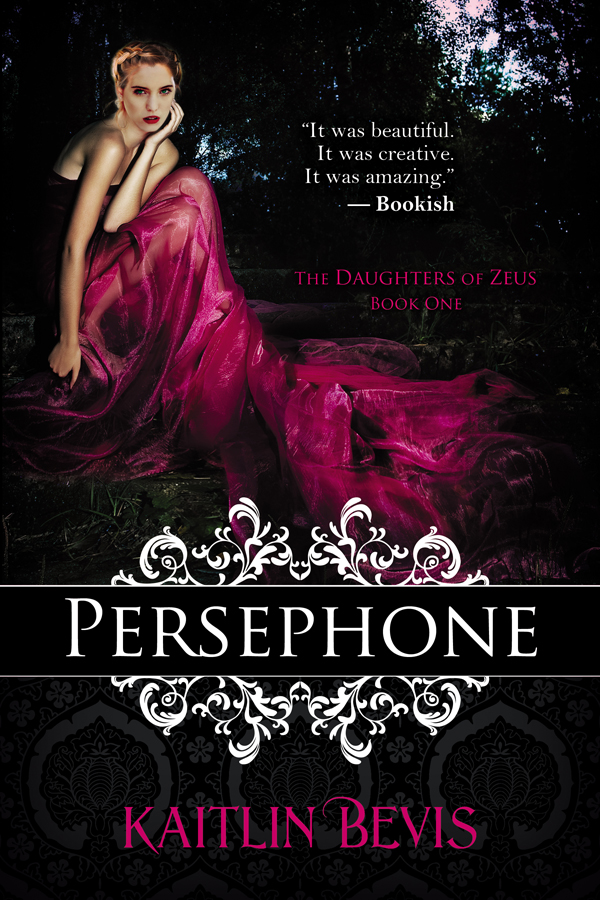
New Cover

Posting early in honor of tomorrow’s cover reveal. When I portrayed Moirae as schizophrenic, I ran into a problem. Schizophrenia is not multiple personality disorder. Despite the media’s portrayals as schizophrenics being dangerous individuals with Jekyll/Hide syndrome, that’s actually an entirely different mental disorder. So why did I keep the same description? Because she doesn’t have multiple personality disorder either.
People with multiple personalities don’t have personalities that converse with each other. They experience black outs when the other personality is in charge. That’s not Moirae either. Because there’s a magical element there, she is all three people at once. Since one personality isn’t dominant and because they interact, that goes more toward the auditory hallucinations of schizophrenia. In the end, I wasn’t sure what to call her and after lengthy talks to my writer’s group and my editors, schizophrenic stuck, both because the symptoms were more true, though still not quite right with the illness and because on a colloquial level Persephone was a sixteen year old. She would have called it schizophrenic. She never said the word out loud so no one would have corrected her.
All the same, I was careful to never depict Moirae with the more stereotypical attributes associated with mental illness because books and movies do enough damage without me adding to them. She’s never violent and scary and she’s not some wonderful manic, pixie dream girl either. She’s a character, not quite as fleshed out as I’d like because the pacing of the story never really allowed for me to develop her like I wanted but hopefully future installments will let me do more with her, who just happens to have three voices in her head vying for attention at once and that does impact her life in a very big way but she still has a personality, friends, and a life.
Later in the series (as in not yet published) we learn Aphrodite suffers from anxiety (there’s a very plot oriented reason this hasn’t shown up in its entirety in Iron Queen, but you’ll have to read Venus and Adonis to learn why). That was another area I had to be careful because panic attacks and all the other symptoms that come with anxiety aren’t cute and it drives me nuts when plots give characters these very real issues just to make them vulnerable in the moment and then never revisit them or worse, treat it as a cute quirk.
That being said, I totally understand why authors polarize mental disorders, especially in POV characters. It’s not just that its easier to either romanticize or vilify them. It’s to some degree healthier. Moirae was one thing because she only existed on the periphery, Aphrodite on the other hand…I was in her head for a year writing Venus and Adonis and it was hell. Rewarding, yeah because at the end of the day, I think I might have done an okay job writing her experience. But mentally draining. So draining, I had to take a break between writing Venus and Adonis and Love and War to write an entirely different book that didn’t deal with anxiety. I *had* to.
All the same, the constant romanticizing/vilifying mental disorders is damaging both as representation of mental disorders and for people suffering with them. Scrubs did a good episode on this with an episode that had Michael J Fox playing a character with OCD. The episode begins by playing into the trope. Being OCD makes him a better doctor, he’s a magical and wise character who can solve everyone’s problems. But as the episode progresses, it goes into the dark/realistic side of OCD and it’s a really impactful moment.
Representation matters. And because I’m about to dive back into Aphrodite’s head to write Love and War, I’d really like some input. What are some books, shows, or movies that you really appreciate for their depictions of characters with mental disorders? I’d love to give them a read.
Variations of the triple goddess and the fates abound through popular culture and were all over the place when I was growing up. On Monday, I explained why I chose to make Moirae a schizophrenic woman who embodies all three fates instead of three distinct individuals. But the following groups of three may give you a better idea of what those three voices sound like.

Gargoyles
The sisters three from Macbeth popped up a few times in the Gargoyles cartoon. Always creepy and awesome, there was something about their time onscreen that gave me chills.
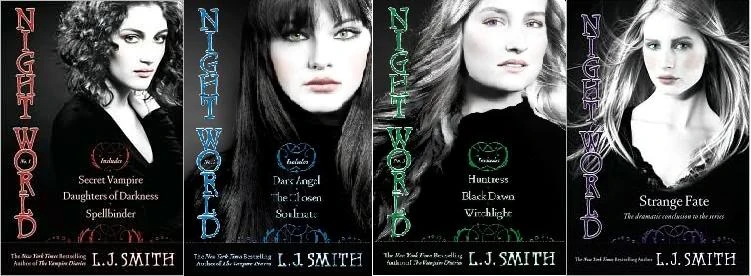
Nightworld
Yet another series by L.J Smith that I owe a debt of gratitude for. The Nightworld was a great series and within it, there were circles of witches that had positions for the mother, maiden, and crone. These three powerful women never acted as POV characters but the were always on the periphery.

Disney’s Hercules
Definitely the grossest version of the Fates out there. The three sisters sharing one eye thing was taken to a literal and gross level.
Can you think of any examples of the triple goddesses or Fates I may have missed?

Last week, I said that if you want to know what a society fears, tap into their fiction. We write our fears into stories that we can control. But if you want to know what terrifies a society, tap into the stories they’re afraid might be fiction. For humankind, as long as we’ve been aware of death, those stories have to do with the afterlife.
The fear of what comes next inspires us to make the most out of now. It also inspires us to be on our best behavior just in case that dictates the quality of the time after our time. Then there’a the fear that there is nothing after our time, and with that fear we do an interesting thing.
We bury it. People don’t think about death. Not really. There’s this odd kind of willful denial that even as we plan for it, are aware of it, and let our ideas of the afterlife dictate our behavior, we don’t really think about it. It’s an omnipresent fact to our existence but rarely do we dwell. It’s always a shock when it happens, either the death itself or the diagnoses that tells us its coming.
Part of that is self-preservation. The knowledge that time is running out doesn’t change the fact that it is. Being sad about it doesn’t change the fact that it is. Seizing the moment can get you in major trouble or give you a momentary joy but it doesn’t change the fact that the clock is ticking.
Nothing does.
I don’t know my thoughts on the Afterlife, but I like the version I came up with. That life just goes on but we’re happier for it. Here’s to hoping.

When it comes to the Underworld, there’s been no shortage of sources that could have influenced the way I saw it. Here are a few of the more prominent examples that spring to mind.
Hell
I live in the Bible belt so this imagery was unavoidable. I made a point to stay away from the more stereotypical hell-scape stuff, given that the Greek Underworld was an entirely different place, so the biblical version of Hell didn’t so much influence what my Underworld was like, but what it wasn’t.

The Inferno
As an English grad who lives in the Bible belt this was another set of imagery I couldn’t escape when considering the Underworld for my book. Especially since Dante linked the Greek Underworld with the biblical one. Much of Tartarus was modeled after Dante’s vision.

The Forbidden Games Trilogy
When it came to Tartarus, what wasn’t inspired by Dante was inspired by the bleak outside of the Shadow World, right down to the shambling, creepy figures and the hot/cold terrain. That imagery really stuck with me all these years later. I really owe L.J Smith a debt of gratitude. I read so much of her work growing up. She’s the author that inspired me to become a writer. There’s this theory in writing that there’s always some writer you’re subconsciously inspired by/ holding your work up against. For me that is absolutely her.

What Dreams May Come and Hook
Here is no doubt where my living realm based layers of the Underworld were no doubt inspired from. You have the happy layer and the creepy layer but it’s all one afterlife. I have to be honest, I watched this movie once, ever, when I was like twelve or thirteen years old, so all I really have are basic impressions that for some reason keep mashing up with Neverland from Hook. So that unlikely combination is likely what inspired the whole if you imagine it, it will be there thing that existed in my Underworld.

The Amber Spyglass
The Underworld in this book was clearly inspired by Dante, but it held truer to the Greek version. Again, this is more a vision of Tartarus than of Elysium or Asphodel, but the bleakness of the landscape stuck with me long after I set down this book.

The Lovely Bones
This haunting book no doubt inspired the normalcy of the suburbs in my version of the Underworld. If you haven’t read this book, go read it now, before you have children. Because it’s honestly an amazing story and an incredible look at death. I just can never, ever, ever read it again now that I have a daughter.
What do you think of when you hear Underworld? And what have you read or watched that inspired it?
On Wednesday I explained that as far as I’m concerned, Artemis was the original strong female character. When I think of modern day examples that best reflect Artemis, Buffy the Vampire Slayer springs to mind. But lately, strong female characters have gotten some bad press lately.
This article and this article (seriously read them, they’re great) explains the issue with the strong female character better than I could, but it basically boils down to the fact that strong female characters have become a gimmick. Someone the hero can impress and use as a bench mark to move past or someone who’s given a moment of beating someone up to make viewers happy before the hero has to save her. This, by the way, is not Buffy the Vampire Slayer at all and by the way, Buffy does not fall into the other strong female character trap, which is to make her the only type of female character. Buffy is strong but she’s also multi dimensional, there’s more to her than that she can kick but and on top of that, the cast is exploding with examples of different female characters with different strengths, weaknesses, and complexities.
If the Greek myths had been written today, I’d want Artemis to be a Buffy figure. A single, strong and otherwise complex character who exists to do more than just motivate the hero and who is just one example of what a goddess could be like out of many. Part of my motivation for writing the Daughters of Zeus series was to do just that.
Persephone is an (I hope) complex character with different strengths and weaknesses. People in the book keep calling her strong and brave and all these wonderful things that shallow-strong characters are supposed to be, but she’s the first to point out that they’re wrong. She’s not strong in the physical sense, not because of lack of ability, but because until she ended up down in the Underworld, it never occurred to her to try to be. She’s not the brightest crayon in the box but she’s resourceful. She’s naive and idealistic and that naive idealism helps and hurts her at different points in the plot. Her plot is a romance and but she exists outside of her relationship with Hades. She has strengths but she also has flaws, enough of them that some readers can’t stand her, which is a great thing. A character that everyone loves is a flat character. Universal appeal doesn’t exist in three dimensional characters.
Aphrodite isn’t a strong character at all. She’s weak. She’s one-hundred percent defined by her relationships. She’s confident to a fault and on the surface seems very shallow, but inside she’s dealing with a lot of pain and that confidence and those relationships are the only thing holding her together while she deals with that, and that’s okay because there are people like that and they deserve to see themselves in fiction too. Also, she’s not static, she’ll grow as her series does, but in ways that are very different than Persephone.
Artemis is strong and confident and unlike both Persephone and Aphrodite she’s not trying to live up to some self-imposed ideal, she’s completely happy with who and what she is. Her arc won’t deal with growth but with other things I can’t get into because of spoilers. She’s had relationships but they don’t define her and they aren’t important enough to the plot to bear much mentioning.
There’s different ways to be strong and there’s room for all of them in fiction. Don’t settle for shallow “strong” characters who don’t even pass the sexy lamp test.
Artemis is the original strong female character. But I never really thought of her when I was watching movies or reading books growing up. Now, yes. She’s all over the place. Katniss for example. But when I was younger? For a super cool, self-sufficiant moon/hunting goddess, she didn’t get nearly enough time in the spotlight.
Part of that is because her history is more convoluted than most. The Greek gods and the Roman Gods were not the same gods. They were similar but they weren’t actually the same deities. With some gods, the differences were so minute it hardly mattered. But with others, the differences were pretty vast. Merging Artemis and Diana is problematic on a lot of levels, and that’s ignoring all the other goddesses she absorbed along the way. Recreating her character for my series was hard and it involved a lot more research than I had to do for Persephone or Aphrodite (both of whom required a ton of research so when I say more, I don’t mean I was slacking on those two goddesses). I’m happy with the version I created and I look forward to exploring her more when she gets her own trilogy. Here are a few of the inspirations for bits and pieces of her.
The Sailor Scouts
Sailor Moon herself was more like Selene than the goddess of the hunt, but if you take the major definining traits from each of the Sailor Scouts you’ve got a pretty good picture of the very multidimensional goddess.
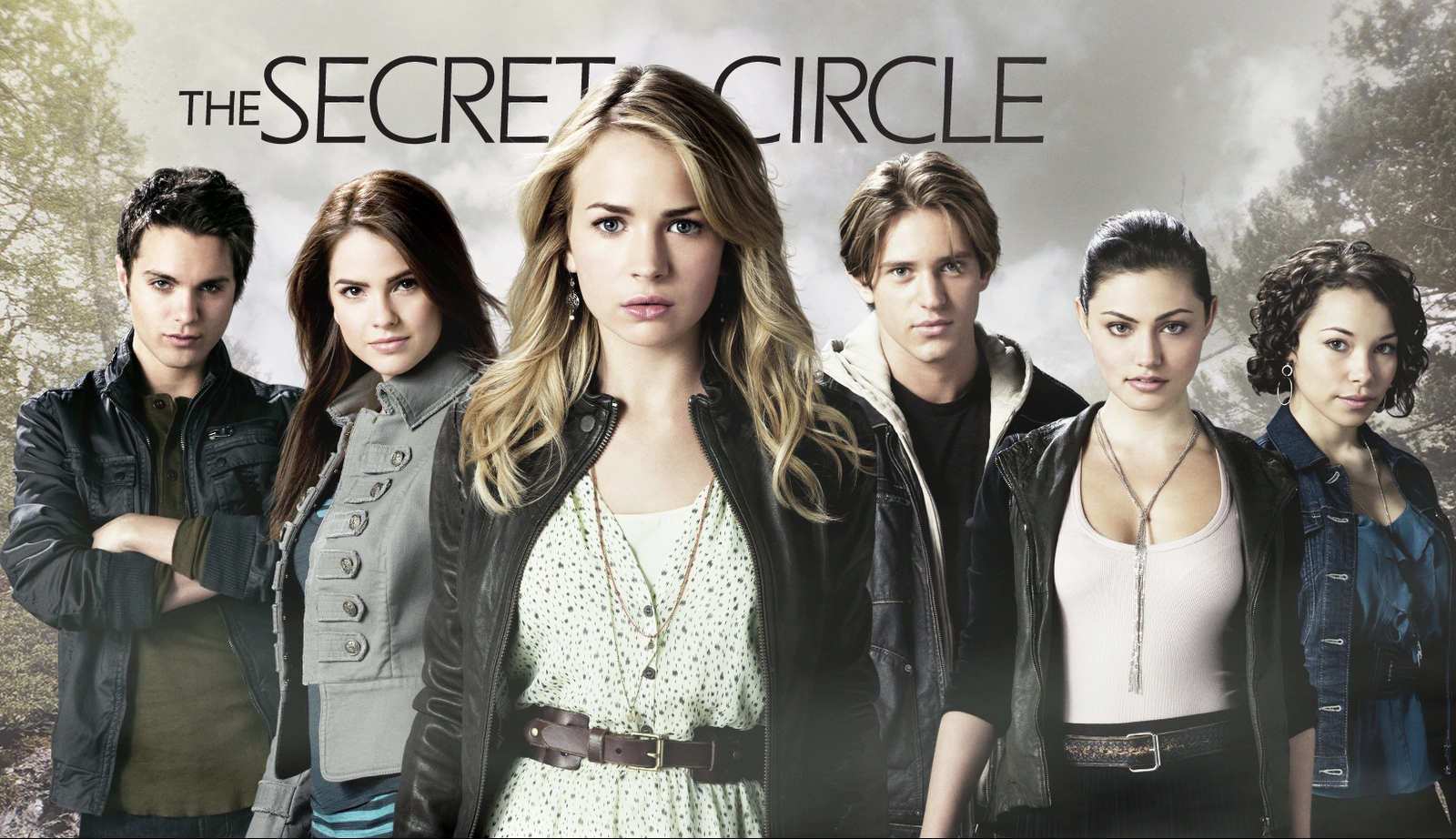
Diana and Deborah from Secret Circle
L. J Smith made a point to model the characters in this series after the major goddesses. Diana has more traits of the Roman version, Diana, while Deborah embodies the fierceness of the Greek version of Artemis. Together they created the foundation of my idea of that goddess.
And last of all, the character who essentially is the goddess….

Buffy the Vampire Slayer
She literally embodies all things Artemis. I have to be very careful when writing Artemis scenes not to make the two too much alike. She’s the idea I have in my head for the goddess of the hunt. She’s strong, she’s beautiful, she’s absolutely in her element in the night, she’s brave, she’s sometimes wise but mostly passionate and quick tempered, and she’s short and witty. It’s an amazing character all around and I honestly think Artemis was an inspiration for Buffy.
How about you? Any Artemis like characters in books, movies, or TV shows that you have to share? There are a *ton* out now. What’s your favorite?

If you want to know what a society fears, read their stories. Not just fairy tales, not just the warnings we pass on to our children. All stories reflect some level of fear. Don’t believe me? Read zombie stories through the ages. What causes zombies? Communist pod people? Martians? Nuclear war? Viral terrorism? GMO’s? Cancer curing drugs gone wrong? The cause changes with the time as do the zombie-symptoms. Zombies themselves aren’t zombies, they’re symbols of some unknown fear that can change the people around us and will change us if we’re not lucky. Why and how are the relevant details.
Archetype myths like Cassandra or her opposite, the boy who cried wolf, are like that. They appear over and over and over again in story after story as veritable harbingers. Warnings. Why? What about these two tales has captured our collective unease?
Losing our voice.
Cassandra was beautiful, spirited, and a princess to boot. Even ignoring the fact that she was clairvoyant and literally never wrong, if any woman in her time should have had a voice, it was her. She had wealth, power, beauty, intelligence. She was confident enough to spit in a gods face when he propositioned her. She represents everything everyone strives to have, and yet she was still ignored, powerless because she was stripped of her voice. She represents that niggling little fear in the back of our mind that we should have listened. She represents that outright terror that keeps us awake at night that no one will listen. The fact that she’s a woman and she lost her voice after saying no to a man in position of power adds this whole other layer to her myth, especially when you compare her to her opposite, the boy who cried wolf.
The boy who cried wolf was a shepherd and a child hardly a prince. This is not an archetype of a powerful figure brought down to his knees, but a bored child crying out for attention. His every warning isn’t ignored. He’s responded to instantly and on multiple occasions. He didn’t lose his voice despite being right, he lost it for being wrong. He was wrong, and then he was wrong, and then he was wrong again, then too late he was right, but no one listened. He represents the same fear that worries away in our minds. We should have listened. What if they won’t listen because i’m not good enough, smart enough, or I didn’t do everything right?
They’re two sides of the same coin. The fear we didn’t listen when everything said we should have and the fear we didn’t listen when everything said we shouldn’t have. The fear that despite being the absolute best, being silenced and the fear that we’re not good enough to be heard. It’s no wonder their stories have been with us for so long.
There’s nothing more frightening than not being heard.
Cassandra pops up a lot in modern culture, and when I was growing up, every T.V show, cartoon, book series, and movie seemed to have a nod toward her. She’s such a great stand alone character that she even moonlights in other Greek myths. Tons of people who have no idea she was a princes of Troy or Helen’s sister in law or anything about her actual origin myth know the gist of Cassandra’s story. She’s an entirely new angle (still) on a tragic character. Here are a few of the adaptations of her that stuck with me.

Hercules the animated series
Hercules features a sassy version of Cassandra with a dry sense of humor, this version of Cassandra probably influenced mine the most. Mine is much, much, much more upbeat, but the snark is very much alive in this one.

Buffy the Vampire Slayer
This one-time cameo of the cursed prophetess, Cassie, stuck with me for years after the episode aired. Whedon is very good at giving glimmers of hope and jubilation and just when you think everything is going to be okay, he swings the ax.

Goddess of Yesterday
Read this book. Seriously. This version of Cassandra is what got me wondering what her life was like in Troy. Somehow, in all the myths, I’d never connected her to Troy (which is crazy because that’s her main myth). She’s a background character in the story but an extremely well done background character.
Not exactly Cassandra but…
Woody in Toy Story, Sarah Conner in Terminator 2, Sally in Nightmare before Christmas, the scientist in Jurassic Park, Professor Trelawny, and dozens of others. Being a Cassandra is as big a trope as being the boy who cried wolf. It’s everywhere. Tune in Friday to see why this particular myth has continually resonated with our society regardless of context.
 ve the date for the cover reveal of the all new cover of Persephone, soon available for the first time ever in print.
 Kaitlin Bevis