Mythology Monday: Calliope

calliope

“What can we do for you?” Hades repeated impatiently.

“Well, you see,” Orpheus said,  “I haven’t died yet.”

That news caused stirring amongst the judges. They muttered, glancing at each other. Hades shot a look at Cassandra.

“Then how did you come to be here?” she asked.

“My mother is the muse Calliope—”

“I should have known you were a demigod!” I interrupted. “I didn’t know about the eyes thing when I met you, but it was so obvious. I mean, well, if anyone was a demigod it would be you.”

“Well—” Orpheus shifted uncomfortably “—I’m human for all practical purposes. I’m just gifted with music.”

I sighed. “You sure are.” Oh my God! Did I just say that out loud? How humiliating.

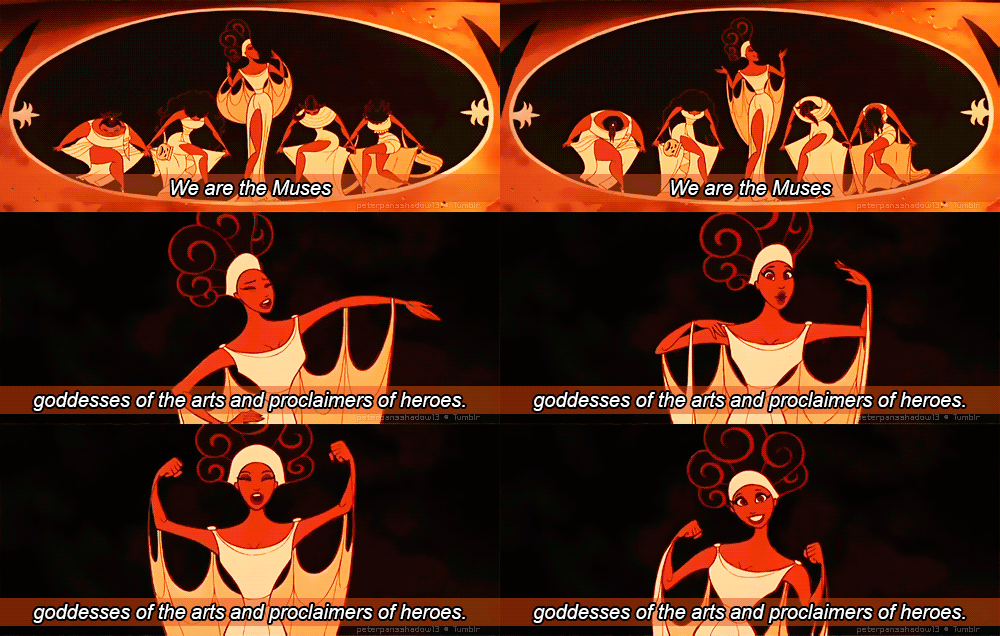
“Calliope herself is a fairly minor deity,” Hades explained, ignoring my faux pas. “Well, sub-deity. She’s a singer of some renown herself. You may know her as . . . ” He paused. “What does she go by now, Cassandra?”

Cassandra supplied the name, and my jaw dropped. “She’s your mother?”

Orpheus shrugged. “Yes, but we don’t advertise that fact. The lack of age difference would be difficult to explain.”

~@~

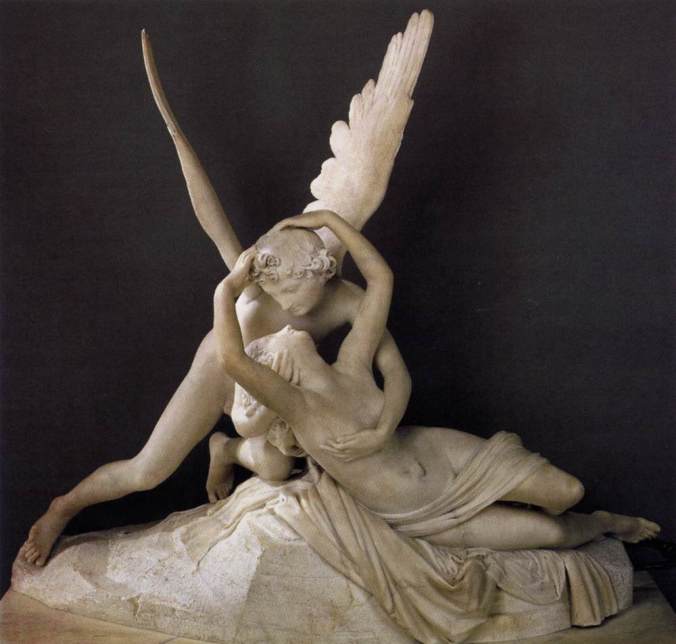
Orpheus’s mother, Calliope is the oldest of the nine muses (well, there’s some debate about that, but in most myths), and the goddess of music, song, dance, eloquence, and epic poetry. She was considered to be the wisest of all the muses and the most assertive. Depending on the myths, Orpheus’s father was either Apollo or a Thracian King named Oeagrus (that she was married to). Orpheus may have had a brother named Linus (or he could have been the child of another muse depending on the myth) who taught him music. She may have also had several children by Ares.

Once, she had a singing duel with several daughters of the King of Thessaly (Pierus), and upon soundly defeating the princesses, turned them into magpies.

Mythology Monday: Voting!

g138468792658915347

Tomorrow is election day in the good old U.S of A, so if you’re in country and eligible, go vote! Do your civic duty and stuff.

To further inspire you, I thought I’d do a special edition Mythology Monday voting edition to show just how important it is to vote and the dire consequences that follow if you vote wrong.

This election day, I’m going to feature the most famous example of voting in mythology. The judgement of Paris.

Eris was the god of strife, chaos, and discord. She is the daughter of Nyx, and sometimes Erebus, sometimes Cronus. Eris is the major deity behind Discordianism. Eris and Enyo, a younger goddess of war, are sometimes referred to interchangeably.

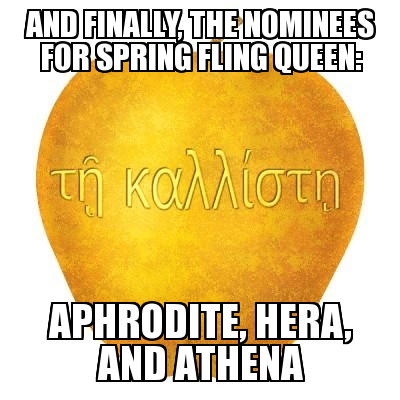
Eris is most famous for setting the Trojan War into motion. She was not invited to the wedding of Peleus and Thetis, so she showed up anyway in a very Malificent move, bearing the gift of a golden apple. The gift, she explained, was intended for the most beautiful goddess in attendance. Hera, Athena, and Aphrodite immediately began bickering over the apple, and in the end Paris was chosen to judge the divine beauty contest. Each goddess tried to bribe him, and Aphrodite, who promised him the most beautiful mortal woman on earth, Helen of Troy, won. Unfortunately, Helen was not yet of Troy, she was married to Menalaus, so when Paris kidnapped her he started the Trojan War.

See. Your vote can make an impact 😀

Have a happy election day tomorrow.

Myths Featured in Love and War

love-and-war

Love and War is coming out on October 21st! You can pre order it here.

And here’s links for the mythological essentials for Love and War.

Aphrodite

Ares

Jason and the Argonauts

Medea

Otrera

Adonis

Tantalus

Narcissus

Pandora’s Box

There are other mythological references in there, but these are the big ones featured in Love and War.


“No one ever knows about all my cats”: the inscrutable divine trickster Hermes

I am busy with birthday fun for my daughter this week, so the amazing Molly Ringle offered to do a guest post about one of my favorite mythological characters from her series. Hermes.

molly-ringle-sm

Thank you for having me back, Kaitlin!

I am always happy to ramble about the Greek myths, and by the end of my Chrysomelia Stories trilogy (Persephone’s Orchard, Underworld’s Daughter, and Immortal’s Spring), Hermes had become one of my sentimental favorites, and the favorite of many readers. Today I’m giving a brief sketch of who he is, and why I love him.

You might know of Hermes as a deliverer of messages between gods, or between gods and humans. Which he is. But he’s more than that.

You might know him as a trickster and thief, and he definitely is. But not just that.

You might think of him as untrustworthy, and you’d be right. But that’s not the whole story either.

You might even know he’s a psychopomp: a guide who brings departed souls to the Underworld. Again true, but it’s only one of the many jobs he performs.

In fact, he has so many facets, and is always coming and going on so many mysterious errands, that the more I studied Hermes, the more I decided no one (except Hermes himself) knows all the things he does. He’s a variety of things—nimble, clever, mischievous, untrustworthy, playful, dangerous, seductive, helpful, adaptable, irreverent, dark and light and good and bad all at the same time. He fascinates me, and when starting my mythology-based series of novels, I knew I wanted him to be one of my major characters. And indeed, after Hades and Persephone, he’s one of my main secondary characters.

However, he’s never one of my point-of-view characters. That is, I never got fully inside his head and showed his thoughts, his errands, his loves, his motives. And that’s mainly because I feel like even I, the writer, cannot possibly fathom the depths of the mind of the divine trickster. In Underworld’s Daughter, when another character discovers a trick he’s pulled, and remarks, “Your cat’s out of the bag,” my Hermes character answers, “No one ever knows about all my cats.” I still believe that. While I do reveal some of his secret plans, I’m certain there are lots more that I know nothing about.

Hermes is the quickest thinker, the nimblest thief, and one of the most charismatic of all the gods. In mythology, on the day he’s born, as an infant, he steals all of Apollo’s cattle, covers his tracks, gets caught anyway, then charms Zeus and everyone else—including Apollo—into not holding a grudge and indeed forgiving and liking him. In my version, he’s the one to call on when you need anything (or anyone) stolen or acquired; he’s a con man and sometimes plays tricks even on his friends, but he also protects and avenges them. He’s unpredictable, but mainly benevolent. Chaotic good, some might call him.

One of the interpretations that helps me understand Hermes, and ties together all his diverse personality traits, is that he’s a god of boundaries, and the transgressing of them. As the god of travelers, he helps keep you safe on the road: his name comes from the piles of stones called herms that people used to build at crossroads or countries’ boundaries to mark the way. As a psychopomp, he guides souls across the living world/Underworld boundary. As a thief and a trickster, and the patron god of thieves and tricksters everywhere, he embodies the irreverent transgression of the taboo against stealing and deceiving—stepping over the boundary between lawfulness and crime.

But even with his dark side, Hermes is generally considered a bringer of good things. He’s often described in myth as youthful, playful, and light-footed; he flies through the air in the sunlight and starlight on his winged sandals. Yes, he’ll screw you over sometimes and drive you crazy. But he’ll also surprise you with unexpected gifts. For example, as an apology for the cattle incident, he gave Apollo the lyre he (Hermes) had just invented, and graciously let Apollo become the god of music even though Hermes himself was just as enchanting a musician.

As I have one of my characters say, “It’s wise to leave room in our lives for the chaotic, the unexpected. Hermes has always been excellent at providing those elements. It’s part of the reason I like him, despite the trouble he causes. Ultimately you will find he brings more good than harm.”

And anyway, haven’t we all had friends like that?

Excerpt from Immortal’s Spring, in which Hekate encounters Hermes at a Dionysia festival:

Hermes’ presence stole up beside her. She smiled without turning, and didn’t even look when he slid his arm around her waist and said in her ear, “What a fetching young woman. I must fondle her.”

“Hello, Hermes.”

“Hush, my darling. We are all masked tonight. No names.” He drew her forward and began dancing with her.

“You’re not even trying to disguise your voice. And I can sense who you are, stupid.”

“Oh, come now. I’m many terrible things, but never stupid.”

She conceded with a shrug, and spun in the dance in harmony with him.

His mask covered the top half of his face, a fitted piece of leather that sparkled with scattered gold leaf. Mistletoe wreathed his head. “It makes me happy to see you at another of these,” he said.

“I thought it time to come back.”

“I agree. Hey, Aphrodite gave me a new perfume. I tried putting it on my mask. Smell it and tell me what you think.”

Hekate leaned her face close and inhaled. She was about to tell him she could hardly smell anything when he took advantage of her proximity and kissed her on the mouth.

She planted her hand on his face and shoved him, though her annoyance was mixed with laughter, and she didn’t bother trying to escape from his arms.

He was grinning. “Such a simple trick, and you fell for it. Now who’s stupid?”


Like what you read? For the months of October and November 2016, Persephone’s Orchard will be free on all major ebook retail sites! Download today and get started on the series. Find out more below:

Molly Ringle is the author of the New Adult Greek mythology series that begins with Persephone’s Orchard and continues in Underworld’s Daughter and concludes with Immortal’s Spring. She has also written ghost stories in The Ghost Downstairs and Of Ghosts and Geeks—and, to some degree, in What Scotland Taught Me. She stays within the bounds of reality (though still fiction) in her romance novel Summer Term. She lives in Seattle with her family, is happy when it’s cool and cloudy, and gets giddy about fandom, things that smell good, and gorgeous photos of gardens.

Visit Molly Ringle at her website, Goodreads, or Twitter.
 

Guest Blog by Eva Pohler: Noble Monsters

Noble Monsters

Thanks so much for having me on your blog, Kaitlin. You asked me to talk about one of my favorite myths, and it just so happens to be one of the most popular: the Persephone story.

The Persephone myth was my introduction to Greek mythology. I was in the seventh or eighth grade and found it in my English teacher’s library. From that moment on I was hooked.

As I became older, I wondered how a story about an innocent girl being tricked into marrying the god of the most repulsive realm could possibly have appealed to me. I was a feminist, wasn’t I? This was absurd.

But you know what? Beauty and the Beast became my favorite Disney story, and we all know which Greek myth inspired it. So why would a girl, and, later, a woman, who considered herself to be an advocate for women’s rights, adore a story about a girl being held in captivity until she fell in love with her captor?

After years of therapy–just kidding! After years of self-analysis, I came to this conclusion: It wasn’t Persephone’s (or Belle’s) captivity that allured me; it was the unloved, misunderstood monster who needed the opportunity to be redeemed.

And now when I look back on my young adult novels based on Greek mythology, I see that I tend to take up for those innocent monsters: Medusa, the Minotaur, and even, to some extent, Scylla. But the monster I have come to defend most in my writing is Hades, because, really, if you study the classic myths, he was the most noble of all the gods despite the lot her drew that condemned him to rule the Underworld.

Back then, girls and women were viewed as property, spoils of war, and the caretakers and nurturers for the people with real power. So when Hades asked Zeus if he could have his brother’s daughter for his wife, and Zeus agreed, there was no obligation for Persephone’s wishes to be consulted. The male deities had an agreement, and unlike the one between Tevye and the butcher in Fiddler on the Roof, even a dream about a dead relative couldn’t get Persephone out of it.

My novel, The Gatekeeper’s Bride, set during and after The Trojan War, tells their story as I believe it really happened. In my series, Hades has a saying: “Life isn’t fair, but death is.” My series shows his true nobility–unlike the way Disney portrayed him in the animated film Hercules, in which the lord of the Underworld is conflated with the Satan of hell.

Face of handsome bearded confident young guy

evapohler

evapohler

Eva Pohler is the Amazon bestselling author of The Gatekeeper’s Saga, The Purgatorium Series, The Vampires of Athens Series, and The Mystery Book Collection. After teaching writing and literature at a university for over twenty years, she now writes full time in San Antonio, where she lives with her husband and three teenagers. You can email Eva at eva@evapohler.com.

PERSONAL LINKS

VERIFIED SERVICES

View Full Profile →s Blo

If the Daughters of Zeus were Disney Princesses

I’m sure one of these lists has been done for Greek goddesses, but not my version of the Greek goddesses from the Daughters of Zeus series. So why not join in on the fun?

These are my characters, represented by disney princesses.

Persephone


Small and fluffy, but mighty. I probably was channeling a good bit of Tangled while I wrote Persephone. Persephone was also kept from the world she belonged in by a deceptive (though considerably more well-intentioned) parent. She dove into that world with bravery and determination, even though it frightened her. She mastered powers that would otherwise be used to control her. Plus she’s all about sunshine and flowers. Rapunzel makes the perfect Persephone.

Aphrodite

This one was too easy. A redhead that emerged from the sea who is completely new at this whole acting human thing? She uses bad guys as a means to an end, trusts people way too fast, and has a fiery temper. The Little Mermaid is absolutely the best disney princess to represent Aphrodite.

 Athena

36385_1290805771853_full

This is probably the biggest stretch,  but hear me out. Belle is book smart, but not that great with people. If you take her romance with the Beast completely out of the equation, she’s a perfect Athena.

15-46-28901-812x522

Artemis

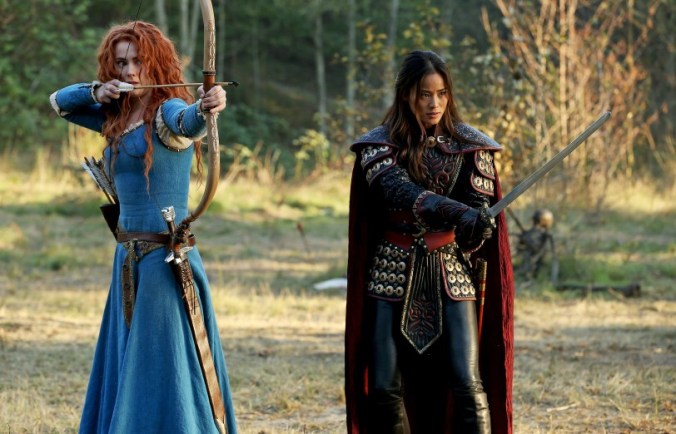
Artemis was tough. I kept wanting to cast her as Merida because of the arrows and the aversion to marriage, but she’s so much more kick-but than that. So consider her a cross between Merida and Mulan.

largeHelen of Troy

Plagued by powers she doesn’t understand and can’t control, used as a scapegoat for a political takeover, fiercely pragmatic and more than a little sad, Elsa is a perfect Helen of Troy. I do wish mine had gotten a better ending.


And of course, I can’t forget these guys

tumblr_mhhv7orsbv1rjl16lo1_500

Which disney character would you cast as your favorite god or goddess?


Psyche Master Post

cupid-and-psyche1

The love story of Psyche and Cupid is perhaps one of my favorite myths outside of the Persephone story. There are echoes of it all over the fairy tales and modern literature. I wrote a blog series on it a while back, and now I’m putting the posts together all in one place.

I began with Psyche’s backstory before she met Cupid (or Eros). Then I talked about the strange marriage, which lasted right up until Psyche looked upon Cupid’s face. Doing so broke all kinds of divine rules, and if Psyche wanted to be reunited with her husband ever again, she needed to complete a series of trials (post 1, post 2, post 3).

Enjoy.

Adventures of Hercules Master Post

70140394

I’m going through all my series posts and rounding them up into master posts. When I’m done, I’ll put links in at the bottom of my page so it’s easy to find the whole series on a topic.

Here’s what I’ve written on Hercules.

The birth of a hero— In this post I talk about the politics of Olympus when Hercules was born.

Young Hercules— In this post I talk about Hercules’s adventures as a youth.

The legendary labors of Hercules (the stuff he was really famous for) are outlined in these four posts. One. Two. Three. Four.

Hercules also went on a few miscellaneous adventures as an adult, not related to the famous labors. I talk about those here.

In this last post about Hercules, I talk about his ascension, love life, and death.


Jason and the Argonauts Master Post

chc3a2teau_de_versailles2c_salon_de_diane2c_jason_et_les_argonautes_dc3a9barquant_en_colchide2c_charles_de_la_fosse

In an effort to organize my blog a bit better, I’m creating master posts for topics I covered over more than one week of blogging. I’ll get these together and link them somewhere in the menu once I’ve caught up.

Here’s everything I’ve written about Jason and the Argonauts. This set of myths serve as important background for the second and third books in Aphrodite’s trilogy.

So without further ado…

The Adventures of the Argonauts Referenced in my Books

Mythology Monday: Jason

Mythology Monday: The Island of Lemnos

Mythology Monday: The Golden Fleece

Mythology Monday: The trials for the Golden Fleece

Mythology Monday: Escape from Colchis

Mythology Monday: The Argonauts Encounter Sirens

Mythology Monday: A Wedding and a Sandbar

Mythology Monday: The Argonauts Returned Home

Mythology Monday: Medea

The Adventures of the Argonauts Not (Yet) Referenced in my Books

Mythology Monday: The Argonauts Encounter Hungry Harpies

Mythology Monday: The Argonauts meet the Amazons

Mythology Monday: Circe

Mythology Monday: Thetis and the Nereids

Mythology Monday: The Island of Lemnos

Meet The Argonauts

Mythology Monday: Meet the Argonauts, Philoctetes edition

Mythology Monday: Meet the Argonauts: Peleus Edition

Mythology Monday: Meet the Argonauts: Telamon

Mythology Monday: Meet an Argonaut: Castor and Pollux

Mythology Monday: Meet an Argonaut: Glaucous

Mythology Monday: Meet an Argonaut: Atalanta


Mythology Monday: Otrera

runner-808932_1920

There you are!” Otrera exclaimed, crashing down beside me in a spray of sand.

I jerked back, startled, shutting the journal before she could catch a glimpse of the crazed scrawl.

“How was your run?” I asked, sitting up.

“Great.” Otrera managed around a gasp for breath. “Except I misjudged the distance. Got all excited thinking I was done and—” she drew in another breath. “Ugh.” She dropped backward, hand hitting the beach towel with a thump. “I’m gonna need a minute.”

I reached into my bag and grabbed her metal water bottle. “Here.”

“Lifesaver,” she gasped and took a huge gulp. “Whatcha working on?”

“Just journaling.” I tucked the book into my beach bag. “Jason said a blog was too high risk no matter how private I set it, so I’m going old school.”

Otrera nodded around another sip of water. “Cool. Is Glauce meeting us tonight, or—”

I shook my head, and made a futile attempt to brush the sand off the blanket. “Jason’s testing every inch of the shield. Again.”

“Poor thing,” Otrera clucked, eyes sliding to the volleyball playing demigods down the beach as a particularly large burst of laughter reached our blanket. “He’s working you two to death.”

I shrugged. “He’s starting to ease off now that we’ve got the evacuation drill down to a science. He’s talking about taking a few days then starting random drills.”

“You can’t keep doing that, Medea. We don’t know enough about how this stuff works.”

“I’m fine.” A strand of dark hair worked free from my pony tail, and whipped around in the wind. Irritated, I tucked it behind my ear.

“I’ve seen you afterward. You’re not fine.”

I resisted the urge to roll my eyes. Otrera was in her mid-twenties, making her one of the oldest people on the island. And that meant something to her. She flip-flopped between mothering Glauce and I, and just hanging out like a regular person.

The first time she saw Jason kiss me, she’d grabbed my arm so tight I was sure her fingers left bruises, made some excuse to Jason, then marched me off in the opposite direction and told me in no uncertain terms I didn’t have to do anything with him that I wasn’t comfortable with. The age difference between us still made her squeamish. But now that Jason and I were older news, she seemed to be coming to terms with it.

“Well if she’s not meeting us, I guess there’s no reason to wait,” Otrera decided, climbing to her feet and further upsetting the blanket. “I need a shower.” She shoved my shoulder when I nodded. “Want to hang out at my place until the dining hall opens or were you sticking around here?”

~@~

Otrera is a new character who will be introduced in Love and War. Unlike almost every other named character on the Island of the DAMNED, she’s not an Argonaut, so I haven’t talked about her yet on this blog.

Otrera was a Queen of the Amazons and Hippolyta’s (the much more famous Amazon queen) mother. She was either a consort or a daughter of Ares, though many myths place her as the daughter of the Eastern wind. She is credited with the creation of the Temple of Artemis in Ephesus and the creation of the Amazon nation.

In short, she was an awesome figure in mythology. Unfortunately, she was later killed by Bellerophon (he’s interesting, I’ll be sure to talk about him in another mythology Monday).

I wrote Otrera into my story because I needed another female demigod, and there aren’t that many to choose from. But I’m glad I chose her, because she’s interesting. There’s not a ton of information out there on her, but what I have been able to dig up from research tells me she’s fierce.