Mythology Monday: The Hours

The Hours, The Horae, Greek Mythology, Mythology Monday

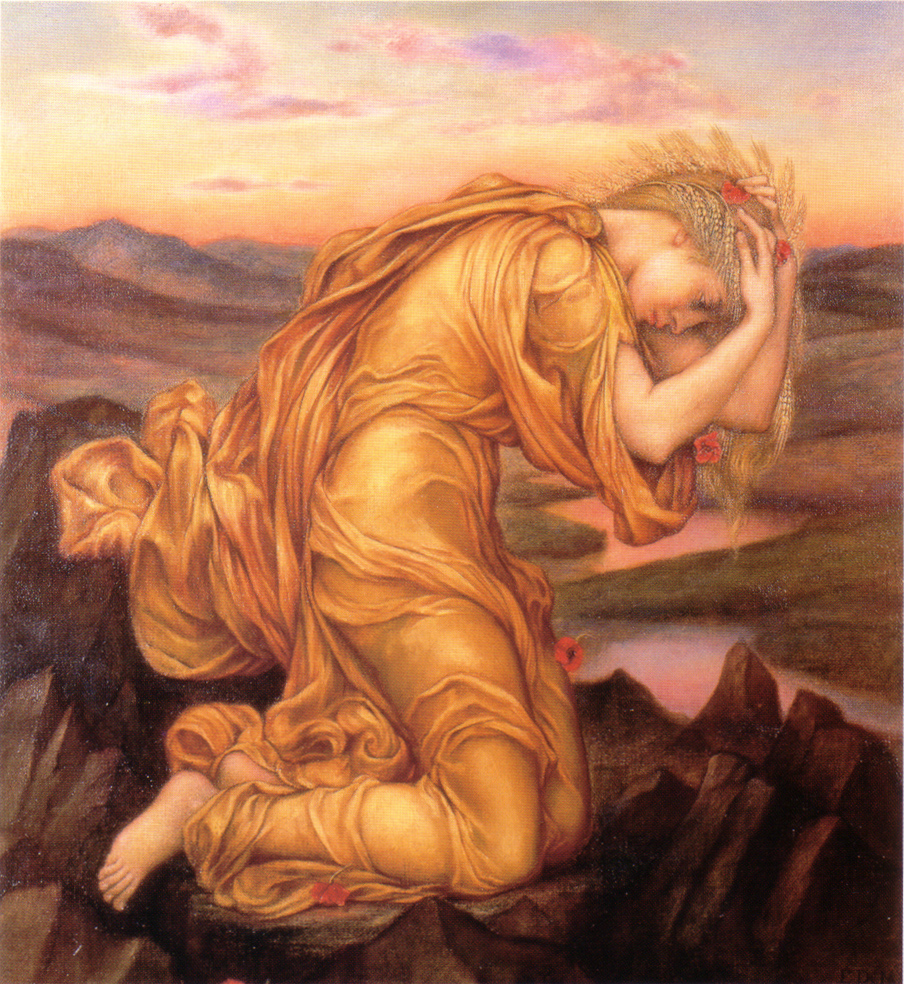
The Horae (the correct moment) were goddesses of the seasons, time, and the ordering of heaven. They were also guardians of the gates of Olympus and servants of Hera. Farmers really appreciated/worshipped the Horae. They may have been daughters of Zeus and Themis, or daughters of Selene and Helios, or just daughters of Helios.

The Horae were divided into several groups, and there is a ton of overlap.

The Horse of the Seasons:

  • Eiar- A goddess of Spring
  • Theros- A goddess of Summer
  • Phthinoporon-  A goddess of Autumn
  • Cheimon- A goddess of Winter

Horae of Good order, Justice, and Peace.

  • DIKE (Justitia/Libra)- The goddess of justice, who reported the misdemeanors of man to her father Zeus. She is sometimes combined with a goddess of innocence and purity, Astraea
  • EIRENE (Pax)- A goddess of peace and spring.
  • EUNOMIA- A goddess of lawful conduct, good order, and green pastures. She was also an attendant of Aphrodite, where she represented lawful and obedient behavior of women in marriage. She’s often associated with Eurynome, the mother of the Graces. She is by most accounts the daughter of Themis and Zeus. Her opposite number was Dysnomia (Lawlessness)

Horae of the Order in Nature

  • Thallo/Thalotte- (Flora) A goddess of Spring
  • Auxo- (Sometimes referred to as Auxesia) A goddess of Summer who was also associated with the charities. Her name meant increaser, and she was the protector of vegetation, growth, and fertility. She’s often left out of the Nature Hours
  • Carpo/Xarpo/Carpho- (Damia)- A goddess of Autumn and often known as “the one who brings food.” She was in charge of ripening and harvesting. She also guarded the way to Olympus and pulled back the clouds to let the gods come in and out.

Horae of Plenty

  • Pherusa- Goddess of substance and farm estates
  • Euporie/Euporia– Goddess of Abundance
  • Orthosie/Orthosia– Goddess of Prosperity

The Hours: 

The hours were a separate setof Horae that represented the nine, ten, or twelve hours of the day (depending on the season and myth origin). Their hours run from just before sunrise to just after sunset, thus winter hours are short, summer hours are long. There’s a lot of overlap between groups of Hours.

The Nine Hours

  • Auco/Auxo – Growth
  • Eunomia- Order
  • Pherusa – Substance
  • Carpo- Fruit
  • Diké – Justice
  • EuporieEuporia – Abundance
  • EireneIrene – Peace
  • Orthosie / Orthosia- Prosperity
  • Thallo – Flora

*Thank you Wikipedia

The Ten/Twelve Hours 

  • Auge- first light (initially not part of the set),
  • AnatolêAnatolia- sunrise
  • Mousikê / Musica- the morning hour of music and study,
  • GymnastikêGymnastica /Gymnasia- the morning hour of education, training, gymnastics/exercise,
  • Nymphê/ Nympha-  the morning hour of ablutions (bathing, washing),
  • Mesembria- noon,
  • Sponde- libations poured after lunch,
  • Elete- prayer, the first of the afternoon work hours,
  • AktêActe /Cypris-  eating and pleasure, the second of the afternoon work hours,
  • Hesperis- end of the afternoon work hours, start of evening. Also associated with the Hesperides, nymphs of evening and golden light.
  • Dysis- sunset,
  • ArktosArctus,- night sky, constellation (initially not part of the set).

*Thank you Wikipedia

Mythology Monday: Deities Associated with Asclepius

Asclepius, mythology monday, greek mythology retelling, young adult

Short and sweet Mythology Monday today because I had a few too many more notes on Asclepius to include in last week’s post.

Asclepius had a wife and a handful of daughters who were all associated with healing, and there’s a bit of repetition and overlap among them, so bear with me.

Epione was Asclepius’s wife. She was also the goddess of the soothing of pain, and by most accounts, mother to the goddesses listed below.

Hygeia (Salus) was the goddess of good health, the reason why good health is called hygiene, and an all together different goddess than her sister Aegle (Aigle) who was the goddess of the radiant glow of good health and shared her name with a variety of other goddesses.

Akeso was the goddess of curing illness. She’s different from her sister, Panacea (Panakeia) the goddess of universal remedy (or as gamers might know her, the cure-all), because she stands more for the process of getting better rather than the cure itself. Iaso was also a goddess of recovery, but not cure-alls and not the process of getting cured.

Paeon (Paion) The physician of the Olympian gods. He was sometimes considered a unique god, other times he was considered an epitaph of Apollo or Asclepius.

P.S Persephone is on sale from May 20th-May 26th for 99 cents! Please spread the word.

Mythology Monday: Epic Moms

h7h4t

In honor of Mother’s day next week, I’m dedicating this week to the amazing mom’s in Greek mythology. Ancient cultures may not have had the most respect for women in general, but they respected the role of motherhood. Here’s the top three mommy myths in Greek mythology. By the way, I’m leaving both Hera and Gaia off this list because in my opinion they sucked as mothers.

Demeter

I’ve already went into Demeter’s myth at length several Mythology Mondays ago, but I can’t leave her out of this list.

She was by all accounts, an awesome mom. She took great care of Persephone, protected her, and kept her out of the drama of Olympus, no small feat.

When her daughter went missing, she scoured the earth to find her and didn’t rest until her daughter was returned to her arms.

It’s a pretty epic myth, all things considered and in my opinion the most powerful myth about motherhood in Greek mythology.

Rhea_MKL1888

Rhea

Rhea was married to a kind of awful guy. And yes, it took him eating a couple of her kids to realize the true depths of his depravity, but eventually that mothering instinct took over and rather than allow Cronus to kill Zeus, she, at great risk to herself, snuck him away and tricked her husband. Later, she gives Zeus the tools he needs to save her other children. This decision cost her a kingdom, a husband, every bit of status she had ever gained. She wasn’t killed with the rest of the Titans but she faded into obscurity.

"For two days and two nights the boat was and hither and thither" by Walter Crane - The story of Greece : told to boys and girls (191-?) by Macgregor, Mary. Licensed under Public Domain via Wikimedia Commons - http://commons.wikimedia.org/wiki/File:For_two_days_and_two_nights_the_boat_was_and_hither_and_thither.jpg#/media/File:For_two_days_and_two_nights_the_boat_was_and_hither_and_thither.jpg

“For two days and two nights the boat was and hither and thither” by Walter Crane – The story of Greece : told to boys and girls (191-?) by Macgregor, Mary. Licensed under Public Domain via Wikimedia Commons – http://commons.wikimedia.org/wiki/File:For_two_days_and_two_nights_the_boat_was_and_hither_and_thither.jpg#/media/File:For_two_days_and_two_nights_the_boat_was_and_hither_and_thither.jpg

Danae

Danae was a princess whose child was fated to kill her father. Her dad locked her up so no man could reach her, but that didn’t stop Zeus. As punishment for getting knocked up, her father locked her and her baby in a coffin and threw them out to sea so Poseidon would get the blame for killing them, not him. Poseidon didn’t cooperate so mom and son, Perseus, made it to shore, where a king fell in love with her. She wasn’t interested in marriage (no doubt emotionally scarred from her horrible treatment with her father), but the king raised Perseus and agreed not to pursue her for awhile anyway. When Perseus grew up, the king lost patience and tried to marry Danae, but Perseus used Medusa’s head to turn him to stone.

That tells me a few things about Danae. The main one being she’s an awesome mother. Perseus loved her enough to go to great risk and kill a father figure for the love of his mom. That means rather than shutting down or blaming Perseus for all the trouble he brought her, she kept mothering on like a good human being. Given her insane childhood, that’s kind of awesome, so props to Danae.

So there you have it. My top three favorite Mom myths in Greek mythology. What’s your favorite Greek mother?

FAQ Friday: Wouldn’t it have been safer for Persephone to just stay in the Underworld?

Question mark in a blue bubble. Repeating icon for the frequently asked questions in the Daughters of Zeus series a young adult greek mythology retelling by Kaitlin Bevis


*Spoiler warning for Persephone and Daughter of Earth and Sky

A reader wondered why, if Hades and Demeter knew Zeus was still around and after Persephone, did they allow her to return to the living realm in book two?

Remember, Boreas was restricted to a relatively short season, but Zeus could wait around for all eternity. Persephone wanted to hang on to the human life she’d built. She has friends, a job, a family, and a life. And while it’s one thing to step away from that for a few months (December-March) while Boreas was at full strength, it’s quite another to say goodbye forever.

Persephone’s will in this is paramount, because I didn’t want to write a horror story about a teenage girl being forced to spend her life in the land of the dead. It’s one of the first things I changed when I rewrote the myth.

As far as what Hades wants, while other writers have tackled the whole over protective significant other forcing their loved one to stay somewhere safe (and thus destroying their relationship in the process) SO well (Seriously read the linked book. It’s so good), that’s not the story I wanted to tell. Which is why, in book one, Hades explicitly stated that he wouldn’t keep Persephone in the Underworld against her will. That’s a promise he has to honor. He does try to convince her to stay a few times. He just can’t make her.

Demeter on the other hand, would absolutely force her daughter to stay in the Underworld for her safety. For a season. Asking her to say goodbye to her daughter for all time, especially after her daughter nearly died the last time she tried to make that happen, is a bit much. Plus, Demeter’s dealing with a lot of parent guilt in book two. Every move she’s ever made regarding Persephone was for Persephone’s own good, but it backfired. Her daughter hates her for her deception, the events of book one outright would have never happened if Persephone had had an ounce of preparation, the priestess she chose for her daughter has gone rogue, the father she chose for her daughter so she’d have enough power to survive is the very thing threatening her life. Every move she made failed. So while she never shows it (she’s a goddess after all, showing weakness isn’t easy for them), Demeter spends most of book two feeling paralyzed. She knows if she pushes Persephone to stay in the Underworld, she will lose her forever on more than one level. Plus, she can’t force Hades to abide by her will, and Persephone sure isn’t going to go alone with it, so it’s a fight she couldn’t win if she wanted to. Demeter’s smart enough not to pick a losing battle.

Plus, she feels like she’s losing Persephone to Hades already. Her goal for the first third of book two is to keep her daughter out of the Underworld as much as possible. It’s only once the danger becomes explicit that she takes a major step back. She knows if she tries to force Persephone into the Underworld, that Persephone is just mad enough to dig her heels in to spite her. So she doesn’t. And she assumes that is where Persephone is spending most of her time.

At the end of the book, Persephone had every intention of waiting out the danger in the Underworld. But she couldn’t remember her charmed promises compelling her to leave the safety of the Underworld and return to Zeus. The important thing to remember about charm, is that done right, the implanted thoughts  it feels like the charmed person’s idea. So when Persephone irrationally decides to go find Orpheus and fix things, that’s her mind desperately trying to rationalize an obviously bad idea.


Mythology Monday: Dionysus

Dionysus, Bacchus, Bacchanalia, Greek mythology, young adult greek mythology retelling, Daughters of Zeus, Persephone, Kaitlin Bevis

Dionysus (Bacchus) was the Greek god of revelry and pleasure. Depending on which painted vase you’re looking at, he was either an old man with a beard, or a pretty boy with long hair. He was the son of Zeus and a princess of Thebes named Semele (or possibly he was a son of Zeus and Demeter, Io, Dione, Arge, Persephone, Io, or Lethe, or possibly the son of Ammon and Amaltheia, but let’s go with Semele). While Semele was pregnant with Dionysus, Zeus promised her anything she asked. Hera tricked Semele into asking to see Zeus in his full glory. Zeus, bound by his promise, had to comply, and Semele burned to a crisp. Zeus managed to save Dionysus by sewing him into his thigh and carrying him to term. (The gods are SO weird!)

OR Dionysus is a son of Demeter or Persephone and Zeus and was sent to be eaten by the Titans by a jealous Hera. Zeus swooped in to save the day and found they’d already eaten everything but his heart. Athena or Rhea or Demeter managed to restore him from that by placing the heart in Zeus’s thigh until he reformed and Zeus gave birth. Because of this dying then being born thing, he’s considered a death and rebirth deity.

After giving birth, Zeus sent Dionysus to live (in some versions of the myth disguised as a girl) with Semele’s sister, Ino, and brother-in-law, Athamas (He may have lived with some nymphs prior to moving in with his aunt and uncle, or he might have lived with a daughter of  Aristaeus, and Athena named Nysa, or Hermes, or Persephone, or Rhea). Hera, enraged to discover the child still lived, drove Ino and Athamas insane. They killed their children and then themselves. In some versions of the myth, Zeus saved Athamas from madness by turning him into a ram and having him take the young Dionysus into a cave on Mount Nysa, where he was then brought up by Nymphs. I’m sure Athamas appreciated being rescued from madness after his wife and children were slaughtered by his own hands.

Dionysus grew up among one group of nymphs or another (his origin stories are vast if you can’t tell. There’s about as many different versions as there were people in ancient Greece), and possibly took lessons from Chiron. As an adult, Hera cursed him with madness and forced him to roam the country side introducing people to the wonders of wine. This trick had a profound impact on the young Dionysus, and violence and madness became his go-to punishment. King Lycurgus angered Dionysus and ended up killing his entire family and then himself with an ax (he thought they were vines). King Pentheus was torn limb from limb by his daughters and/or wife, King Proteus was flayed alive for refusing the introduction of the grape vine, a group of pirates leapt overboard convinced they were dolphins, women who didn’t acknowledge his divinity ate their young, a nymph who pursued him was (predictably) turned into a plant, and so on. This was not a guy you wanted to upset. Despite that bloody history, he was regarded as a god of peace, civilization, and law.

He was also all about partying. His bacchanalias were famous. He went everywhere, establishing towns, introducing wine, driving out and killing invading amazons. He cursed Midas with the golden touch (though it was intended to be a gift) and eventually journeyed to the Underworld and led his mother back to the realm of the living.

In some versions of the myths he could tell the future or heal mankind. He was often seen as a god of art or protector of theater.

Dionysus came about fairly late in the Pantheon, and some interpretations of the myth suggest many myths involving Demeter may have been altered to give Dionysus credit (I mean, think about it, she was the goddess of the harvest, wine should be her thing). He’s also virtually identical to Iachus and a few more minor mythological gods and figures that may have combined to create one deity. Other interpretations consider him to be another aspect of Hades because “the cult of Dionysus is also a “cult of the souls”; his maenads feed the dead through blood-offerings, and he acts as a divine communicant between the living and the dead” (thank you wikipedia).

You’ll notice Dionysus isn’t included in my books, like, at all. That’s mostly because he is such a compilation of other deities that I have included/may include in my books. His insanity is reflected in Zeus, his chthonic tendencies in Hades, his powers in Demeter. Orpheus and some not-yet-introduced characters share other characteristics. Plus, he’s technically a demigod, so if he did exist in my universe, his time would have already come and gone.

Mythology Monday: Chthonic Deities

Chthonic deities, Underworld, Greek mythology, Retellings, Daughters of Zeus, young adult greek mythology retelling, Hades, Persephone ,Thanatos , The Judges , Cerberus, Charon, Cronus , Erinyes , Hecate , Hermes , Hypnos , Moirai ,Nyx ,  Acheron , Arae,  Ascalaphus , Kakodaimones ,Empusa ,Epiales , Erebus ,  Keres , Lamia , Lethe , Leuce , Melinoe , Minthe , Mormolyceia (Mormos) , Oneiroi , Styx , Tartarus ,Daira, Eurynomus, Gorgyra, Lampades, Cocytus, Macaria, Menoetes, Phlegethon, Trophonius,

Orpheus spoke up. “Last time I saw you, you didn’t even know you were a goddess. How did you end up down here? You don’t look like you belong with the chthonic group. No offense,” he said to Hades.

“Not that it’s any of your business, but her parents are Olympian,” Hades replied.

“Chthonic? Olympian? What are you guys talking about?”

“Chthonic deities are gods associated with the Underworld. We tend to have darker features.” Hades motioned to his black hair. “Olympians were associated with Olympus, and were various shades of blond. The primordials tended to represent their element to the extreme, and the Titans were . . . well, titanic in size.”

I blinked. Gods were classified by appearance? I supposed it wasn’t relevant anymore with so few of us left, but the whole system seemed strange to me. None of that mattered, though, because Orpheus remembered the last time he saw me! I was sure my face was bright red. Hades sighed, no doubt bored by the whole conversation.

~@~

Chthonic deities were gods associated with the Underworld. Below are links to descriptions of the more important Chthonic Deities.

Hades | Persephone | Thanatos |  The Judges Cerberus |Charon | Cronus | Erinyes | Hecate | Hermes | Hypnos | Moirai | Nyx |  Acheron | AraeAscalaphusKakodaimones |   |Empusa |Epiales | Erebus |  Keres | Lamia | Lethe | Leuce | MelinoeMinthe Mormolyceia (Mormos) | Oneiroi | Styx | Tartarus 

And this is a list of the Chthonic deities too minor to get their own blog.

Daira (Knowing One or Teacher), was a daughter of Oceanus, sister to Styx, and a key figure in the Eleusinian mysteries. While Demeter was searching for Persephone, she visited a town called Eleusis, and drank water from a particular well. Daira was the Naiad attached to that well. She was also the mother of the king, Eleusis, by Hermes.

Daira initiated members into the mystery cult that worshipped Demeter, Persephone, and Hekate. Persephone and Hekate both sometimes borrowed Daira’s name in invocations.

Eurynomus (Wide Ruling), played an important role in keeping the Underworld clean by stripping the corpses of their skin. This underworld spirit was often depicted with blue-black skin and rode around on a vulture.

Gorgyra (Underwater Drain), may have been another name for the River Styx or in her other form, Gorgyra Orphne, Nyx. She and Acheron were the parents of Ascalaphus.

Lampades were torch bearing nymphs of the Underworld, and gifts from Zeus to Hekate because of her loyalty in the Titanomachy. The light from their torches had the power to drive people to insanity, so naturally they accompanied Hekate on all her nighttime hauntings and revels.

Cocytus was both a river (of tears) and a goddess (of sorrow) in the Underworld.

Macaria (not to be confused with the daughter of Hercules) was the goddess of blessed death. She is a daughter of Hades (no mother is ever mentioned, but the man was fairly monogamous). She might have been a kinder counterpart to Thanatos or she might have led the souls to the isle of the blessed, or she might not have been a goddess at all and might have just been an expression (go in peace). Very, very minor goddess.

Menoetes (Doomed Might) was a spirit who herded cattle in the Underworld. While Hercules was in the Underworld for his 12th labor, the two wrestled, and Menoetes lost. Fortunately, Persephone was there to save him.

Phlegethon (flaming) was one of the five rivers located in the Underworld and/or the god of the river of fire located in the Underworld. The river was made of fire and, in my universe, acted as the division between the Asphodel fields and Tartarus. I’ve heard a myth that says that he and Styx were in love. As rivers, they flowed into one another.

Trophonius (Nourisher of the Mind) was the demigod son of Apollo and Erginos. He and his brother Agamedes built the temple to Apollo at Delphi. As a reward, both brothers were told to do anything they wanted for six days, and on the seventh day, their greatest wish would be granted. Both brothers were found dead on the seventh day (possibly for stealing treasure) in a cave near Lebadeia in Boiotia. Trophonius is considered to be the cave spirit for what became a sacred site.

I hope you enjoyed this introduction to Chthonic Deities. If you enjoyed the Persephone series, follow up with the Aphrodite trilogy. Love and War is on sale today for .99 cents. 

Mythology Monday: Melinoe

Melinoe, Greek mythology, goddess of ghosts and madness, retellings, Persephone, Hades, zeus, young adult greek mythology retelling, Daughters of Zeus


“Persephone?” I reached out to caress her cheek.

She flinched. “Don’t.” Her green eyes searched my face. “I should be able to tell.” Her voice broke. Persephone tried to pull back, but I held her fast.

My arms dropped, and I stepped away for good measure. There was no telling what she had gone through, so if she needed space, I was happy to oblige. “Tell what?” I wanted to reach out to her, to demand to know what Zeus had done and how I could fix it, but I didn’t dare. “Persephone.” It was a fight to keep my voice calm. “Tell me where to find you.”

She looked away and I jerked toward her, almost unable to restrain myself from reaching for her. Persephone flinched.

“Hey, it’s okay. Wherever you are, I’m going to find you and bring you home, okay? But I need you to point me in the right direction.”

“Stop.” She took a deep, shuddering breath, sliding her air plant pendant back and forth on the chain of her necklace. “I should be able to tell him from you. If you’re not him, if you’ve taken that from me, if you’ve broken us that badly . . . ” Iron glinted in her eyes, hard and unfeeling. “Then you won’t have to find me. I haven’t come into my powers yet, but I will. I’d be afraid of that day if I were you.”

Comprehension bubbled up within me like bile. I was going to make a way to kill him. Then I’d drag him down to hell and spend the rest of eternity making him suffer.

It wouldn’t be enough. It would never be enough. Zeus looked like me. The bastard had looked like me when he’d hurt her. “It’s me.”

She didn’t look convinced, and I didn’t blame her. I didn’t sound like myself. There was no getting past this. Even if I found a way to get her back, even if everything worked out, she would look at me now and see him.

“Everyone is ‘me.’” Persephone put the word in air quotes. “Be more specific.”

~@~

Melinoe (dark minded) was the moon goddess of ghosts and the bringer of nightmares and madness. Every night she wandered the earth, trailed by a group of wailing ghosts, waiting to strike fear int he hearts of men. One half of her body was black as pitch, the other corpse pale, a testament to her duel nature. She was born on the mouth of the Cocytus River. 

Sometimes Melinoe is described as a daughter of Persephone via Zeus pretending to be Hades. When either Hades or Persephone (myths vary, but personality wise post-abduction this sounds more like a Persephone punishment than a Hades one) discovered what happened, and enraged, rent the daughter resulting from the union, discoloring her flesh.

In my books, I split the difference. Zeus does take on Hades’s likeness in Iron Queen as a trick to drive Persephone to the madness Melinoe represents, but I don’t go physical with that because frankly, I didn’t want to write that story. Plus the whole Zeus as Hades thing is tricky because there are interpretations in Greek Mythology that Zeus and Hades were the same god, just different titles. Or Hades and Dionysus, or Melinoe is actually another title for Hekate or Persephone and the whole origin story is moot. When you mix the religions of a bunch of different regions and try to combine them into one Pantheon, things get messy.


**Before you go, I just wanted to remind you that Love and War is still on sale for .99 cents! Click here to buy it today. 

Sale: Love and War

love-and-war1

Love and War is on sale for .99 cents from now until March 15th! Don’t miss this opportunity to catch up before Venus Rising is released.

Mythology Monday: Ascalaphus

Ascalaphus, bad omen, screech owl, mythology, greek mythology, from the young adult greek mythology retelling The Daughters of Zeus series by Kaitlin Bevis. Persephone, a modern day persephone retelling

Time passed in a blur of color and light. People laughed and danced around us, the spinning arcs of the skirts making me dizzy.

“I can’t dance another step.” I giggled, clinging to Hades so I wouldn’t trip and fall.

“Let’s get some air.” Hades led me out of the ballroom. The party was scattered all across the Underworld, but we found privacy in the grove of trees. The trees stretched into the sky, their branches arching and spilling over, sheltering us from view of any of the other souls wandering the Underworld.

“You’re trying to stop me from making a scene.” I stepped away from him into the center of the clearing. I spun around, holding my arms out. “Whoa.” I stopped mid-spin, waiting for the clearing to do the same.

“You should probably eat something.” Hades caught my hand. “Think of something, anything at all.”

I imagined pomegranate seeds and a plastic baggy full of them appeared in my free hand. I put six seeds in my mouth. An owl hooted in the distance.

Hades laughed. “You’re going to need more than that. What’s your favorite type of bread?”

“I’m a goddess. Do I have to worry about hangovers?”

“Your metabolism will change when you come into your powers. As far as alcohol is concerned, right now you’re a human.” He suppressed a grin. “Ambrosia gets even gods drunk, so you’re in trouble.”

~@~

I had a lot of fun peppering my books with Easter eggs for people as obsessed with Greek mythology as I am. The owl hooting in the distance in the scene above was a reference to the god Ascalaphus.

Ascalaphus (not to be confused with the Argonaut by the same name)  was a minor deity/spirit that kept the orchard in the Underworld. He saw Persephone eat the fateful pomegranate seeds and informed Hades and Zeus. Because of those seeds, she was forced to return to the Underworld every year.

Demeter did not take that news well. But she couldn’t lash out at Zeus or Hades to the degree that she’d like to, so she shot the messenger. She buried Ascalaphus under a rock, but that pesky demigod Hercules freed him. Since keeping him trapped didn’t seem to be working, she turned him into a screech owl. Ever since, screech owls have been associated with the Underworld. Spotting one is a bad omen.

There is a version of the myth that credits Persephone with his transformation, which while out of character at the time, wouldn’t be for long as she became known as The Iron Queen.

FAQ Friday: How old is Hades, physically?

How old is Hades? Daughters of zeus, Persephone, Hades, young adult mythology retelling

How old is Hades, physically?

Simple answer? Let’s call him twenty-five.

Less simple answer? While Persephone said she thinks he’s in his mid-twenties, the answer to that question is going to depend on which part of Hades you’re talking about. The gods are basically frozen in their prime. That moment before cells start degrading and everything is just getting better and better and better. For different parts of your body or brain, that turning point happens at different parts of your life. For instance, your prime years of math learning or foreign language learning are over way before your prime height. But for simplicities sake, human men stop maturing in their mid-twenties, exactly which year/month/day of their mid twenties is going to vary person by person, but mid-twenties is a pretty safe estimate.