Way Back Wednesday: Mind Control

l-85127

Charm, compulsion or some variation of mind control, has been around since the days of bards. The list of shows or books or movies that used mind control as a plot device when I was growing up are endless. My version of charm could literally have been inspired by any show ever. It’s that huge of a plot device in modern culture, and for good reason. It’s terrifying. I’ve said it before, and I’ll say it again, if you want to know what a society fears, look at their stories. We don’t like losing control. We don’t like being made to do something. And deep down, we’re a little afraid that we might not realize we’re being manipulated into doing something that goes against our best interests.

Aladdin

The earliest memory I have of mind manipulation as a plot device is Aladdin. In retrospect, Jafar’s ability to hypnotize people didn’t bother me nearly enough as a child. But I guess it helps that he had some pretty severe limits. It’s heavily implied his powers only work on the weak willed as we never see Aladdin or Jasmine controlled in the way the Sultan was. And the Sultan could break free if something was shocking enough.

Vampire Diaries

The books, not the series. It’s worth noting the series’ way of portraying compulsion with the pupils widening and such happened well after Persephone was written. Not suggesting they copied me, like I said, mind control is a pretty standard trope and even the eyes widening is fairly common place, just pointing out that I didn’t lift charm that overtly. The book version of compulsion was subtler, but it was there and it was pretty cool, though like Jafar, there were some hefty limits so it wasn’t as scary as it could have been.

Star Wars

These are not the droids you’re looking for.

Ella Enchanted

The book, not the movie which should have been named something else with a tagline that proclaimed it was inspired by the novel Ella Enchanted, not that it was in any way, shape, or form, a film version of the book because the book and the movie had nothing in common with the book except the name and even thinking about the movie gets me so angry, which is a shame because if the movie had been named something else, I’d probably love it. *deep breath* Sorry for the run-on. But good lord, that movie…

Anyway, the Ogres in Ella Enchanted had hypnotic voices and could literally convince their food (people) to cook themselves.

There are more exampled. Hundreds upon thousands of them. What ways have you seen charm used in popular culture?

For Real Friday: Fading into the Background

Hestia is one of my favorite goddesses because she, and all other important yet quiet background characters, reminds me of something really important. People have ripples. Some people’s are obvious. They’re boulders thrown into the stream with a big splash. They draw attention and it’s easy to attribute their ripples to them because they’re so obvious.

But some people are pebbles. They slip quietly into the stream in the boulder’s wake and they aren’t noticed but they still alter the stream. Their ripples keep going and going and going. This quiet little thing you never would have noticed impacts the whole pond. Hestia is a reminder that everyone matters, no matter how inconsequential you think you are, your ripples have reach.

Way Back Wednesday: Background Characters

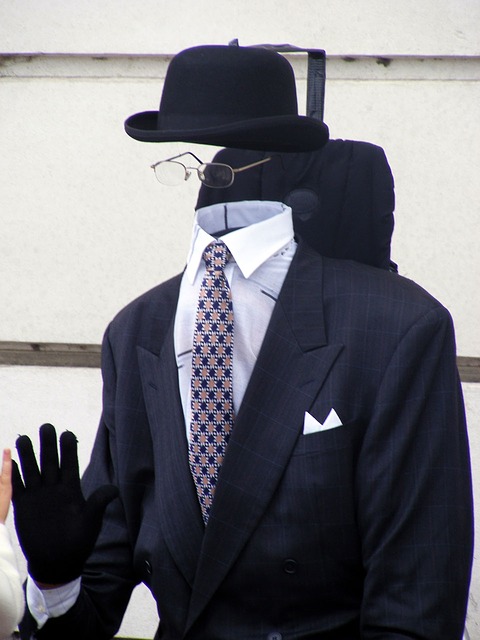
invisible-13955_640

Hestia is remarkable in Greek mythology for a few reasons. She was worshipped by all, given bits of every offering, in theory if power = worship, she was raking it in. But she was also the quietest, least dramatic god in the pantheon. But she’s not the only figure like that in stories. Those really important, ever-present background characters are all over the place if you know where to look. Here are a few that I can remember.

The Teacher in Charley Brown

Everyone who watched the show or read the comics remembers her. She was in pretty much every episode, and she played a role pretty important to children (you’re stuck with your teacher all year after all) yet no one would consider her a main or even a particularly important character. She’s the epitome of an always present background character.

Kathy Santoni From Full House

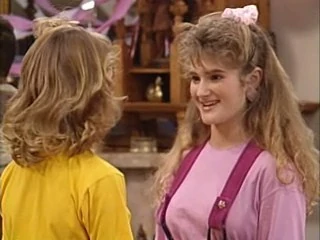
Kathy Santoni was only known by name for entire seasons of Full House before she finally got screen time but she had a pretty significant impact on D.J Tanner. Anytime Danny said she couldn’t do something, Kathy Santoni was allowed to. She stole D.J’s first boyfriend, caused all kinds of drama, and became pregnant as a teenager, freaking Danny out to no end. Influencial, yet otherwise unmemorable.

Ponch from So You Want to be a Wizard

I…can’t go in to why this character counts in this list without major spoilers, but if you haven’t read this series, do.

Literally every background character in Chrono Trigger or the Sword of Truth series at all.

Owen from Gargoyles

Owen is a perfect example of that always present, actually super important, background character who is just *there.* He’s there, he matters, but as Owen, he doesn’t get a lot of screen time.

Bill Turner

Let’s ignore the fact that anything exists past Pirates of the Caribbean 1 for just a minute. Bill Turner in movie one is a perfect example of what Hestia is like in Greek Mythology. He’s referenced a lot. He matters to the other characters, he influences the motivations of others just by being named. As a concept he’s important, as a character he isn’t actually there.

The Naked Guy From Friends

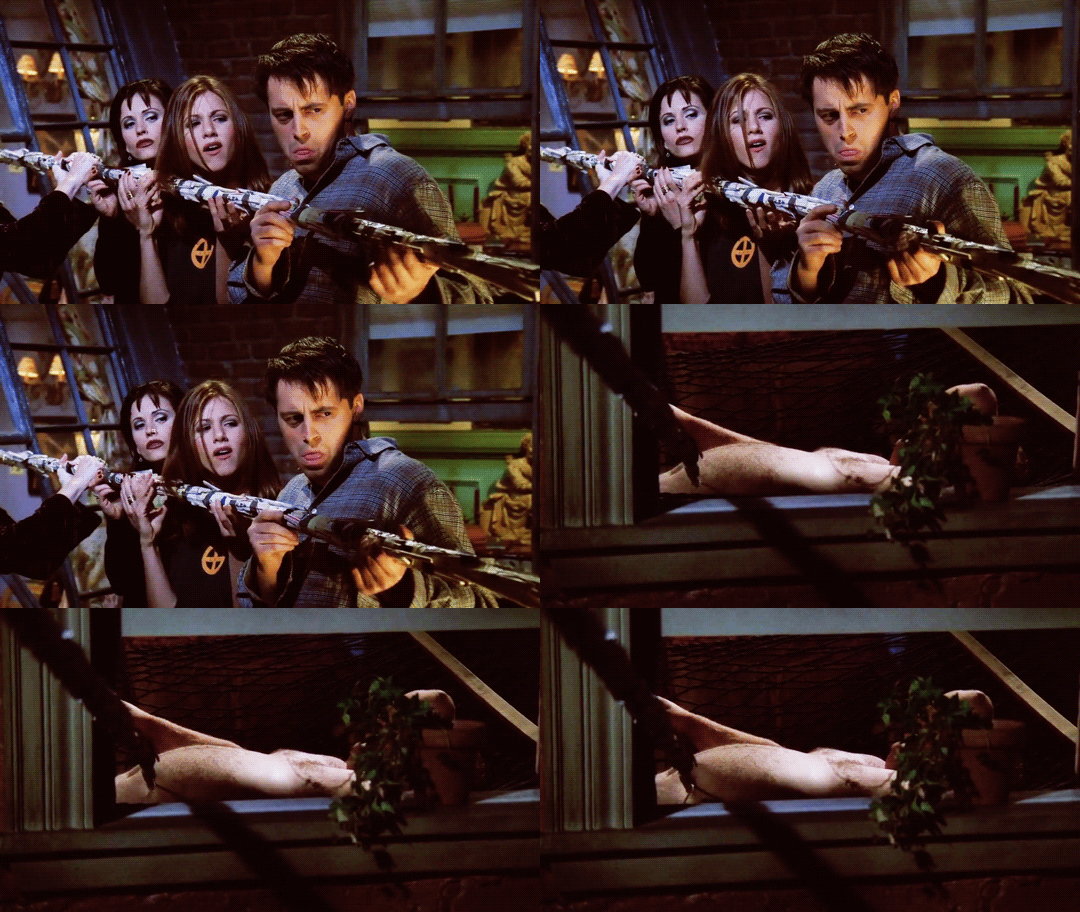
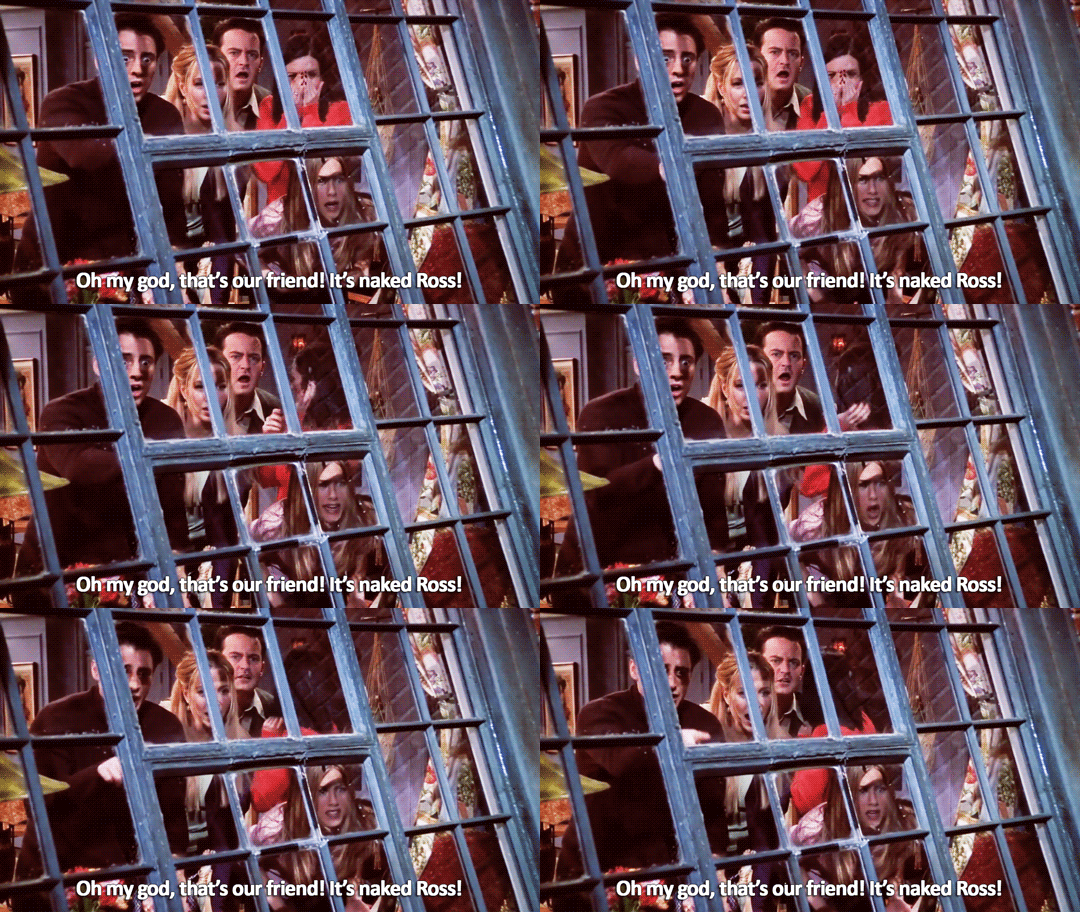
Referenced throughout the entire show, Naked Guy added a layer of illicit entertainment to Friends. Viewers were aware of him, but until close to the end never saw him. Here’s a whole string of Naked Guy Gifs from Tumblr.

Can you think of any background characters who were actually really important to the story?

Mythology Monday: Hestia

pixabay

pixabay

Hestia arrived right on time. The goddess was soft-spoken and diminutive. After looking askance at my papasan chair with her smoldering gray eyes, she created a side room for our lessons that contained a simple wooden table and two wooden chairs. The most interesting thing in the room was the fireplace.

Then she took one of the seats, motioning for me to take the other. In her soft voice she gave me a brief rundown on all the living gods and proceeded to tell me the history of the gods of Olympus. She spoke for precisely one hour and fifty minutes, leaving ten minutes for questions.

~@~

Hestia was one of the original six children of Cronus and Rhea. She was the goddess of the hearth and home. The Romans called her Vesta. She is both the oldest and the youngest daughter (born first, thrown up last). However, I replaced that bit of her with Demeter for story telling purposes. Hestia never married, swearing to always be a virgin (hence the vestal virgins). She chose no symbol for herself, and for a god as widely worshiped as she was (every house honored Hestia) was remarkably quiet and drama free. When any offering was made to any god, a small offering to her preceded it. In my story, she teaches Persephone the history of the gods.

Way Back Wednesday: Epic Moms

Mom’s don’t get a lot of recognition in fiction. Especially young adult or children’s fiction. They tend to get killed off or are mysteriously off-screen for most of the story, or are so laughably incompetent the kids have to take charge. It makes sense in a way. The focus on children’s and young adult literature is on the children. It’s a space for the kids to be the center of the story and that’s hard to do with mom shadowing your every move. But here’s my  favorite fictional mom’s growing up.

Kitty Forman from That Seventies Show

It wasn’t possible to hate this woman. She was a well rounded character with a sense of humor, morals, and while she had flaws, she was so lovable you just didn’t care.

Molly Weasley from Harry Potter

She had a ton of children, loved every one to pieces, and made room in her family for Harry. There was nothing not to love about this woman. There’s a great blog about her here and of course there’s this awesome tumblr post here. She really was an amazing character and way too underrated for her role in the series.

Amy Matthews from Boy Meets World

Amy Matthews had a good bit of snark to her, which made her entertaining, but she was also a really good mom to two kind of crazy boys.

Maggie Seaver from Growing Pains 

She stayed home, she worked, she always looked really pretty. Maggie Seaver was probably she super mom prototype. And while the show did do a good idea of occasionally focusing on the strain keeping that big family and her career and everything else she did caused, she still made it look easy. Considering the only other working mom I remember from television at the time (that doesn’t mean there weren’t any, just none I remember that the whole career thing was notable for) was Angelica’s mostly absent (she might not have been but again, the only impressions I remember of her were Angelica being sad and spoiled and her mom talking on her phone) mother from Rugrats, I think Maggie Seaver definitely filled a needed void.

Who are your favorite fictional moms?

Mythology Monday: Mother’s

h7h4t

In honor of Mother’s day next week, I’m dedicating this week to the amazing mom’s in Greek mythology. Ancient cultures may not have had the most respect for women in general, but they respected the role of motherhood. Here’s the top three mommy myths in Greek mythology. By the way, I’m leaving both Hera and Gaia off this list because in my opinion they sucked as mothers.

Demeter

I’ve already went into Demeter’s myth at length several Mythology Mondays ago, but I can’t leave her out of this list.

She was by all accounts, an awesome mom. She took great care of Persephone, protected her, and kept her out of the drama of Olympus, no small feat.

When her daughter went missing, she scoured the earth to find her and didn’t rest until her daughter was returned to her arms.

It’s a pretty epic myth, all things considered and in my opinion the most powerful myth about motherhood in Greek mythology.

Rhea_MKL1888

Rhea

Rhea was married to a kind of awful guy. And yes, it took him eating a couple of her kids to realize the true depths of his depravity, but eventually that mothering instinct took over and rather than allow Cronus to kill Zeus, she, at great risk to herself, snuck him away and tricked her husband. Later, she gives Zeus the tools he needs to save her other children. This decision cost her a kingdom, a husband, every bit of status she had ever gained. She wasn’t killed with the rest of the Titans but she faded into obscurity.

"For two days and two nights the boat was and hither and thither" by Walter Crane - The story of Greece : told to boys and girls (191-?) by Macgregor, Mary. Licensed under Public Domain via Wikimedia Commons - http://commons.wikimedia.org/wiki/File:For_two_days_and_two_nights_the_boat_was_and_hither_and_thither.jpg#/media/File:For_two_days_and_two_nights_the_boat_was_and_hither_and_thither.jpg

“For two days and two nights the boat was and hither and thither” by Walter Crane – The story of Greece : told to boys and girls (191-?) by Macgregor, Mary. Licensed under Public Domain via Wikimedia Commons – http://commons.wikimedia.org/wiki/File:For_two_days_and_two_nights_the_boat_was_and_hither_and_thither.jpg#/media/File:For_two_days_and_two_nights_the_boat_was_and_hither_and_thither.jpg

Danae

Danae was a princess whose child was fated to kill her father. Her dad locked her up so no man could reach her, but that didn’t stop Zeus. As punishment for getting knocked up, her father locked her and her baby in a coffin and threw them out to sea so Poseidon would get the blame for killing them, not him. Poseidon didn’t cooperate so mom and son, Perseus, made it to shore, where a king fell in love with her. She wasn’t interested in marriage (no doubt emotionally scarred from her horrible treatment with her father), but the king raised Perseus and agreed not to pursue her for awhile anyway. When Perseus grew up, the king lost patience and tried to marry Danae, but Perseus used Medusa’s head to turn him to stone.

That tells me a few things about Danae. The main one being she’s an awesome mother. Perseus loved her enough to go to great risk and kill a father figure for the love of his mom. That means rather than shutting down or blaming Perseus for all the trouble he brought her, she kept mothering on like a good human being. Given her insane childhood, that’s kind of awesome, so props to Danae.

So there you have it. My top three favorite Mom myths in Greek mythology. What’s your favorite Greek mother?

For Real Friday: Snooping

l-80434

Posting this a day early because of the cover reveal tomorrow.

Dream walking, telepathy, or some variation of getting into someone’s innermost thoughts appears in fiction all over the place. To me, that particular plot device has always been a really interesting commentary on privacy in general.

With most psychic abilities in fiction, there are three levels of acceptance from characters without the power.

1) Ignorance. They have no way of knowing someone is observing. To me, this is the most frightening way to portray these powers in fiction because they are so often treated as harmless.  *note* There is a difference between wild-power and controlled power in this scenario. A character bombarded by everyone’s thoughts no matter what they do is in a different position than one in control of those powers and just using them for kicks.

2) Acceptance. They are not only aware of the other character’s power, but they use it to their advantage to communicate with the other character. Boundaries are in place and accepted and safeguards are typically introduced to prevent unwanted or unintentional snooping.

3) Fear. The character in power actively uses their abilities to hurt or unnerve them, respects no boundaries, and are otherwise powerless against the character in power.

There’s several real life counterpart for each of these scenarios. Take the Facebook for instance. You can Facebook stalk people online without them ever being aware you exist. Technically they aren’t harmed by your creepy lurking, so life just goes on. You can also unintentionally Facebook stalk people because every now and then Facebook changes their settings and suddenly you’re seeing personal statuses of people you aren’t friends with because a friend of yours is friends with them and made a comment on their status.

There’s acceptance. You can friend someone on Facebook. Send them messages, work Facebook to your mutual advantage and communicate.

Then there’s fear. You can seriously stalk people through Facebook. Research where those pictures were taken, get schedules, and cross the internet boundary into the real world.

Pre-internet there were other means of distance stalking but they took quite a bit more commitment than today. So it’s unsurprising to see so many books and movies and TV shows dealing with these magic based snooping abilities today than say, twenty years ago. Don’t get me wrong, the plot device was still there, but there’s a reason it’s used so much more now.

If you want to know what a society fears, read their fiction.

Way Back Wednesday: Dreamwalking

l-4998

Dreamwalking was a thing long before I wrote Persephone. Here’s a few examples of Dreamwalking that I grew up with. Can you think of any to add to the list?

Roswell

Roswell was my very first introduction to the concept of dream walking, so I’m sure it heavily inspired my idea of what dreamscapes looked like. One of the characters, Isabel could walk into people’s dreams if she had a picture of them. She pretty much could only observe and wasn’t noticed by the dreamer.

A Nightmare on Elm Street

Creepiest horror concept ever. Definitely inspired the darker side of my dream walking.

The Wheel of Time series

The Wheel of Time series had a pretty interesting concept for dream walking. There was a neutral dreamscape called a dream world that most dream walkers hung out in. But if someone dreaming felt intensely about the dream walker they could be pulled into dreams, and within those dreams they were vulnerable to the dreamers.

Mythology Monday: Hypnos

art-645612_640

“You have absolutely no talent for dreamwalking,” Hypnos hissed in frustration.

“I’ll say,” Hades muttered from the divan.

“Maybe if my target was actually sleeping,” I snapped.

“I can only sleep so much in a day. If I sleep any longer I’ll be in a coma.”

“Let’s try again.” Hypnos took a deep breath. “Hades, sleep.”

Hades fell mercifully silent, and I sank into the soft leather couch. The room Hypnos had selected to teach me dreamwalking looked like it should belong to a therapist. Aquamarine curtains covered the windows, casting the room in a soft blue glow.

I closed my eyes and felt Hypnos’ powers settle over me, pulling me through layers of sleep. Hades. I directed my thoughts. I could sense the energy of other sleeping deities. It was a weird sensation, like catching a glimpse of something out of the corner of your eye only to have it move before you turned your head.

The minds of the gods twinkled in the darkness, reminding me of stars scattered in the vast emptiness. Hypnos had spent the last month getting me to the point where I could sense who was who. It was easier to identify gods I’d met. Thanatos was a guarded cloak of darkness; Hypnos shone like the sun; Hestia smoldered in the night; Charon cast an amicable glow. I found my mother, green and thriving, and Boreas’ frozen fortress.

Despite the name, dreamwalking was nothing like walking around. I couldn’t keep my distance from gods I didn’t like, or get close to another. They all existed, suspended in this disorienting space; the only thing that changed was my awareness of them. If I stopped concentrating on them, they faded into darkness and I could slip into my own dreams without fear of Boreas following me.

Boreas hadn’t tried anything since that last awful dream. Maybe Hades was wrong. Maybe Boreas would back off, now that I was protected on all fronts. I doubted he wanted Hades to come after him, but maybe being unprotected in my sleep had been too much for him to resist.

“Persephone!” Hypnos’ frustrated voice startled me as it flooded my consciousness. Right . . . . I was supposed to be concentrating.

Since it was the middle of the day, there weren’t as many gods to navigate. It was easy to find Hades. He was a bundle of dark energy. I concentrated on sending a small pulse of energy his way. It was a weird feeling, gathering the energy in my mind and aiming it at someone without intention.

To do anything else with my powers, intention was half the battle. I had to keep my mind on exactly what I was doing and what the desired outcome was. It was the difference between planning an arrangement—placing every flower just so to complete my vision—and throwing a flower in the general direction of a vase.

After several tries, I found myself in the library. The bookshelves blurred around me and I rubbed my eyes.

“Thank the gods,” Hades said. He was in hyper focus in the center of the blurry room.

“Okay.” Hypnos clapped his hands. He looked at Hades and then around the library with an eyebrow raised in question.

Hades shrugged, turning his head toward me. “You did it.”

“I did!” I grinned. “Now what can I do?”

“Nothing,” Hades and Hypnos said simultaneously. I frowned at them.

“I can continue to work with you if you like . . . ” Hypnos sounded less than thrilled at the prospect. “But I have to be honest, you have absolutely no natural talent for dreamwalking. It’s not your fault; it’s just not in your bloodline.”

“Oh.” My ego deflated. I’d never been bad at anything before. I always picked up whatever sport or skill I’d been trying to learn like it was second nature. But those were human skills. Divine stuff was different. Even learning to use my own powers was difficult, and dreamwalking was Hypnos’ specialty. I nixed my half-formed plan to leave my mind unguarded and ambush Boreas in a dream. He’d had much more practice at this than I had.

“Thank you, Hypnos,” Hades said.

“My pleasure. You two should be waking in a few minutes. I’ll see you later.”

He vanished and I looked at Hades. “He left! What if I get stuck or something?”

“Getting out is easier than getting in. I think Hypnos needed a break.” Hades snickered, picking up a book. “I’ve never seen him stressed. You’re really terrible at this.”

~@~

Hypnos was the god of sleep. He was called Somnus to the Romans. His twin brother was Thanatos, and his parents were Nyx and Erebus. In mythology, he had three children. Morpheus, the god of dreams, Phobetor, the god of nightmares, and Phantasos, the god of apparitions/waking dreams. In my universe, Hypnos hasn’t had kids yet, so he’s still god of sleep AND dreams. Hypnos looked young, and was often portrayed in the nude with wings on his head. He lives in a cave near the Underworld that the River Lethe flows through. Hypnos doesn’t do much in mythology. He’s pretty quiet so there isn’t a lot to say about him. I enjoy writing him though, because I feel like his solemn seriousness is such a good counter balance for my snarky characters.

For Real Friday: Death Toll

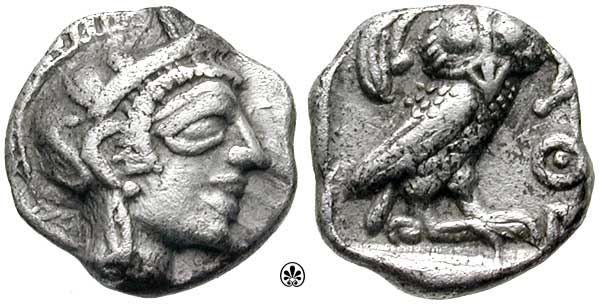
"SNGCop 053" by Classical Numismatic Group, Inc. http://www.cngcoins.com. Licensed under CC BY-SA 3.0 via Wikimedia Commons - http://commons.wikimedia.org/wiki/File:SNGCop_053.jpg#/media/File:SNGCop_053.jpg

“SNGCop 053” by Classical Numismatic Group, Inc. http://www.cngcoins.com. Licensed under CC BY-SA 3.0 via Wikimedia Commons – http://commons.wikimedia.org/wiki/File:SNGCop_053.jpg#/media/File:SNGCop_053.jpg

 Hades pulled an old iron coin out of his pocket. It was about the size of a dime, but thicker and more misshapen and lumpy. Like it was trying really hard to be round but couldn’t quite succeed. A centurion was stamped on one side of the coin, and a bird with huge talons was stamped on the other.

“What is that?”

“An obol. Just a knickknack from one of the shops. A demigod walked out of the Underworld with one of these once, and suddenly all of Greece was using them for currency. They had this crazy idea they could use them to bribe Charon.” 

~@~

People are terrified of death. Always have been. Because of this fear, we cling to stories, real and otherwise. But we also do something else, something really interesting that transcends every culture and unites us into this deeply human trend.

We try to bribe death.

Every single culture, every single religion, every single subset of people have a similar story. Whether we’re bribing death with deeds or commitments or coins, the idea is still there. If we provide our ferryman with enough incentive, he’ll take us right up to the gate instead of losing us somewhere along the way.

It’s an interesting universal fear and one that spawned the existence of ghost stories. We’re terrified of getting lost. Of being stuck. We don’t know what comes after death and in most stories these bribes don’t even guarantee you a spot in the good afterlife. They just convince your ferryman to take you to the gate. Why is that? Being stuck on the wrong side of the river wouldn’t seem like a fate worse than Tartarus. Being a restless spirit able to see the loved ones you’ve left behind seems like a step up from the great, gaping, unknown. Does it go back to our fear of being a Cassandra figure? Unheard, unseen, but there, helpless to do anything to alter event? Is it really better to be gone all together than reduced to an observer?

Why is ever ghost story ultimately about moving on and letting go? Why do we need to bribe death to make sure he takes us with him?